Tuesday, 25 December 2012

Happy Christmas!

While I doubt many people will be reading blogs on Christmas day (I wont be, although I bet a few will!) I've had to post this week's blog a day late to avoid any premature present revelations for family and friends, so apologies for no blog yesterday.

Christmas always feels like a tricky time to be green, lots of presents to find and collect, food to prepare, travelling all over the place and all that wrapping paper and lighting. Each Christmas I try to remember all my good habits from the rest of the year, and stick to them. Recycling (both wrapping paper and rubbish), buying local and not buying things that will just be thrown away soon. But most of this takes some pre-planning and organisation; like remembering to wrap presents with paper than can be recycled  (and hinting to family that you'd like to receive gifts that are wrapped similarly) or ordering those extra few things from the veg box. I'm really quite lucky as my nearest and dearest are all very green too. So using last years paper (whether it's been carefully ironed flat first or not) is common practice and staying at my parents for Christmas means I can sit back and relax knowing they've already ordered the local turkey and the organic veg box.

Like last year, I've tried hard to make my present giving green. I've had nowhere near enough time to make handmade gifts for everyone (and also my craft skills are not great enough to create presents that would impress or please everyone either) but I have made some. Friends got home-made festive candles in red mugs (the mugs can be reused as normal mugs once the candles have gone) and a pot of bulbs already growing to give a nice splash of colour and life in the first few months on the new year. I've also received a present of home-made gingerbread biscuits which is always a brilliant gift and another friend made me a jewelry hanger out of lace and a large picture frame, both useful and very pretty.

If home-made isn't your style you can go for eco-friendly, like the grow-your-own-fruits kit I received this year or the mushroom kit I gave in a previous year. Or maybe buy your normal gifts, but from a charity. Maybe Fairtrade earrings from Oxfam or some singing birds from the RSPB. This means your loved ones get something professionally made that they love, but also you're doing some good for someone else too. You could take it one step further and buy one of the "buy a goat" gifts for someone, whether it's sponsoring a polar bear, giving a charity gift membership or donating the equivalent of a new goat to a project where they help local people develop their agriculture system. I get a few of these each year and although it's always nice to receive physical gifts too, the knowledge that someone's put their money into a fantastically worthwhile project on your behalf is lovely. 

Sometimes though none of these options quite work for that particular person or that particular present which would be just perfect. For all those other presents I try to make sure I get things that will last, and that will bring lasting enjoyment. Books are good for a lot of people in my family, I try to look for ones that have FSC paper but in reality it doesn't always happen. Whatever you're giving, and receiving, today enjoy it and enjoy your day;

Happy Christmas!

Monday, 17 December 2012

A Green Engagement

A few weeks ago I had a lovely visit to the RSPB Leighton Moss nature reserve. It was a very icy day which meant there was lots more wildlife out in the open looking for food than usual. The bird feeding station was completely covered with birds, my first Water Rail was a particular highlight and there were also Spotted Red Shank on the ice and Marsh Harriers flying overhead. But none of these were the highlight of the day. That particular moment was when, with the view across the lake from Lillian's hide in front of us, my boyfriend proposed and I said yes! I'd never thought of it before but an RSPB reserve was definitely the perfect place, what could be better than being surrounded by beautiful nature.

Image courtesy of Lewis Niven

So the proposal was perfect, and with a bit of a green twist, but what about the wedding? Everyone wants their wedding to reflect them, so obviously I'm already thinking of how to keep green while planning my something blue but it might not be easy.

Whether from personal experience, or from reading this blog, we all know sticking to a green life isn't always simple. There are tempting foods flown in from around the world, short car journey's on rainy days, ethical vs non ethical fashion and lots more choices that can be green, not green or somewhere in the middle. All these concerns (and more!) apply to weddings too so this week's blog looks at all the green and not so green wedding thoughts I've had so far. But don't worry, I wont be going wedding mad and we'll be back to (slightly) less girly blogs on nature and general green living next week, just in time for Christmas!

Save The Dates and Invites
I'm beginning to realise there's a lot of posting things out to friends and family when you're planning a wedding. All that paper adds up and before you know it you need a small forest just to invite everyone. Even the postage can add up and just think of all that transporting of the invites around the country, and world, too! Hand delivering, when passing by or visiting on other trips, is a good way to cut down on both postage costs and travel millage for you invites and don't forget the less paper you use the lighter things are to post. I'll be thinking hard about whether each piece of information needs a separate sheet of paper and if the information needs to be posted in the first place. Wedding websites are very popular now and it's a great way to post all the vital information, some less vital information and some general bride and groom trivia for everyone to enjoy. It also avoids any of those last minute "where did we put the directions" worries. Of course, don't forget that not everyone has a computer, so some printing will probably be needed anyway.

The Dress
An expensive item of clothing bought to wear on just one day? I think not. There are some truly lovely  organic, Fairtrade or alternative material weddings dresses online but I'd much rather have something I can wear, or adapt to wear, on lots of other occasions or just hire a dress for the day (then it can be reused by someone else) or even just buy a very simple cheap dress for the day and then donate it to a charity like Oxfam for someone else to buy next time. There are lots of options that don't break the bank and don't cost the Earth either. It may be the most important day of your life but surly using it to save the world one dress at a time rather than destroy it is best?

Food
It's easy to get carried away with set menus, impressive desserts and delicious wines. But if you spend the rest of your life buying local, Fairtrade and organic why should your wedding be different? There are lots of caterers who are already very keen on green issues and any who aren't yet might be persuaded with a little help from you, after all, you are paying them for it. Another option is the home made route so you know exactly where the foods come from but depending on your party size this could get very stressful, very quickly! This is one of those ethical choices that might mean the bill goes up a bit. But if it's important to you you can save on other things (maybe home make invites) to make up for it. Alternatively you can pick one part of the catering and make that greener, possibly by choosing a local brewery to provide the drinks. As with all green things, every little helps.

Venue
It's one of the biggest expenditures you'll make during the wedding process, where is it all going to happen? A quick internet search finds lots of incredible eco-friendly wedding venues (hardly any close to where we want to have ours though!) with solar panels, grey water toilets, compost bins, vegetable gardens and lots lots more. If you're both huge nature lovers another option is to pick a nature reserve as your venue. There are lots of places like this that you can hire out now, even Leighton Moss where we got engaged. I think it's a bit trickier to make this greener, but it's worth asking if they do simple things like recycling and composting, and having a look whether the lights are energy efficient. Even if you pick a venue with no green credentials keen asking about them, the more people get asked the more they'll be thinking about it. And again, you're the ones spending the money and if enough people ask more venues will become greener. One thing to consider is if you chose the same venue for your ceremony and reception then people wont need to be driving around between the two, this will save your loved ones a bit of money and reduce emmisions too.

Travel and the Honeymoon
I'm determined to make it as easy as possible for people to get to our wedding (wherever we chose to have it) by public transport. Driving to a new place, finding somewhere to park and then choosing whose the designated driver is never fun, and weddings really should be for everyone. Give people advance notice so they can book cheap trains or plan car shares. Some people even create a section of their wedding website for people to arrange lifts and journey shares.
The other potentially huge travel decision is where to have your honeymoon. Do you pick somewhere local, but maybe not quite so magical (although it can be), do you spend a small fortune travelling by land rather than air to get to an exotic location or do you just give up and book a perfect cheap flight somewhere you'll remember forever and pay for carbon off setting of the flights? A very personal choice and I feel that since it's probably going to be for a holiday longer than a couple of days if it means a lot to you it's worth spending a bit of money on to get it right both with location and avoiding any eco-guilt that might ruin the stay.

All the other Odds and Ends
There are so many other things to consider, plan, budget for, order and decide upon for even the most basic wedding. Maybe you'll choose biodegradable confetti or maybe you'll have local, in season flowers. Perhaps the wedding favours will be a donation to charity or your gift list will ask for second hand or homemade presents. Whatever you choose it's got to fit your principles and wishes for the day. It's just as bad to spend your wedding day stressing about the ethical dilemmas without enjoying it as it would be to spend it worrying about if your hair will blow in the right direction in the photos.

So those are my green wedding thoughts so far. But for now I'm putting the finishing touches to some pretty green Christmas presents. All will be revealed next week!

Monday, 10 December 2012

Seeing the Wood for the Trees

Despite looking up the date back in September I've missed National Tree Week (24th November - 2nd December) for another year but I've already put it in my diary for next year (23rd November - 1st December). Almost all the leaves have gone from the trees now and I think we can definitely say we're moving deep into the winter months but we shouldn't forget all about trees just because we've passed national tree week. 


Even without all the leaves trees are still full of life whether it's the dormant trees themselves of the life that they support. I took this picture a few weeks ago of a tree just outside the hide at RSPB Bowling Green Marsh. It's covered with ivy, lichens and was full of singing birds (although none stayed long enough to be photographed!). I bet if I had looked closer I would have found insects among the branches and maybe other animals like foxes, owls and deer use the tree at other times too. And that's just one tree in December. Just think how full of life that tree is throughout the year, and then how many other trees are just as full of life all around it. When I think of rainforests I see them brimming with thousands of creatures and lives. It's easy to forget that the trees here in the UK are also beacons of vitality and life. 

With only 15 days to go (hasn't it gone fast!) it's also time to start thinking about Christmas trees too. As with most things festive this can be a bit of an environmental minefield. The best thing to do is reuse, if you already have a plastic tree keep using it, if you had a tree in a pot last year bring it back inside. I doubt anyone has done "reusing the Christmas tree" as well as this family though, who are still using a tree bought in 1886! Very impressive. If you're looking at buying a new tree this year aim for real rather than plastic. The real trees will only emit the amount of carbon they have absorbed in their lifetime plus the cost of transport, while plastic trees have a much higher carbon footprint and still have the cost of transport. The very best option is a real Christmas tree that can be put out into the garden for the rest of the year, and reused again and again. For some tips on how to pick the best real Christmas tree, how to pot it and keep it evergreen for years to come have a listen to Gardener's Question Time which has a great article on the subject. Of course there is the option of no tree (a shocking idea I know). Personally I would be devastated to spend a Christmas without greenery in the house but this year we're moving into our new flat on the 18th and heading back to family for the festive period on the 21st so we've decided not to get a tree for the house in Exeter as it just seems a waste of trees and time for three days. I'm sure I can manage for three days without one and then pile my enthusiasm for chaotic decorating into the family tree later. 

As well as the article in Gardener's Question Time there have been quite a few other tree related programs on Radio 4 lately. So if you fancy loosing yourself in the forests without leaving the house why not listen to the special tree edition of Poetry Please  or The Secret Power of Trees

How are you celebrating trees this winter?


Monday, 3 December 2012

Wet Wet Wet

Throughout history there are tales of the constant battle between humans and the forces of nature; Noah and his ark, King Canute ordering the sea to stop, Li Bing taming rivers in Chinese culture. In the past, human life was ruled by the changing of the moon, the seasons and the rising of the tides but in modern life it's easy to believe we have conquered the natural world and control it at will.

In reality we know this isn't true and over the past 10 days we've seen news story after news story covering floods all over the UK. We do not control the weather, we merely use it on its tamer days to our advantage.

The South West was one of the first areas to be hit by severe storms last weekend with Exeter train lines halted and roads closed in various directions. I became very familiar with the Environment Agency's Flood Warning website but thankfully despite living in a flood plain the defences for the  city centre worked as they should and our house wasn't affected. Hearing the rain pouring down and passing the river each morning did fill me with a renewed sense of awe for nature though.

Once the rain has stopped I ventured out and took some photo's of the swollen river. It had already receded several feet since the weekend but was still covering paths, grass, trees and roaring along. While the damage to human residences and businesses is terrible I'm always reminded of the impact flooding and natural disasters have on the natural world itself, and its wildlife. Habitats can be lost in seconds, and wont be very high on the list of things to fix afterwards. Also, I have no idea what happens to fish during a very big flood. Do they find somewhere quiet to hide away in while things get back to normal or are they swept down river?


The trees where we spotted our first Exeter Kingfisher last summer, the branch we saw it on is several feet underwater in this picture.

The path of my normal river walk follows that white line running under the water. There are also at least three more steps that are underneath there and the river must be about 6m wider than normal.
See the "tide line" of debris over the path to the left. Shows how  high the river had been previously.

Raging torrents of the weir and on the opposite bank a TV woman doing an interview from the soggy flooded garden of a great riverside pub.

This summer has been very wet and particularly during the spring floods there were many wildlife victims. There were some success stories too though. While the brand new visitor centre at RSPB Radipole was plunged into meters of water staff at the nearby RSPB Lodmoor reserve acted quickly to save the fledgling common terms by using inflatable mattresses as rescue rafts until water levels dropped again. 

The huge forces of nature can be terrible and uncontrollable, but we can use some of their strength for good without trying to tame them completely.  Renewable power sources make clean energy from the waves, wind, sun and tides all around us. We must live in partnership with the natural world, understanding that floods will happen (so we maybe shouldn't build in flood plains or make sure other areas are free for the overflow), droughts will happen (so we need good ways of storing water from the wet times) and that we cannot predict it all but must live with the consequences. Let's hope the recent floods give all politicians (not just President Obama) the motivation to deal with our current conservation, energy and environmental issues to make the world a better, cleaner and safer one for both us and the thousands of other living things we share the planet with.

Monday, 26 November 2012

Something About Nothing

When did you last go a whole day without buying anything? Nothing at all, no quick coffee, no new top, no sneaky packet of crisps after work and before dinner, no pint, no anything. When you really think about it, it can be surprising how far away that day was. For me it was Saturday, but only because I took part in


On Saturday 24th November people all over the UK took a day off from shopping and bought nothing. It's a day to challenge yourself, and friends and family, to embrace life and let go of consumerism for a day, avoiding all those temptations and discovering there's a lot more to Saturdays than shopping. According to the website the rules are simple, 
for 24 hours you will detox from shopping and anyone can take part provided they spend a day without spending
But why bother? Well firstly because it will save you money. Making a conscious decision not to buy anything at all during the day helps to avoid those little purchases that add up, like coffees and chocolate bars, and it also helps you to really think about the big purchases, whether you need them, where you're buying them and how your money is being used. We in the developed world are only 20% of the global population and yet our consumer lifestyle uses up 80% of the earth's natural resources impacting on everyone else, more often than not in a negative way.

These seemed like pretty good reasons not to buy anything on Saturday. It was probably easier for me than most people as I was busy at work, although work did involve standing in a Christmas Market all day surrounded by shops so maybe it was actually harder! When you know you aren't going to spend anything it's incredible how many things you want to buy. Here's a list of some of the things I suddenly wanted on Saturday:

  • Parking space in pay and display car park
  • Hot Chocolate to start my morning at the market
  • Yummy looking bread from the stall opposite
  • Necklace and bottle opener from the stall next to me
  • Cakes from the stall opposite
  • Take away because there wasn't much in the cupboards for dinner
I'm sure there were more, and that was on a day when I was busy working! But wanting to get to the end of the day without opening my purse made me strong and I felt a real sense of achievement when I managed it, even though it was only a small thing. I found a side street to park on for free (walking further but saving money and being healthier!), I resisted the other stalls and I used up a can of soup and bread that I found in the cupboard that I'd forgotten existed for dinner. Avoiding waste food and buying anything! What I found fascinating was how much of a challenge it was not to buy anything, as I don't normally see myself as a big spender or a mass consumer. None of the things I avoided were essential buys and at the end of the day I feel better for not having them. 

So one day is surprisingly hard, but how about the next day? Sunday was less of a success. Back at the same Christmas Market I bought a cake (but avoided the bread) from the opposite stall and bought a coke and chocolate bar on my drive home. A bit of pre-planning could have avoided this, an extra water bottle and a snack for the journey are easily found at home and I could have grabbed these before leaving in the morning. In total I spent just under £2 on Sunday. My normal guilt tripping trick is to think how much good would that £2 have done if I'd have donated it to charity instead of food and drink for me. Looking back it would probably have done more good/given more pleasure in charitable form than I got from consuming those products. Or selfishly it would have been better saved up for other purchases I need to make in the future.

It's almost impossible never to spend money on things. Today I'll do my weekly shop. But before I do I'll look through the cupboards and plan my week's meals to avoid buying unnecessary items. I'll also keep a list so I don't end up impulse buying. When I walk past the glossy magazines I'll remember that I can get most of it online and that saves paper as well as money. I'll go for a walk or run along the canal (as long as it's not flooded) and watch wildlife as I exercise rather than watching the treadmill screen. Not buying really does feel liberating, and makes buying more of a thought through process rather than an automatic response. Since I'm doing well on having one veggie day a week (a challenge I set myself back in September) maybe I'll try and have one Spend Nothing day a week too, although I'll need to make sure I don't just move my purchases onto a different day, I want to reduce, not double up. 

When did you last spend nothing? If you're interested in trying it, you don't have to wait until next year, just pick a day and go for it. Even just listing everything you;e bought in a day can be interesting. Let me know how it goes!

Friday, 23 November 2012

Avery's Ark (part 2)

It's the moment you've all been waiting for, the second blog of the week with my final five Devon species that I'd love to see more of and learn more about over the coming year. Hope there weren't too many sleepless nights trying to figure out what they would be! Since Monday I've found that there's a lovely drawing of the Devon cup coral in the Royal Albert Memorial Museum which I would probably have never noticed before. It's great how learning something new makes you look at the world differently.

So, without further ado, here are my final five, as I said on Monday, all of these animals can fly but they aren't all birds, just most of them.

By John Haslam from Dornoch, Scotland
(Nesting Herring Gull) [CC-BY-2.0
(http://creativecommons.org/licenses/by/2.0)],
via Wikimedia Commons
Sea Gulls: Now I've cheated here, because I'm including all the "common" gull species you find on the Devon coastline and inland; blackheaded, herring, greater and lesses blackbacked too, all the ones that people complain to me about during my day job. I didn't have strong feelings about gulls before I moved to Devon, now, because so many people seem to hate them, I have become somewhat of a gull champion. To most people's surprise all UK gull species are protected by UK and EU law because they are either on the amber or red list of conservation concern, this means their numbers are declining steeply and widely enough that smart people are getting worried. While they may be noisy, they might try to steal a chip or ice cream and it might feel like they're encroaching on our towns and villages we've got to remember that they were here first, it's quite normal for them to nest/live inland and have been doing it for decades and that many people would love to see this marine wildlife in the numbers we have. I'm sure a future blog dedicated to gulls isn't far away so for now I'll just say that these intelligent, fantastically designed birds are brilliant and they can definitely have a hassle free (but also chip and ice cream free) place on my ark.

By Seglea (Own work) [GFDL (http://www.gnu.org/copyleft/fdl.html),
CC-BY-SA-3.0 (http://creativecommons.org/licenses/by-sa/3.0/)
or CC-BY-SA-2.5-2.0-1.0 (http://creativecommons.org/licenses/by-sa/2.5-2.0-1.0)],
via Wikimedia Commons
Avocet: Here is a bird I have followed south. After watching them breed (not very successfully this year) at the RSPB Marshside reserve I'm looking forward to a winter watching them out on the Exe estuary. In fact, I'm even booked onto one of the RSPB's Avocet Cruises  to watch them from the water in January! Other than being the RSPB logo bird these are some of the smartest dressers in the avian world. I always imagine they're in the equivalent of dinner jackets and ties with their neatly preened black and white plumage. Watching their courtships is fascinating but seeing whole flocks fly across the estuary is a real Devon wildlife spectacle.


Starling:  Talking of wildlife spectacles how could I not include this flocking wonder. I've never seen a full, large starling murmuration (the name given to the large acrobatic flocks seen over winter) but have seen lots of smaller ones around Preston, Mere Sands Wood and other UK venues. Whilst the big famous ones in Somerset are something to be seen I'll be looking out for more local spectacles, like these ones videoed at Okehampton ( very near Exeter) last winter (Video from YouTube). I'd love to see one of these and then when I see the starlings in the park I can wonder if they were there, in a massive flock.


By Júlio Reis (Original file) [CC-BY-SA-3.0
(http://creativecommons.org/licenses/by-sa/3.0)],
via Wikimedia Commons
Marsh Fritillary: My one, non bird flier out of the five today is a beautiful butterfly. Most commonly found in the south and west of the UK, Devon is a prime location to go hunting for a sight of this lovely insect, although I'll have to wait until April to start my search. With yellow eggs, black caterpillars and gorgeous brown, gold, orange and black checkered wing patterns as adults this creature's interesting at all point in its life cycle. Marsh Fritillary is in decline although at sites in Devon owned by the Wildlife Trust numbers have been increasing in recent years, a sign of hope that things are getting better for this scabious eating butterfly. I'll be looking forward to sunny summer days searching for this beauty, and doesn't the wing colour look just perfect for a warm summer's day?


By Cirl_bunting.jpg: Paco Gómez from Castellón, Spain derivative work:
Bogbumper (Cirl_bunting.jpg) [CC-BY-SA-2.0
 (http://creativecommons.org/licenses/by-sa/2.0)],
via Wikimedia Commons
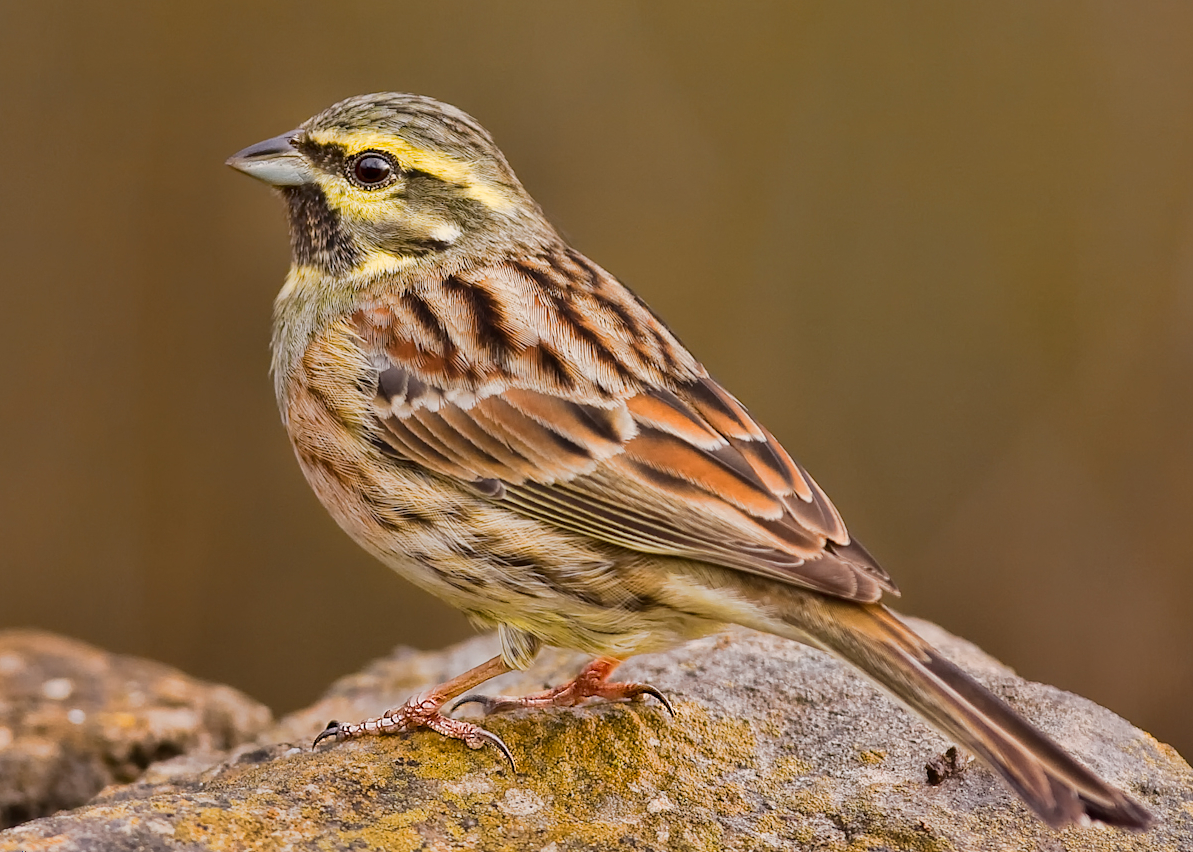
Cirl Bunting: My final Devon species is a very special one (almost exclusively found in the county), and one that I cannot remember seeing before, although I might have done when young. The cirl bunting used to be widespread but when I was born there were only 118 pairs in the UK. Things have improved thanks to the hard work of farmers and RSPB staff (as well as others) working together on agri-environmental schemes to help improve habitats for this farmland bird and in 2009 numbers were up to 862 pairs. This is definitely a species which needs a helping hand and maybe a lift on an ark. While the native, wild population's range is still limited to the southern edge of Devon there is now a successful reintroduction scheme in Cornwall helping this lovably bird spread it's wings across the UK countryside again. So maybe in future it will be a bird of the whole of the south, or with climate change maybe the whole of the UK, again, but for now I'm going to relish being so close to this rare bird and see it as much as I can. Hopefully a truly wonderful Devon export.


So there we have my ten Devon species that I'd love to see more of this year. Some are rare, some are hard to spot, some feel like they're everywhere, others are loved by locals, some are misunderstood or undervalued but the thing I find most amazing is how many fantastic creatures and plants there are to see even close to my home. I could easily have made a list of 20, or even 100 brilliant species in Devon. We may not live in a country of panda's, tigers and hummingbirds but the countryside and towns and still full of absolutely astonishing wildlife to explore and value, even in just this tiny corner of Devon. What's on your doorstep? I'd love to hear from you, or if you've got some more Devon wildlife you think I should go and see, let me know that too!

Monday, 19 November 2012

Avery's Ark (part 1)

I loved watching David Attenborough describe the ten species he would most like to save from extinction on Attenborough's Ark: Natural World Special last week and this (as well as reading a great blog by Amanda Scott) started me thinking, what would I save, which species would I miss the most, what needs protecting the most...

The questions are endless. I'd always want to keep things like blackbirds in my world, but at the moment they don't need as much protection as lots of other things. So I'm going to cop out and pick a slightly easier question. Since I've only just moved to Devon I've chosen ten amazing species that live here, and that I don't often see, that I would love to find, watch and learn about over my first 12 months in the county. I'm splitting them up into two blogs so here are the first five (the rest will come in a second blog later this week):

Derek Harper [CC-BY-SA-2.0 (http://creativecommons.org/licenses/by-sa/2.0)], via Wikimedia Commons

Ash: This lovely tree has been all over the news recently and unfortunately last week the first reported case of ash die back disease was recorded in Devon. Ash is one of the trees I find easiest to identify and I would hate to see it disappear from our countryside. Hopefully I'll be seeing ash all over Devon for years to come, but this year in particular I'll be watching out for it more than normal.


From wikicommons
Leatherback turtle: This creature might not be what springs to mind when someone says "Devon wildlife" but they are there, out at sea, normally during the summer months. Sightings are rare but about 15 are recorded each year in the UK, and it's very likely that many other individuals are never seen. These huge (up to 6 ft!) creatures eat mainly jelly fish (another exciting Devon creature) and I'd love to see one! I have seen turtles briefly in Australia, but there would be something infinitely cooler about seeing one off my native shores. It's unlikely and I'll probably have to find a  sea canoe to get a good chance of seeing one, but a girl can dream, and keep trying. Have a look here and here for more information on their Devon sightings.


Photo by Chris Gotschalk  http://www.piscoweb.org/who/techs/cgotschalk.html 
Basking Shark: Another amazing marine creature swimming off the coast of Devon. What's not to love? It eats plankton and small fish, it is the second biggest fish in the world (beaten by the whale shark) and  you could see it in the UK. Fantastic! Another great reason to support campaigns to protect our marine environment, it's these large animals that will suffer and disappear if we don't. Nothing more needs saying, I'd LOVE to see one of these.


Photo from http://www.devonwildlifetrust.org/species/Devonshire+cup+coral/
Devonshire cup coral: From the very big to the quite small, this coral is only 2.5cm wide and 1.5cm tall. Anything that has Devon in the name really must go on my list of things to see. This coral was named after the county upon its discovery in 1860 and was thought to be confined to the region, after further study however it's turned up in the North East England, North West Scotland, Wales, Ireland and the Mediterranean. Despite this I'm keeping it on my list because I think anything that has "80 translucent tentacles splaying out of the calcified cup with unique terminal knobs" must be worth a look!


Raft spider: Similar to the Great raft spider (which has been recently reintroduced into the Norfolk Broads) the raft spider is one of the biggest spiders found in the UK, growing up to 8cm from toe to toe (do spiders have toes?!) . These amazing little beasts hunt by sitting on the water (using their legs like a raft) using the surface tension as other spiders do the tension of a web. A deep chocolate brown with a light stripe on each side of their back these are quite pretty as far as spiders go. I have seen them briefly in the past but in Dorset (at the RSPB Arne reserve) and I would love to see them again, in Devon, for a closer longer look. Check out this BBC video, to see how good they are at hunting!
Photo from Orest (Flickr: Raft spider - Dolomedes fimbriatus) [CC-BY-SA-2.0 (http://creativecommons.org/licenses/by-sa/2.0)], via Wikimedia Commons

So there are my first five. My next five can all  fly and are fantastic Devon wildlife sights, but they aren't all birds, can you guess any of them? Answers coming soon...