The move that's been being planned in the background for months is finally happening this week. After 14 months in Preston I'm moving down south (even further south than I grew up!) to Exeter and starting work as the new RSPB Membership Development Assistant in Devon (look out for me in my van and at events). As my last blog from Preston it seemed fitting to look at how green this city is and how it's helped or hindered my green living efforts.
As you enter Preston from the M6 you see a big sign saying PRESTON: A FAIRTRADE CITY. I blogged about this last year here and since gaining the status back in 2004 the city's Fairtrade establishments have grown. Starting with 29 shops and 17 cafes that sold fairtrade products back in 2004 there's now a huge choice for buying Fairtrade in town. There's no excuse not to find a Fairtrade coffee or bananas now and in 2008 the university UCLan gained Fairtrade status too.
One of my favourite Fairtrade haunts is the Beautiful Planet cafe on Friargate. You can't really miss it as it's painted a lovely green outside. But inside it's full of brilliant Fairtrade products, cups of tea, coffee, hot chocolates, pasta, cakes, biscuits, tins, everything really! It's also full of green magazines and posters that have been donated. Whether you want to find out about local green groups (like the Central Lancashire Green Party group I had a small part in setting up), learn some new vegan recipes or catch up on ethical banking you're sure to find what you need. Run by local volunteers the cafe is a little piece of green heaven in the midst of a busy shopping street and a very different place to the Tesco's just doors away. If you're ever passing by pop in, I never do as much as I want to and it's so lovely!
Closer to home there's the Co-op. Almost my nearest shop and definitely my prefered one for every day foods. I've grown up on Co-op food and so a constant supply of their own brand Fairtrade 99 tea is an essential. If you're fed up of big brand supermarkets then joining the Co-op is a refreshing change. Not only is there a great supply of Fairtrade, organic and local foods in the shop but you get loyalty points when you go shopping and you get a share of the profits twice a year! The Co-op campaign on lots of environmental and social issues and with regular local updates it's fantastic to see how the group are helping community groups and projects. So much more than just a shop (they're my bank too) and since the North West has lots of historic links with cooperative movements it's great to see this tradition thriving here in the city.
On the same road as the Co-op are lots of charity shops (at least three) full of interesting second hand items that need a new home. I can think of few things better than charity shops. You get a new top/dress/set of glasses, charity gets some money and things get reused/recycled. Brilliant! And it's certainly a good way to get rid of old items that you don't need or want anymore so get giving to charity shops.
Beyond the Co-op and charity shops is one of the many parks that are sprinkled throughout the city. One of the best things about Preston is the many and varied Victorian parks and green spaces dotted around. Whether it's Moor Park with playing fields, trees and playground, Avenham Park with pretty flowers beds and river bank or Haslam Park with it's wildlife garden, sensory garden and canal path. Finding wildlife in a city isn't hard, but having trees and green spaces close by means you get a lot more variety and (to be honest) makes searching for it and watching it a bit more pleasant sometimes. Wildlife highlights for me have been long tailed tits along the canal, (grey, red would be better) squirrels collecting acorns, and ivy plants covered in red admirals. I haven't managed to see the nesting peregrine falcons on St Walburge's Church but knowing they're there flying around and hunting has been nice over the summer. There's so much happening in our local parks and they're brilliant places for community projects whether it's walking groups or children's clubs or getting hands on with a bit of conservation volunteering. Here's hoping that they're be there for years and year to come.
A little way out of town is the local recycling/rubbish centre. I'm always impressed with how much gets recycled here. Last year 79.52% of the rubbish brought to the centre was recycled or reused. The staff are helpful with finding where different items should good (is it metal, glass, hard plastic...) and also good at quickly taking out items that can be reused before they get damaged. Having a good doorstep recycling and food waste system, as well as this brilliant tip means that we throw much much less into landfill than in the past and that can only be a good thing.
So there we have it. My green memories and highlights of Preston. I'm sure there are many more places, projects and events that I've missed so if you know anyone I'd love to hear about them. For now I'm packing up ready for the move south and next Monday I'll be checking out the new city and seeing how it measures up against Preston's greenness.
Monday, 29 October 2012

Monday, 22 October 2012
The Most British Of Fruits
The apple is found as a symbol throughout human culture; in pictures of the garden of Eden (although most scholars believe it was some other fruit), poisoning Snow White, keeping the doctor away and now as one of the best known technology logo's in the world. But the apple is the quintessential British fruit and autumn is it's season, in fact, yesterday was National Apple Day with festivities all over the country to celebrate this fantastic plant.
A quick look on the web shows that people were picking apples, tasting apples, going on autumn apple hunts through orchards, tree dressing, apple pressing, cider tasting and planting apple trees, among many other ways of celebrating our national love of apples.
After a summer of short shelflife strawberries, raspberries and other fruit and veg the apple season brings a sense of familiarity and comfort. Everyone likes apples, and everyone knows how to eat them and cook them from a steaming apple pie with custard or apple chutney with local pork through to just popping a few in a bag as a snack on an autumnal walk outside. They just feel right. We eat apples all year round and they often get forgotten or seen as a bit boring, but I love this time of year as it's the only time I can be sure to find lots of choice for UK grown apples, without having to check that my fruit hasn't been grown in Chili (on a side note I couldn't find any UK plums in the shops this weekend and was most disappointed).
What I'd love to have is an apple tree (or an orchard) of my very own. You can't get more local than your own back garden for food and apple tree's are brilliant all year round. The whitey-pink blossom of the spring heralds the start of warm weather and the fruit that grows through the summer ripens just in time to make the darker nights a bit more bearable as you snuggle up with a home grown, home cooked apple crumble. My parents house has a small solitary apple tree and on a good year there are more apples than our family can keep up with. Thankfully apples are versatile as well as yummy and can easily be stored without too much fuss. You can either stew and freeze them or simply wrap individual fruits in newspaper and pack into a dry cardboard box, storing them somewhere dry and dark. This means you can have fresh apples to eat and cooked apples ready to go into pies all winter. One day, in a bigger more green garden, I'll have my apple tree but for now I satisfy myself by watching how others grow them. There was a brilliant section on the BBC's Gardener's World last week about how to grow the tree's to get the best fruit without them taking over the whole garden. Have a look at the video here at 16 minutes 48 seconds in.
Apart from the self propagating varieties apples reply on insects such as bees and wasps to pollinate them so to get good apples we need to look after those insects that make the harvest possible. Last week I signed an e-petition organised by 38 Degrees asking the UK government to ban certain pesticides that harm bees. This seems like a no brainer really, we need bees to pollinate huge numbers of our crops and scientific evidence is showing that some chemicals we're using on our crops are killing the bees. Solution: stop using the chemicals. I've talked about the plight of bee's on this blog before (here and wasps here) so if you haven't already signed the petition spend 30 seconds helping wildlife today by clicking here.
Another piece of online campaigning I've been up to recently that might affect apple farmers is the RSPB's campaign on reforming the CAP (common agriculture policy) in Europe. This piece of legislation affects what money farmers get from tax payers and what they should be spending it on. I think farmers are amazing, mainly because they are much much better at producing food than me but also because they look after (or should look after) the majority of our countryside. So when I see fields full of lapwings or hedges with insects, birds and other wildlife thriving I often have farmers to thank. I think if farmers are getting some of my money through taxes it should go towards helping them make the countryside a better place, for wildlife, for the environment and for people and it should really reward farmers that are going above and beyond current requirements to protect our planet. So I emailed my MEPs ( some twice in fact) and asked them to make these policies stronger and better for wildlife friendly farmers. For more information of this topic have a look here and sign the petition too!
All this talk of apples is making me think of the only drink possibly better than mulled wine, and that's hot mulled cider. Some oranges and apples, a dash of brandy, cinamon sticks, apple juice, brown sugar, cloves and ginger added to hot cider is the best way to warm up on cold winter nights and is a brilliant idea for Christmas parties. With just over two months to go I'm already thinking of possible homemade Christmas gifts to give to friends and family and starting now saves money, gives me more time and means I can make sure my gifts are eco-friendly before the madness of Christmas hits and I start being drawn into buying plastic covered gifts that will be thrown away before June. If anyone's got any good ideas I'd love to hear them. But for now I think I'll just relax and enjoy a lovely British apple; because they're brilliant.
 |
| Image from http://www.gardenorganic.org.uk/events/show_event.php?id=768 |
A quick look on the web shows that people were picking apples, tasting apples, going on autumn apple hunts through orchards, tree dressing, apple pressing, cider tasting and planting apple trees, among many other ways of celebrating our national love of apples.
After a summer of short shelflife strawberries, raspberries and other fruit and veg the apple season brings a sense of familiarity and comfort. Everyone likes apples, and everyone knows how to eat them and cook them from a steaming apple pie with custard or apple chutney with local pork through to just popping a few in a bag as a snack on an autumnal walk outside. They just feel right. We eat apples all year round and they often get forgotten or seen as a bit boring, but I love this time of year as it's the only time I can be sure to find lots of choice for UK grown apples, without having to check that my fruit hasn't been grown in Chili (on a side note I couldn't find any UK plums in the shops this weekend and was most disappointed).
What I'd love to have is an apple tree (or an orchard) of my very own. You can't get more local than your own back garden for food and apple tree's are brilliant all year round. The whitey-pink blossom of the spring heralds the start of warm weather and the fruit that grows through the summer ripens just in time to make the darker nights a bit more bearable as you snuggle up with a home grown, home cooked apple crumble. My parents house has a small solitary apple tree and on a good year there are more apples than our family can keep up with. Thankfully apples are versatile as well as yummy and can easily be stored without too much fuss. You can either stew and freeze them or simply wrap individual fruits in newspaper and pack into a dry cardboard box, storing them somewhere dry and dark. This means you can have fresh apples to eat and cooked apples ready to go into pies all winter. One day, in a bigger more green garden, I'll have my apple tree but for now I satisfy myself by watching how others grow them. There was a brilliant section on the BBC's Gardener's World last week about how to grow the tree's to get the best fruit without them taking over the whole garden. Have a look at the video here at 16 minutes 48 seconds in.
Apart from the self propagating varieties apples reply on insects such as bees and wasps to pollinate them so to get good apples we need to look after those insects that make the harvest possible. Last week I signed an e-petition organised by 38 Degrees asking the UK government to ban certain pesticides that harm bees. This seems like a no brainer really, we need bees to pollinate huge numbers of our crops and scientific evidence is showing that some chemicals we're using on our crops are killing the bees. Solution: stop using the chemicals. I've talked about the plight of bee's on this blog before (here and wasps here) so if you haven't already signed the petition spend 30 seconds helping wildlife today by clicking here.
 |
| Image from http://www.human-3d.com/3d-picture/bee-on-apple-flower-000012406805 |
All this talk of apples is making me think of the only drink possibly better than mulled wine, and that's hot mulled cider. Some oranges and apples, a dash of brandy, cinamon sticks, apple juice, brown sugar, cloves and ginger added to hot cider is the best way to warm up on cold winter nights and is a brilliant idea for Christmas parties. With just over two months to go I'm already thinking of possible homemade Christmas gifts to give to friends and family and starting now saves money, gives me more time and means I can make sure my gifts are eco-friendly before the madness of Christmas hits and I start being drawn into buying plastic covered gifts that will be thrown away before June. If anyone's got any good ideas I'd love to hear them. But for now I think I'll just relax and enjoy a lovely British apple; because they're brilliant.
Monday, 15 October 2012
Ice Cream or Tigers?
Only 15 months away from surviving on a student budget I'm still quite good at making my money go a long way when it needs to. But even though I'm now getting much more in a salary than I did as a student it seems to disappear very quickly and I've slipped into a life of relative luxury and excess very easily. So where does it all go?
As a quick guesstimate I'd say on an average week, when I'm not counting the pennies, I'd spend about
As a quick guesstimate I'd say on an average week, when I'm not counting the pennies, I'd spend about
- £15 at the pub or socialising with friends
- £5 on "treat" foods like chocolate, ice cream, coffee, melon etc. that don't make up part of a meal
- £5 on petrol for unnecessary journey's by car
I'm pretty good at not wasting money on heating or lighting unless it's completely necessary (I've been known to wear two big woolly jumpers and snuggle under a blanket rather than admit we need the heating on) and I don't spend much on new clothes very often. So I would guess I'm around (or below) an average spender for my age and income. I wouldn't want to cut out the pub completely but could some of that money be better spent elsewhere?
After rent, taxes, food and bills I do still have a fair amount of cash to play with, and it mostly goes on the above or into savings. The savings account I use is with Triodos (who only lends to groups that work to make a positive social, environmental or cultural change) so I know that money is doing good for me and the world while it sits in my ISA and out of my reach. But what about the rest? If I bought two fewer pints a week (let say £5 less as the average pint up here is about £2.50) and stopped making unnecessary journeys and buying "treat" food I'd have £15 each week spare. At the moment that £15 is mainly helping me gain weight and adding some very short term happiness into my life, what could it be doing?
£15 a week is about £60 a month, and that's a whopping £780 a year. £780 spent on nothing in particular. There are lots of things that I could do with that money. I could save it, and stop complaining I didn't have enough money for bigger consumer items like ethical clothing or organic meat. I could start to support three new charities at £5 a week; that's £260 a year that three charities would love. I could sustainably travel abroad more often as I could afford to take the ferry or train to Europe and not fly. The more I think about it the less I need to make that car journey or have to have that piece of cake in the shop. I'd be fitter, healthier and the world would be a better place too.
I wish I had someone stood next to me each time I opened my purse to ask two simple questions
- Do you need to buy this?
- Could that money be better spent elsewhere?
but I don't. I might do better if I force myself to see every pint as a potential £2.50 to provide drinking water for children or each short car journey as not only polluting but also a waste of £2 that could go towards rainforest protection. I'm not going to cut out everything, but hopefully I will do better in the future because £780 a year can go a long way for a better world. But that's just one person for one year; just think what could be achieved if everyone did this.
In the most recent issue of Science there is an article by scientists from the RSPB, BirdLife International, Cambridge University and elsewhere which puts an estimated price tag on meeting two key targets for the 2020 Aichi Biodiversity Targets:
- To protect the world's most important wildlife sites
- To prevent the extinction of the worlds most threatened species
These are targets agreed upon by governments to halt biodiversity loss by 2020. The fact that we need targets for 2020 at all gives away the fact that the 2010 Biodiversity Targets weren't met. So what would it cost to sort this problem?
The report says that to save all the world's globally threatened species it will cost around £3 billion a year. That sounds like a huge amount. At least it does until you remember that there are 7 billion people on this planet, and if half of them could afford £1 a year we could raise that money. That's less than half a pint a year. Put another way, it would take about 3,846,154 of me swapping £15 a week from pointless spending to saving the planet. In the UK alone there are 16 times this many people. So the UK could raise this on its own if one in 16 people wanted to. That's not going to happen, and I probably wont always have £15 spare each week, but spread over the whole world population that £3 billion doesn't seem such a big ask. According to the RSPB's Conservation Director Martin Harper it's less than half of what is spent on ice cream each year in Europe!
The second target is a bit more pricey. To protect and manage all the world's most important wildlife sites the estimate is £50 billion a year. So every person on the planet would need to find about £7 a year to do this. Now for me, that would be fine. In fact, I would happily pay that each month so 11 other people wont need to. It is a lot of money, but then it is a lot of land. How much do we spend on gardens each year? If you imagine a garden that covers 17% of the worlds land surface (as the world's most important wildlife sites do) then £50 billion doesn't seem so mad, it's one fifth of what the world spends on soft drinks each year after all.
So from now on I'll be trying to see each purchase as what it is. If it's worthwhile I'll buy it, if that money could be better spent saving lives, protecting the planet or just making the world a little bit better somewhere else then I'll try to do that instead. What purchase could you swap? Maybe spending a few pounds on a charity each morning would make starting work even better than spending it on a coffee. Or by having one less pint a week you could swap to free range meats. It all adds up, hopefully to a better world.
Monday, 8 October 2012
I Know It's Autumn When...
This week I've had lots of little reminders that summer's gone and winter's on it's way. But signs of autumn aren't all about chilly air and darker nights.
Butterflies may not be the first autumn animal that springs to mind but many species are still feeding up before hibernation in late summer and early autumn. The small tortoiseshell is one of the UK's most common and widespread butterflies and while one of the first to be sighted in spring it stays around late into the season, often seen feeding on garden flowers in autumn. That's where I found one in our garden this week, or more accurately sunning itself on the brick wall, very well camouflaged! It's lovely to see these insects and also to have some late second blooms in the garden. I'd forgotten about the snapdragons in our hanging baskets but they've sprung into life again with lovely yellow, red and orange flowers - very autumnal!
On a sunny day, with butterflies and flowers in the garden I can almost convince myself that it's still summer, but the autumn chill has penetrated the house and I'm back to resolutely layering on the woolly jumpers to avoid turning the heating on. Thankfully it's not quite as extreme as in our old student house when, on occasion, gloves and scarves were worn inside in the middle of the day! But it just seems pointless to heat the whole house when only one person is at home, so for the moment I'm jumpering up when I'm on my own and then in the evenings we pop the heating on for a few hours making sure all the curtains are closed and tucked in so the heat doesn't escape. I've also noticed my seasonal migration to spending time in the kitchen. It's the sunniest room in the house during the day and in the evenings after dinner it's warm from cooking. I'm quite enjoying it as it means I do more than just watch TV in the evenings whether it's writing up old favourite recipes into a book or playing cards with housemates.
Outside the house the chill is even more noticeable but I quite like it. You appreciate the warmth when you go inside and the cold air conjures up memories of collecting conkers, watching dew on spiders webs and the impending festive season to come. When it's not raining (that rare event here in Preston!) the sun's warmth means that walks are still pleasant as long as you've got a jacket on, and the colours are just fantastic. On a walk round some local lakes this weekend we saw every colour of leaves, from emerald green through yellows and oranges to deep reds and purples. There were elderberries, haws, hips, blackcurrants, apples, sloes, damsons and even a few blackberies still. We left the berries for the birds this time and headed straight for the sloes and damsons. We make at least an annual trip to these lakes, because they have such good fruit trees. The trees are so close together and the sizes are so variable that I'm sure many of the fruits are sloe/damson crosses (if that's possible). Whatever they are they make brilliant "sloe" gin and it's so easy everyone should try it so here is the recipe/instructions I use.
- Pick as many sloes/damsons as you can. Make sure they're nice and ripe with a blue/purple colour and plump. (Damson's will be squishy when ripe like plums and sloes will be harder)
- Buy gin (our house consensus is using cheaper gin makes the final product taste better)
- Fill (or part fill) an old lemonade bottle with sloes/damsons, then pour gin in until almost full (up to just below the neck of the bottle)
- Add sugar until bottle is full. Then put in a dark cool place to store.
- Whenever you remember turn the bottle to shake up the insides and top up with sugar as it dissolves. I like really sweet sloe gin so I add as much as possible, but if you don't like it sweet add less.
- After a few months the liquid will be purple, the sugar dissolved and you can bottle it in nicer, posher bottles as Christmas presents or just serve it out of the original container. Enjoy!
As autumn settles in my need to be thrifty increases (still no idea why, maybe it's all to do with saving things up for the winter) and I found a brilliant new leftovers recipe this week. Using carrots, apples, dried fruit (I always have this lying around and almost never use it up, I just can't resist it in shops) and a few other things I'm made some very yummy breakfast muffins. A nice change from cereal and a good way to clear the fridge out. In addition to the recipe (linked above) I added two bananas and next time I might even add some orange juice to add a little extra moisture. Very yummy though and nothing needed to be bough, my kind of baking.


Monday, 1 October 2012
Good Money
I've been told that in the past bankers were well respected, trusted people, and you probably knew your bank manager personally, and well enough that he (back then it was almost certainly a he) could understand your situation and find the best account to suit you. That's not quite how bankers are seen now.
Bankers seem to be trusted even less than politicians at the moment, and banks are seen as evil establishments either through being devious (fixing interest rates or selling PPI incorrectly), incompetent (selling PPI incorrectly or having computer crashes) or being greedy (the amount given out for bonuses even when banks are partly owned by the state). But despite people calling banks all kinds of names it's not often you actually hear people talking about the ethics of their bank.
A bank that's running well, pleasing its customers and has happy staff and shareholders doesn't necessarily mean an ethical bank. Do you know who your bank loans money too, or who they borrow money from? What do they invest your savings in; deforestation, fossil fuels, gambling, the arms trade? Once the money's in the bank it's easy to forget that someone is still using it, making it work for them, it really isn't just sat in a vault. Many high street banks have been accused of financing the arms trade, oil and nuclear industries and many other not-so-ethical companies. A quick internet search bring up Barclays as the banker for the arms manufacturer BAE (very local to us in Preston), HSBC as the banker for mining company Rio Tinto and BP uses Natwest. None of these companies are automatically evil, but if you wouldn't want to support them as a consumer do you really want to share a bank with them or have your money used to fund them?
Like with any consumer choice, the best way to create change is to vote with your feet. Whether it's giving ridiculous bonuses or lending to meat farmers or arms dealer, if you don't like what your bank is doing pick a different bank. But which bank and how do you decide?
This March saw the start of the Move Your Money UK campaign which, in their words, is a
When I looked up my bank I discovered it has an ethiscore of 3.5/20 and invests in the arms trade. Doesn't sound great, so what are my options to switch to?
For current accounts the Co-operative Bank looks like the best bet. While it is only given a score of 5.5 this is low because the owner the Co-operative is involved in animal farming and this is one of the negative criteria it is measured on. The Ethical Consumer report says that
There are lots of building societies that score highly too and also some credit unions which run current accounts through the Co-operative. Unlike my current bank it's very easy to find an ethical policy on the Co-operative Bank's website. It all depends on what's important to you personally, and on the Ethical Consumer site you can switch the criteria to find the best ethical bank for you. Why not try it?
For savings accounts you find more options. There is the Co-operative, Triodos the Charity Bank and the Ecology Building Society. I'm pleased to see my savings account with Triodos scores well. It's true that you probably wont get quite as good interest rates as the highstreet banks but customer service scores are high and at least your money will be working for good not evil. Why not have a look this week and make the change?
Bankers seem to be trusted even less than politicians at the moment, and banks are seen as evil establishments either through being devious (fixing interest rates or selling PPI incorrectly), incompetent (selling PPI incorrectly or having computer crashes) or being greedy (the amount given out for bonuses even when banks are partly owned by the state). But despite people calling banks all kinds of names it's not often you actually hear people talking about the ethics of their bank.
A bank that's running well, pleasing its customers and has happy staff and shareholders doesn't necessarily mean an ethical bank. Do you know who your bank loans money too, or who they borrow money from? What do they invest your savings in; deforestation, fossil fuels, gambling, the arms trade? Once the money's in the bank it's easy to forget that someone is still using it, making it work for them, it really isn't just sat in a vault. Many high street banks have been accused of financing the arms trade, oil and nuclear industries and many other not-so-ethical companies. A quick internet search bring up Barclays as the banker for the arms manufacturer BAE (very local to us in Preston), HSBC as the banker for mining company Rio Tinto and BP uses Natwest. None of these companies are automatically evil, but if you wouldn't want to support them as a consumer do you really want to share a bank with them or have your money used to fund them?
Like with any consumer choice, the best way to create change is to vote with your feet. Whether it's giving ridiculous bonuses or lending to meat farmers or arms dealer, if you don't like what your bank is doing pick a different bank. But which bank and how do you decide?
This March saw the start of the Move Your Money UK campaign which, in their words, is a
national campaign to spread the message that we, as individuals, can help to build a better banking system through our buying power.Their aim is to give you the information you need to pick an ethical bank that's good for you. So to find out how your bank measures up you can go to the Move Your Money UK website and look at the What About My Bank? section or check out the free banking guide that Ethical Consumer has created.
When I looked up my bank I discovered it has an ethiscore of 3.5/20 and invests in the arms trade. Doesn't sound great, so what are my options to switch to?
For current accounts the Co-operative Bank looks like the best bet. While it is only given a score of 5.5 this is low because the owner the Co-operative is involved in animal farming and this is one of the negative criteria it is measured on. The Ethical Consumer report says that
Best Buy Current accounts from the Co-op Bank and its Smile internet brand offer a unique ethical policy and a campaigning brand. Their relatively low score is more than compensated for by their sector-leading approach.
There are lots of building societies that score highly too and also some credit unions which run current accounts through the Co-operative. Unlike my current bank it's very easy to find an ethical policy on the Co-operative Bank's website. It all depends on what's important to you personally, and on the Ethical Consumer site you can switch the criteria to find the best ethical bank for you. Why not try it?
For savings accounts you find more options. There is the Co-operative, Triodos the Charity Bank and the Ecology Building Society. I'm pleased to see my savings account with Triodos scores well. It's true that you probably wont get quite as good interest rates as the highstreet banks but customer service scores are high and at least your money will be working for good not evil. Why not have a look this week and make the change?
Monday, 24 September 2012
One Year On
I’ve always loved wildlife and I was lucky enough to grow up
in a pretty green-minded family but I can pinpoint the exact moment when I
really “got” environmentalism. It was after a family visit to the RSPB
Titchwell reserve in Norfolk when I was 17 and I’d picked up Your Step-By-Step Guide To Climate Bliss, a
very small book about climate change produced by the icount group. There were
loads of easy ways to lower your carbon footprint (grabbing a jumper rather
than turning on the heating, cooking with the lid on and even sharing a
shower!) and also a campaigning ask, to send off the back cover which was a
postcard to the then Prime Minister Tony Blair asking him to stop climate
change by creating a new law. It was the first time I realised that I could
actual do something to affect this thing “climate change” that was on the news
and in sciences lessons and there were so many easy things that you could do to
make the world better. The book was short, simple and entertaining and within
minutes of buying it I was hooked, and by the end of the two hour journey home
I was planning a petition signing at my local market the next week.
and all I really needed was a injection of motivation again to lift my spirits and that’s just what I got this week from another green book. Advice from parents is often very good advice (sometimes grudgingly and annoyingly) but it doesn't often come in the form of print. Proudly reading my Dad’s new book Fighting for Birds I enjoyed often-told family stories and hearing his thoughts on conservation issues but the Climate Chapter really hit home. Again I had a moment when I realised the only thing that will create a better future climate is us, doing something, and the only thing that's stopping us (as a world population) is our own inaction. When I think about it like that I feel really excited about writing to my MP, MEPs and councillors, motivated to try new green ideas and guilt tripped into avoiding bad consumer choices.
So, fully motivated again, I've set myself a few new green challenges:
Since then I’ve been lucky enough to get involved in many,
many different projects. I’ve remade paths after floods on nature reserves,
I’ve sorted post in campaigns offices, I was even lucky enough to be the RSPB
representative for handing in that icount petition I signed, visiting the cabinet
office and meeting Tony Blair. My MP got to know my name as I sent e-petitions
to tell him about issues and ask what he would do to represent me, and I learnt
how complicated environmental issues, laws and policies are, as well as how
many little things we can do to help in our everyday lives.
But as with many new things as time goes by the momentum is
lost and you do less and less. That’s one of the reasons I started this blog, a
whole year ago now, as a way to motivate me to refocus on what impact my life
is having, and how I can make a better, not worse, impact on the world. It’s
definitely made me think more about green issues, and notice the world around
me more. I’ve tried cleaning with vinegar, started getting a local, organic veg
box, learnt all about cycling safety and taken a closer look at my local
wildlife. It’s had an impact on friends and family too with comments about recent
posts or suggestions for future blogs. I can’t believe it’s been a year since I
started, but already I can see myself slipping out of habits and losing
momentum again. It’s easy to be overwhelmed by the problems facing the world
and even easier to think that one small person can’t make a difference. But as
the quote goes
Never doubt that a small group of thoughtful, committed citizens can change the world.
Indeed, it is the only thing that ever has.
and all I really needed was a injection of motivation again to lift my spirits and that’s just what I got this week from another green book. Advice from parents is often very good advice (sometimes grudgingly and annoyingly) but it doesn't often come in the form of print. Proudly reading my Dad’s new book Fighting for Birds I enjoyed often-told family stories and hearing his thoughts on conservation issues but the Climate Chapter really hit home. Again I had a moment when I realised the only thing that will create a better future climate is us, doing something, and the only thing that's stopping us (as a world population) is our own inaction. When I think about it like that I feel really excited about writing to my MP, MEPs and councillors, motivated to try new green ideas and guilt tripped into avoiding bad consumer choices.
So, fully motivated again, I've set myself a few new green challenges:
- Have at least one veggie day a week. (The boyfriend's joining in this one too)
- Break the habit of driving to the local shop. It's close enough to walk and I could do with the exercise!
- Write to my MP regularly asking about green policies and issues. Because you can't presume someone else will be explaining or highlighting them.
Let's see how the next year goes!
Monday, 17 September 2012
Fruity Fields
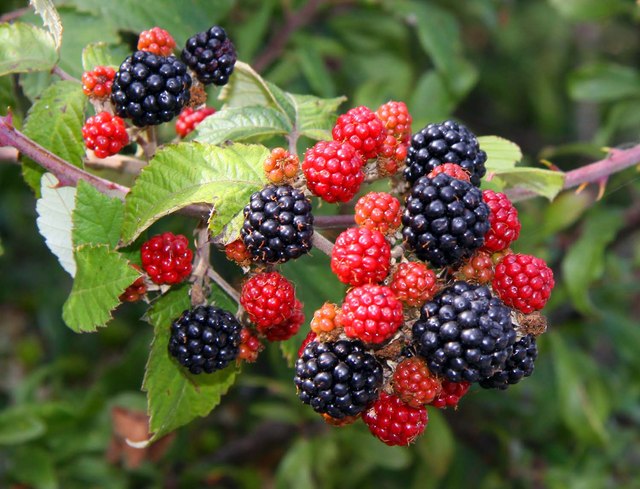
We all know local food is good for the environment as it has less far to travel form the field to your door and so less carbon is used in the process. But better than local food is local, organic(-ish?), free food. At this time of year the hedges are full of fruits and berries and a 30 second walk to the end of a family friends' field found me surrounded by blackberries, haws, rose hips and elderberries.
There's no dress code for blackberry picking but for some reason I always feel like a red woolly jumper and blue jeans are what I should be wearing, maybe it's from some childhood picture. The only really important thing is that you're wearing clothes that don't matter if they get stained by berry juice and preferably ones that are nettle and bramble resistant (it just means you get a few less stings and prickles if you're reaching into a bush for that perfect berry). My new coat stood up to the challenge and other than my hands I hardly got any prickles this year. I'm quite cavalier with my picking and will happily brush aside nettles and reach into thorny corners to get to the best of the crop, I only notice all the scratches once I'm home and I've found the best thing for those annoying little hurts is a bowl of warm to hot soapy water and a good soak.
So now, with the smell of sausages, mash and beans coming from the kitchen I'm off to cook the fruits of my labours for pudding, and then eat them!
I'm not a field kitchen professional and I'm not really sure what you can use most of these for so I stuck to blackberry harvesting which to be honest kept me and the boyfriend busy picking for quite long enough! After a while two large bowls were mostly full and we walked back to the house, slightly scrapped and prickled but happy with over 1kg of easily picked fruit.
If you have a chance over the next few weeks, go blackberrying. There's honestly no better way to spend time on a fine day in autumn (except maybe collection conkers). You can take a whole afternoon and a picnic with friends or a few minutes grabbing as many as possible before adding them to ice cream or making a smoothie at home. You don't even need to be in the country, I remember last year picking just enough blackberries from hedges on rough ground in Preston to make a crumble with some apples from a local friend, but I think country berries away from roads taste much nicer and juicier. And don't forget to look at the wildlife around you while you're picking! Today we saw a buzzard, heard songbirds in the hedges and made friends with a (not very wild) horse. Just being outside is a joy at this time of year, so take a few seconds to rest from the picking and enjoy the view.
 |
| Steve Daniels, via Wikimedia Commons [CC-BY-SA-2.0 (http://creativecommons.org/licenses/by-sa/2.0)] |
There's no dress code for blackberry picking but for some reason I always feel like a red woolly jumper and blue jeans are what I should be wearing, maybe it's from some childhood picture. The only really important thing is that you're wearing clothes that don't matter if they get stained by berry juice and preferably ones that are nettle and bramble resistant (it just means you get a few less stings and prickles if you're reaching into a bush for that perfect berry). My new coat stood up to the challenge and other than my hands I hardly got any prickles this year. I'm quite cavalier with my picking and will happily brush aside nettles and reach into thorny corners to get to the best of the crop, I only notice all the scratches once I'm home and I've found the best thing for those annoying little hurts is a bowl of warm to hot soapy water and a good soak.
Picking blackberries is enjoyable enough that I almost forget I've got the added pleasure of cooking and eating them once I get home. There's so many things you can do with autumn fruit, summer pudding is one of my favourite but a nice simple blackberry and apple pie or crumble has got to come close to top too. If you're feeling a bit less traditional you can make smoothies, ice cream or if you can't wait for them to cook just eat them as they are!
So now, with the smell of sausages, mash and beans coming from the kitchen I'm off to cook the fruits of my labours for pudding, and then eat them!
Subscribe to:
Posts (Atom)