Showing posts with label Wildlife. Show all posts

Sunday, 1 February 2015

Winter Walks

Last week turned out to be too much fun to fit a blog in! I even failed to complete my Big Garden Birdwatch. While visiting Norfolk with friends over the weekend we discovered our holiday house didn't have a garden. And it seemed rather unscientific to use the only view from the house which looked out onto The Wash. So I'll wait for next year.

The holiday did give us a chance to visit the RSPB's Titchwell reserve and enjoy the gorgeous reedbeds, a flock of avocets and more greenfinches than I've seen for years. 


This week has been another busy one, but with time for a walk along a Leicestershire canal seeing bullfinches, buzzards, redwings and black headed gulls. A cold walk but with sunshine and birdsong in the air a welcome hour.


Sothe message for this week is get out and into nature whatever the weather as winter's got some magical moments to offer!


Monday, 19 January 2015

Peddle Power

Winter can be a hard time to get outside. It's dark, it's cold and (at least in the South West) it's often wet too; not the most appealing conditions. But as much as I'd like to I can't  hibernate at home (except for the occasional glorious frosty walk) for the whole season so go outside I must.

It's a 30 minute walk for me to get to my office and an hour walk for the husband (his extra time, he reminds me, is up a massive hill too) and although it's a very pretty walk along the riverside with the chance of kingfishers, long tailed tits and cormorants we often find ourselves easily convinced to walk the five minutes up to the bus stop instead. Despite the bus having a higher top speed with waiting times and so much traffic in Exeter this journey actually isn't any quicker for  me than walking!

One week last November we realized that we hadn't walked once, in either direction. So five days ended without any exercise worth mentioning, and having spent roughly £16 (£1.60 each way) each on unnecessary transport. Enough was enough, that Saturday we visited our local Halfords and spent some of our wedding gift money on new bikes, helmets, high-visibility jackets, lights, panniers and locks. I'm very pleased with my new helmet; it's high-vis green!


I won't pretend that this was all cheap. There are some things you don't want to be stingy about (for most of the safety equipment and locks you get what you pay for) but while we took the easy option of buying everything new and off the shelf a quick Google search of "second hand bikes Exeter" reveals loads of places where starting cycling doesn't have to break the bank. See here, here or here. Also, we found that when we compared the price of bikes to how much we would be saving by not taking the bus it didn't take long before we were breaking even!

So with all this new kit and the excitement of my first brand new bike since I was ten the initial few days were easy. Speeding down the riverside looking out for wildlife we were amazed as how much quicker our journeys were. I quickly gave up taking a change of clothes to the office, as the extra 5-10 minutes it took to get changed meant I was still leaving as early as if I'd walked and after a week or two I wasn't really sweaty or out of breath enough to need to change. It only takes me 15 minutes to cycle now so we also get an extra 30 minutes each day which means more sleep and more spare time in the evenings.

Since the new year we've been tempted by the buses twice. Once due to extreme weather (so windy we were literally peddling to stay still) and once because we were going out in the evening after work and didn't fancy cycling home separately (it's hard to chat on single track paths). But that's not too bad. We're getting 30 minutes exercise most days and although cycling actually uses less calories than walking at the speeds I'm going at least I'm doing the activity rather than sitting on a bus. The fresh air makes a difference too. We've both found that cycling home helps us clear our heads, when walking or busing found us still mulling work problems over dinner.

It's not the first time I've blogged about cycling (see here and here) but I've already kept it up for longer than ever before and after two months we're both still firm bicycle fans. We've been adventuring along the local cycle routes at weekends too discovering that pubs and favourite nature spots are within easy reach and most have cycle racks which we'd never noticed before. I've even found that cycling to my local choir is quicker than sitting in evening traffic! The speed, fresh air, cheapness and small amount of exercise cycling provides all add up to a great reason to swap the bus or car for the bikes this winter, and if you can get through the winter enjoying the outside just think how good spring and summer will be!

Speaking of the seasons, this weekend is the RSPB's Big Garden Birdwatch and I'll be spending an hour with friends discovering the wildlife in a garden away from Devon. Come back next Monday to find out where we were and what we saw. Don't forget to count the birds in your garden this weekend too!


Thursday, 8 December 2011

Tweet Tweet


File:Troglodytes troglodytes -fence-8a.jpgThe Eurasian Wren (Troglodytes troglodytes) is the only wren that you will see in the UK and this little bird has always held a special place in my heart. Sacred to the Druids the wren was considered "supreme among all the birds" and in folklore it was believed that the Fairy Queen would take the form of a Wren, often known as Jenny Wren in nursery rhymes. This connection with my name is probably why I'm so fond of wrens, as I can remember being called Jenny Wren by family and getting cards with wrens on all my life. 


The RSPB's website says that "for such a small bird it has a remarkably loud voice". At 5ft 11"  small isn't a word that's been used to describe me recently but family often point out that my frequent, loud chatter means I punch above my weight when it comes to getting my voice heard, quite like the wren.

Starting this blog meant my online voice got lots louder too and I've been chattering here almost every day for two and a half months now. I hoped that writing about the environment and nature every day would make me think more about my impact on the world and help me make my life more sustainable and greener; and I think it has.

It has also made me think and learn about issues I wouldn't have done otherwise, I never used to trawl the environment sections of news websites or become hooked on environment and conservation radio programmes!

 The third thing I wanted from writing my blog was to get my voice and ideas out onto the internet and it's great to see how many people have looked at my page each day. But like the wren I want my voice to get even louder, as there are lots of other birds singing in the woods! So I've joined Twitter. I've only just started and would love some followers so please follow me @jennifercavery.

I'd love to know what you think of my blog, or if there's a topic you'd like me to write about so please comment or get in touch on twitter!

Thursday, 17 November 2011

Faithfully Green

On Tuesday I was listening to Saving Species on Radio 4. It's an interesting programme as it covers a hugely diverse range of conservation stories, both successes, current concerns and new breakthroughs. The programme I caught covered a suitably eclectic mix of stories.

The first article told the story of a bird, about the size of a sparrow, which is facing desperate times and a new project which hopes to act as a safety net. There are only a few hundred pairs of Spoon Billed Sandpipers left in the wild and these numbers are declining year by year. This week a group of these beautiful birds have been brought to the Wildfowl and Wetland Trust headquarters in Slimbridge as the start of a captive breeding project. To read more about this incredible story have a look at my Dad's blog from Tuesday.

The second story was about a conference this week in Assisi, Rome (home town of the patron saint of the environment, St Francis). This was a unique meeting of worth faiths and the conservation community with the aim to inspire each other and discuss new ways of working together to protect and help the natural world. Great to see that people from very different backgrounds and beliefs can all work together towards one aim of a saver environment and better future for the next generation. The conference was organised by ARC the Alliance of Religions and Conservation.

Tony Juniper (previously CEO of Friends of the Earth and now special advisor to the Prince of Wales' Rainforest Project) talked about the combined power and potential of the world faith groups. The implication was of a new strong force to counter the current economic lobby of bigger, better growth at any cost.

It's true that when I think about it there are always a huge number of religious groups at the environment protests and marches I've been to in the past. And why not? Most world faiths have teachings of harmony with nature and a guardianship of the environment we have been given.

The conference launched the new Green Pilgrimage Network, supporting and promoting environmentally friendly ways to carry out religious pilgrimages across faiths and throughout the world. One example city is Amritsar, Punjab, India, home to the most sacred place in the Sikh faith, the Golden Temple, Harmandir Sahib.  Some of the steps the city has taken to meet the needs of the Network are to only supply organic and pesticide free food for pilgrims, to provide clean tap water removing the need to buy and carry plastic water bottles and they have also banned plastic bags. Impressive steps, even more so when you consider that 30 million visit the site on pilgrimage each year.

Another couple of points of interest in the programme were that it's National Tree Week soon and that the ispot project is still running. More on both of these in the coming weeks.


Wednesday, 16 November 2011

Walking The Walk Again

Yesterday I finally managed to go for a walk along my usual patch of the canal again. My resolution to go every week has lapsed recently but it was great to get out and see how things have been changing over autumn.


As you can see from the photos the leaves have almost all fallen now and with the morning sun behind me on the walk out there was a definite feel of winter in the air. Despite this, even in mid November there are still flowers in amongst the hedges. A welsh poppy and some purple and pink flowers that have been there since I moved here in early September. It's nice to be reminded that even in the season we associate with decay and winding down new shoots and petals are pushing through.

The canal path was busy yesterday, with lots of dog walkers and joggers as well as a man fishing patiently. I wish I'd stopped to ask him what he normally catches. I've only ever seen one fish in the canal, a pike last spring, but there must be lots of fish in there. Unlike the fish the birds were easy to spot. Still in their morning flurry of activity there was lots of birdsong and I easily spotted most of my normal species. Pigeon (always the first one as they live under the bridge I walk down to the canal by), sparrow, great tit, black headed gull, mallard duck, moor hen, swan, as well as the more unusual blackbird, starling and pied wagtail.


Almost all the berries have gone from the hedges now and the sparrows are hooked on the bird feeder in the garden. They're still only eating from one of the two seed feeders though, it's definitely their favourite.

Sunday, 13 November 2011

Eggcelent Choice

I am proud of my farming heritage. My grandparents owned a small dairy farm in rural Northamptonshire and now my aunt and uncle run an organic egg farm only a couple of villages over. I always feel a link back to the countryside and the farming landscape even though I have no day to day experience of it. I didn't grow up on a farm but I have many happy memories of playing in the fields and "helping" with the farm chores when I was little and visiting, although I doubt how much actual help we were when feeding the lambs or herding the cattle.

Farming is a hard profession, even more so now that supermarkets are trying to push down prices for customers which often means pushing down profits for the farmers not the shops. During my lifetime, partly to cope with this, farming has become much more industrial with the use of chemicals, fertilisers, antibiotics and intensive methods. This often means bad news for wildlife and the environment as intensive methods and chemicals push wildlife out to the very edges of the countryside. I've talked about Fairtrade and the benefits for the environment and farmers that paying a fair price has but haven't yet talked about organic farming and the benefits this has in this country and abroad.

The Soil Association is the main certification body for organic farming in the U.K. For farms to be organic they must satisfy strict standards:

  • Artificial chemicals are prohibited
  • Pesticides are strictly restricted
  • Animal welfare is at the heart of farming with a truly free-range life for animals
  • Diversity and rotation of crops and animals allows the soil time to recover and prevents the build up of pests and diseases in the soil
  • The routine use of drugs, antibiotics and wormers is banned
  • The use of genetically modified crops and ingredients is banned

I always get my eggs from my uncle and aunts farm, this sometimes means travelling by train with a rucksack containing a dozen eggs but normally they survive the trip. When they first started farming organic eggs it was amazing to see the contrast with the normal shop bought eggs. Not only do they last much longer (because we get them straight from the farm which makes them about two weeks fresher than buying them in the shops) but their colour, taste and size is different.

Organic, free-range eggs have a much deeper colour and taste, well, more eggy than battery farmed eggs. The yolks are the colour of oranges rather than the pale yellow of primroses. Also, shops want standard size eggs and this hasn't yet been communicated down to the chickens. Because of this we often get the too big or too small eggs that can't be sold in shops. When a new batch of hens comes to the farm they often start by laying double or triple yolk eggs (I've no idea why) and so these eggs are much too big for the shops so we get them. My university friends were amazed by double yolk eggs and I hadn't realised this was an uncommon thing. It can make cake making tricky but an extra yolk in scrambled eggs is a brilliant treat.

Organic farms must adhere to strict welfare conditions and the hens have freedom to roam the fields during daylight and are put away to bed in large sheds when night falls to protect them from foxes and other predators. It's quite amazing to see thousands of hens wandering around in a field but they do look quite happy-as happy as hens can look.

Because pesticides, chemicals and antibiotics are restricted or banned on organic farms the soil and natural environment has time to recover and bloom. Farmers are encouraged to incorporate wildlife friendly schemes into their farms which helps to bring back the balance between nature and farming which is needed to get the full potential out of organic farming.

There are of course downsides to organic farming. It takes up more land, sometimes uses more energy (battery farming is unethical but very energy efficient) and water and doesn't always produce as high yields as intensive farming but the benefits of yummier food, happier animals and better environment must surely be worth something.

How organic farming is used globally and the more general impacts, pros and cons it has are discussions for another blog. For now I'm off to enjoy some bright yellow scrambled eggs! Have a nice Sunday and if you're ever in Waitrose why not try the Organic Free-range Columbian Blacktail eggs, you might even be eating some from my relatives farm!

Monday, 7 November 2011

Stamp collecting

I have a tendency to hoard things, whether it is a small plateful of leftover vegetables, old worn out jeans or jam jars. But the pots of used stamps that have always been present in my home have nothing to do with my hoarding nature. As far as I'm concerned stamps cannot be thrown away under any circumstance, that's just how I've grown up. Stamps go in the stamps pot-that is their home. For years I didn't even questions why this happened, or where the stamps went when, periodically, the pot became empty. The answer is not that we are a family of philatelists (although family tell me Dad dabbled in this before catching the bird watching bug!) but, as it often does, comes back to environmental concerns.

 I've been watching the BBC's new series Frozen Planet and this week it featured some gorgeous shots of the Wandering Albatross. These birds are some of the heaviest flying birds in the world reaching 10kg and (along with the Royal Albatross) have the biggest wingspan of 3.5 meters (11ft). I'm quite a tall person at 5ft 11" but that means I'm only just taller than one wing of these huge birds. 

There are so many other amazing facts about albatrosses that I couldn't possibly cover them all here. For example: they only land to breed, with young flying at sea for 5 years before touching ground again, they have developed intricate gliding skills so that they almost never have to flap to keep aflight and they can cover distances of 10,000km in only 10-20 days.

There are 22 species of albatross and they live in every ocean, except the North Atlantic, in the world. Most breed in the southern hemisphere, with three favouring the North Pacific and one on the equator. Unfortunately 10 species are endangered or critically endangered with all the other species either vulnerable or near threatened according to the International Union for Conservation of Nature Red List. In fact this means that 18 out of the 22 are seen to be at serious risk of extinction. There are many threats to the various types of albatross. The normal threats that affect almost all sealife such as floating plastic rubbish, pollution and climate change are important but there are also problems from introduced predators and various types of fishing. Longlined fishing involves (unsurprisingly) long lines of fishing line with hooks all along it. Problems arise when the hooks are visible from the air and albatrosses get hooked and killed. Trawling also kills a huge number of birds sometimes being caught in nets but also hitting the cables on the ships. The death rate of albatrosses has reached such a level that the birds can't reproduce quickly enough to sustain the population.

So, this is all very bad but what can be done to save these beautiful birds and how does any of this relate to the stamps? Solutions are simpler than you may think. Attaching "scare lines" (a curtain of plastic streamers) to boats, sinking the hooks deeper in the water and dying the bait blue are all simple ways to deter albatrosses and the Albatross Task Force has been working hard on the open sea to educate fishermen of the dangers and solutions. Many fishermen are really happy to make these simple changes once they are aware of the problem and the group have seen huge success over the past few years.

The RSPB are working closely with the Task Force and you can help support them. To join the fight to save albatrosses you could make a donation, buy albatross postcards or cuddly toys or, like me, save your stamps. While individually a used second class stamp doesn't have much value by collecting all our used stamps together and selling them on the RSPB raised £15,000 last year for the albatross campaign. Only £50 worth of stamps will buy a tori-line (scare line) for a long line fishing vessel.

It's little by little but to save these huge beautiful birds I'll keep saving my stamps and sending them to the RSPBs campaign address. And the odd looks from visitors when they find my piles of stamps are a great excuses for me to educate them to the albatrosses plight and hopefully spread the collecting bug.

Sunday, 6 November 2011

A Family Affair

When I started this blog I wanted to write about my life, nature and how both impact upon the environment. I wasn't sure where to start but luckily there's a book with tips and ideas for exactly this - Blogging For Nature conveniently written by my Dad, Mark Avery (look at his website if you want to buy a copy!).

I've read Dad's blog since he started writing it and it's been an education in environment and conservation issues, as well as a good way to find out what he'd been up to while I was at university. My friends started reading it which was fine until they started telling me about the day's blog before I'd even started breakfast! Today, Dad's blog is about other interesting blogs, including mine, so thanks Dad!

This week I'll be writing about Albatrosses, Buglife, the Duke of Edinburgh Award, Eggs and I'll be back on my weekly walk in Preston and looking through this week's new veg box. If you've just discovered my blog, via Dad's link or just by chance, thanks for reading and I hope you come back and read more. Please leave a comment as I'd love to hear your views on my blog and the things I'm writing about.


Saturday, 5 November 2011

Remember, Remember

I don't know how many countries celebrate the failure of a terrorist attack 400 years after it was meant to have happened, but being partial to fireworks I'm quite please the U.K. does. Fireworks night (aka Guy Fawkes night, Bonfire night and 5th November) has lost a lot of its original themes of anti-Catholicism, class confrontations and nationalism. Nowadays it's all about the brightness and being so close to other festivals of lights, such as Diwali, it's common for  fireworks to start mid October and continue until mid November.

Over the last five years, as well as the traditional fireworks, new lights have appeared on the horizon, those of Chinese lanterns. You've almost certainly seen them in the nights sky, points of orange light floating across the skyline. What they actually are is paper/plastic boxes with a tiny tea light heating the air inside the box and lifting it up into the sky. These little lights are really beautiful and it's lovely to see them slowly floating across the sky, sometimes up to 30 miles. They're pretty cheap too at about £2 each.

But (there always seems to be a but with good things) don't let the pretty lights dazzle you into missing the large risks and dangers associated with the lanterns. Last year, while watching lanterns at a family fireworks party, a three year old boy was seriously injured when part of a melted lantern fell onto his face.  Everyone knows the dangers of fireworks but the dangers of these new lanterns are less well know.

As well as possible injuries there are also risks to the environment, farm animals and emergency services. There have been several wild fires attributed to the lanterns over the last few years and also fires on farm, hay barns and injury to livestock. Many of the lanterns are now said to be biodegradable, but people seem sceptical about this and I always wonder how long they take to degrade, even if they do so. Wild fires will damage natural habitats and impact upon unsuspecting animals while the hot wire from fallen lanterns lies in wait for small unsuspecting paws.

There are less obvious problems for the emergency services with these lanterns. Between 1st October 2009 and 30th September 2010 there were 128 false alerts to the Maratime and Coastguard Agency attributed to Chinese lanterns. People see the lanterns out at sea and mistaken for parachute signal flares and so the emergency services are called. On 26 occasions lifeboats were launched and on two occasion helicopters mobilised. 

There are calls for a ban on Chinese lanterns or at least limiting them to certain times of year. I'm sure there are negative environmental impacts of fireworks too, even if its just the hundreds of cardboard and plastic shells that fall to the ground once they've been lit.

Whatever you're doing this weekend, remember to wrap up warm and keep safe. Also, if you're having a bonfire check it for hedgehogs before you lights it! They love the big piles of leaves and sticks as a warm place to hibernate.

Thursday, 3 November 2011

Watch


Yesterday I got some exciting post I'd been looking forward to for a few weeks. My Wildlife Watch Leader Pack arrived!

Wildlife Watch is the junior branch of the Wildlife Trusts. Children of any age can join but it's normally aimed at 8 years and above. When I was younger I was a member and really enjoyed learning about wildlife at the once a month meetings. Particular highlights were seeing slow worms, pond dipping and eating home made flapjacks made by our enthusiastic leader Rupert (who I'm pleased to see on the website is still running my old group). There are now also Greenwatch groups which are aimed at older members (12+) which allow young people to work on conservation projects and surveys to gain a deeper understanding of wildlife and nature.

My Mum is a Watch Leader and I've helped out at a few meetings in the past. It was partly this experience that made me sign up to become a leader when I moved to Preston, but also because I loved being a Young Leader at Scouts and other environmental education projects I've volunteered with.

It was very easy to become a leader. I went to a meeting to check I enjoyed helping, filled in a few forms and completed a CRB check (which came back in 24 hours, a personal record!). So now, about a month later, I am officially a Wildlife Watch Leader and will be helping to run the Preston Peregrines group for two hours once a month (although I'll be doing more than two hours work for it!).

My pack arrived with a CD of the essential guide to running a Watch group, a recent copy of the Watch magazine, and a copy of LINK the magazine for leaders filled with tips and ideas for running educational and fun meetings.

I'm really looking forward to starting as a leader and I hope I can make the meetings as fun and memorable as mine were. Teaching young people about nature and wildlife is essential if future generations are to protect and understand these valuable resources properly.

Saturday, 29 October 2011

Feed the Birds Day

Today is the RSPB's Feed the Birds Day, where they ask everyone to put food out for garden birds. Bird feeders are important all year round in urban areas but they're particularly important when wild seeds and insects are hardest to find during the winter months. My bird feeders are nice and full in the garden this weekend. I haven't seen many other bird feeders in the area but maybe there will be more after today!

Have a look at the RSPB's website for more information on feeding the birds in your garden and identifying what turns up. You could even have fun making bird cakes to hang up outside- a great activity for kids at the end of half term week.

Why not let me know what you saw on your bird feeders this weekend? I'm expecting sparrows and not a lot else but maybe I'll be surprised.

Saturday, 22 October 2011

Reserved

This week I've visited two nature reserves owned or managed by the Wildlife Trust for Lancashire, Manchester and North Merseyside. I've begun volunteering with the Trust's education and outreach department and so far I've been a Viking for the day and also helped with a survival day, learning how to build shelters and fires in the wild.

Both days were great fun (more about what I actually got up to later in the week) and I'm sure part of it was having the activities in such wonderful surroundings. My Viking experience was run on Booth's Plantation, near the Trust's Education Centre in Penwortham. The plantation is lovely thick woodland, well sheltered and far enough away from roads to feel like you really might have travelled back into Viking times- except for the large substation on the hill behind! Due to funding cuts (both for the Wildlife Trust and the National Grid who owns the land) this was the last event to be held at the Education Centre and Booth's Plantation. This is really sad as the Centre has been built up over 15 years with orchards, allotment plots and  beautifully painted classrooms with pictures of nature everywhere. The care and passion that has gone into producing such a wonderful asset is obvious and it must be devastating for those who work there to have to leave it all behind.

But leave it they must and move to their new reserve which will be the Trust's base at Brockholes. I haven't visited this site yet but hopefully I will soon, anywhere with a name that means "badger holes" in Old English has got to be a good place to protect wildlife!

The survival day I helped with was at Mere Sands Wood reserve which has a huge diversity of habitats from around Lancashire, including heaths, woodland, lakes and marsh. We worked in the deciduous woodland and while rain threatened all day it held off mostly. It was great to be out in the fresh air and nature and I'm looking forward to visiting the reserve again soon to have a proper look round all of the 105 acres.

With a chill in the air Autumn is a brilliant time to get out and warm up with a walk. Where's your nearest nature reserve? Why not find out this weekend and visit it, or if you already know it visit somewhere you've never been to before. That reminds me that I really need to go for my weekly walk before the weeks over!


Thursday, 20 October 2011

I'm Back!

After a week offline I'm back! Lots has happened in the last week and I'll be talking about some of it over the next few days. I'll have updates on my veg box ventures and my weekly walks, why I was dressed as a Viking for a day and recent environment news.

Suddenly Autumn seems to have really arrived. With the first frost last night and the clocks changing in just over a week the nights are feeling a lot longer and darker. The heating has come on at home as we need somewhere warm enough to dry clothes. The occasional sunny days are enough most of the time but when washing stays wet for days inside something needs to be done. Our lights are on more now too and since the weekend all our bulbs are energy saving, saving us money and fossil fuels.

As I've said before while we're tucked up in ever warmer houses the wildlife outside has to find other ways to cope with the onset of winter. The sparrows in the garden are at the feeders constantly and I'm going to give them all a good clean and make sure they're filled before the RSPB's Feed The Birds Day on the 29th.

Tuesday, 11 October 2011

Flowers in the Rain

I managed to find almost an hour of no rain yesterday for my walk. It was still very damp and dreary but nice to be out in the fresh air. Now it's part of my routine it's easy going out for a walk but the trickier thing is remembering to take my headphones out. When I remembered yesterday there wasn't much to hear other than the wind in the trees. Occasionally I heard sparrows but there were very well hidden, hopefully in the middle of nice dry hedges.

It wasn't just the sparrows hiding from the rain. I saw my usual pigeons and mallard ducks but even they were sheltering under branches and reeds. There were moor hens, which were quite happily bobbing around on the canal, and I saw my first blackbird on my weekly walk. In fact there were two blackbirds, chasing a pigeon for some reason. The black headed gulls were numerous overhead but noticeably quiet, it was one of those days where everything feels muffled.
The most exciting bird was right at the end of my walk. Just before leaving the canal I saw a grey wagtail! These birds are really pretty, grey on top with a very long tail and a yellow tummy. This yellow tummy always makes me think they should be called yellow wagtails but looking at their pictures on the RSPB website the one I saw really was more grey.
I didn't think I'd seen many birds but now I've written it down it doesn't seem too bad!

There were less people around because of the rain too. Normally I see about 6 people or couples out for leisurely walks but yesterday there were 3 very quick dog walkers trying to get home as fast as possible. Once I was actually out in the cold and wet it wasn't too bad but after the heat wave of a few weeks ago it's definitely Autumn here in Preston with warm coats and scarves all round.

Despite being October there are still lots of flowers out along the canal. Mostly pinks and purples but also yellows and whites. I took some photo's of them so I could identify them at home. Here are my attempts (from left to right, top to bottom), if you can fill in my blanks or if you think I've got any wrong please let me know!
Welsh Poppy, Dandelion, Hedge Bindweed, unknown, Spear Thistle, Herb Robert, Himalayan Balsam, Some type of Hawkweed?, unknown, unknown.


After a week of strong winds across the country I expected almost all the leaves to have been blown off by now but there is still a surprising amount of green on the trees. The pond weed has also grown back on the canal so it's green too at the moment! Here are my pictures from the top of the canal from the last few weeks.

Week 3

Week 2
Week 1


Saturday, 8 October 2011

A Long Way For A Drink

How far would you go for a good bottle of wine? Even if you buy wine from across the street the chances are that the bottle and contents have had a long journey to your door.

English wine, although getting more common, isn't a mainstream product just yet. The English wines I've tried are delicious but it's not always easy to find them in your local supermarket. Wine from some of our nearest neighbours, France, Spain and Germany, are common in our shops though as well as bottles from further a field such as Australia, Chile and South Africa.

If we're trying to live more sustainable lives isn't it a contradiction to only buy local food but to buy wine from the other side of the planet? Following this line of thought I tend to automatically buy wines from France and Spain, ruling out wines from other countries even if they're Faritrade (more on that later). I always thought this must be better for the environment but after looking into it a bit more I'm not so sure. After reading an article on the carbon footprint of wines, here, I realised, as with food, it matters much more how the wine travels to my glass not always from where.

Only around 2% of the environmental impact of food comes from it's transportation but this figure could be as high as 34% for wine. A new initiative is to bulk ship wines and then bottle at the location of sale. For countries such as Australia this could reduce the carbon emissions of wine transport by 40%. This is great for large brands but impractical for small producers. 

Once bottled it's also important to look at how the wine is transported. It's been calculated that a bottle of wine from Chile, shipped by sea container from Valparaiso to Felixstowe and then by road to Bristol uses about 318g of CO2. This is hard to comprehend but when I read that the average car uses 170g CO2 per kilometre it puts it into perspective. Wine from Spain and France may be shipped but may also be brought by truck which will have a higher carbon footprint. The real problem for most buyers who are trying to be ethical is there's no way of knowing exactly how the wine got to this country. I don't know if anything is being done about this at the moment but I'll definitely look at wines from further away more closely now as I can pretty much guarantee they'll have been shipped in.

Fairtrade was mentioned earlier. I'm almost addicted to the Faritrade logo, and if I see it on a product I automatically want to buy it, even if it's something I don't need. You often see the logo on wine from countries outside Europe such as Chile or Argentina or South Africa. Now I've stopped ruling these wines out I'll definitely pick more Fairtrade bottles up in the shops. The reason Fairtrade isn't used in all countries is because it's mainly a way of helping growers in developing countries. In Europe we already have minimum wage and employment laws to protect workers but other places don't have the same protection. As with all Fairtrade products the farms must pursue sustainable growing techniques, minimise use of chemicals, pay a fair wage and help support local community and social development.

So to round up the past few wine filled days: I'll definitely stick to picking wines which use corks (to help the wildlife I talked about yesterday) but I'll look more at wines from countries further away than Europe as they might not have higher travel emissions. If I do buy wine from developing countries I'll always buy Fairtrade so I know that my money goes to the farmers and also supports sustainable development.

Friday, 7 October 2011

Thirst For Knowledge


No veg box yesterday as we haven't finish all the veg from last week! Instead of food I'm thinking about drinks. Today I'm off to a fancy dress party. I'm no wine expert but there's so much choice that surely there's an environmentally friendly option I can find. As well as taste and price there are several key things I look for in a good bottle, but having researched it a little harder some things aren't as simple as I first thought. Over the next two days I'll look at a few of the environmental issues connected to wine.

The first thing I look at is what's in the top of my bottle. In the past 20 years there's been a huge expansion in the number of products used for bottle closure. Before I was born cork was used almost exclusively, and that cork was produced just as exclusively from countries on the Mediterranean, mostly Spain and Portugal. Nowadays screw caps, plastic corks and glass stoppers are easy to find on the shelves so is one better than another and why the sudden change?

Cork monopolised the market for centuries but about 20 years ago scientists discovered TCA, a chemical which taints wine and causes it to go off. TCA is estimated to be in 1-10% of corks and currently cannot be identified before the cork is put into the bottle, you only know it's there when the wine goes off. This problem forced producers to start looking for other ways to seal their bottles.

The most common alternatives are plastic corks and screw tops. Screw tops have the added advantage that you can easily reseal the bottle if you only want a glass so is seen as better than cork for reasons other than a lack of TCA. Plastic corks are designed to look, feel and pop like natural corks. I hate plastic corks. Something about the very fake, plastic feel puts me off, especially when it's set against the almost natural feel of the glass wine bottle. I also can't help thinking that making plastic corks isn't the best use of the world's limited oil resources.

So I don't mind screw tops and I hate plastic, but is there any environmental reason for picking one type
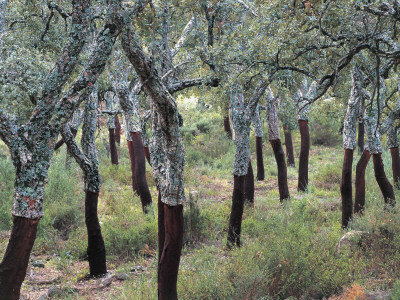
over another. Other than the fact that cork is renewable while metal screw tops and plastic corks aren't there's also another benefit of using cork. The cork oak forests in Spain and Portugal are facing serious danger since the cork percentage of the closure market dropped. The cork oaks of southern Spain are rich in insects, birds, mammals and plants as the production of cork is naturally kind to the surrounding environment. Cork is the stripped bark from the oak trees and this must be done carefully to preserve the trees health. This means that the trees are left safe for wildlife to use while cork can be harvested for decades without ill effects. With a drop in cork demand these ancient forests might be lost forever if the land use is forced to change and with it we could lose the Iberian Lynx, the Iberian Imperial Eagle and the Barbary Deer.
Having seen this beautiful, rare environment in the past I know it's worth protecting so I'm going to try and buy cork wine whenever I can. But is it environmentally friendly to ship cork out to countries that don't produce it themselves, or is it better for Chilean and Australian wines to use screw tops? More on this tomorrow.

Spanish cork oaks. The dark lower trunk had already had it's cork stripped.

Thursday, 6 October 2011

Buzzing Around

What's black, yellow and good for the garden?

Wasps! If you said bees then you can have half marks. It's well known that bees are great at pollinating our gardens but wasps do this and more. Adult Common wasps eat nectar from flowers, pollinating as they go, but also kill pests, such as aphids and caterpillars, for the wasp larvae to eat.

Until last week I didn't know much about wasps, but then I started volunteering for Buglife. This small but perfectly formed charity is the first in Europe devoted to the conservation of invertebrates including insects, spiders and snails. As part of my volunteering I wrote this months Bug of the Month on the Common wasp, which is now on their website here.

While writing the article I discovered loads of fascinating new facts about wasps. Did you know that in the Midlands they're nicknamed jaspers, either because of the Latin for wasp being vespa or after their similarity to the striped mineral jasper?

Did you also know that at this time of year wasps are more likely to go for your crisps than your fizzy drinks? Earlier in the summer there are lots of larvae which the wasps tend to. While this is happening the adult wasps get small droplets of sugar water from the larvae, which helps sustain them. At this time of year there are hardly any young left and so the adults must find other ways of getting their sugars and carbohydrates. Crisps and fruit are great for this and so wasps are commonly found on fallen fruit or trying to get into carbohydrate rich foods during the Autumn.

There are also more wasps around at this time of year too. The numbers steadily grown throughout the summer, from when the nests are built in spring to now when their completely full and can hold up to 10,000 wasps each.

For more information on wasps and all other insects go the the Buglife website!

Monday, 3 October 2011

Falling Leaves

I can't believe how fast this week has gone! It's Monday again and I went for my weekly canal walk. I was lucky with the weather again too. Even though it had been raining all morning by the time I went out at 2:30pm it was a sunny day, although quite windy.

The wind was blowing lots of leaves out of the trees and the canal was almost covered with them in places. Most are still green but they're slowly turning yellow and some lovely oranges and reds. It's amazing how many different shapes and colours the leaves can be. Another colourful sight was all the wild flowers that are still out. Maybe it was last week's warm weather but I'm amazed how many flowers are still in bloom, even though it's October now! I saw three different types of purple flowers (the Himalayan Balsam I talked about last week is still there) and some white ones too.

There was still lots of birdsong all around but I think the birds must have been hiding today as I didn't actually see many. I did see mallard ducks, moorhens and pigeons and I'm sure some of the birds singing were sparrows but that was it.

Four red admirals on the ivy-can you see them all?
Even though it was windy there were other things flying around. I paused by a large ivy bush and noticed lots and lots of hoverflies moving from flower to flower. I shouldn't have been so surprised as I'd recently read September's Bug of the Month on the Buglife website, which is all about the golden hoverfly and it's fondness for ivy at this time of year. More on Buglife later in the week.
To my surprise, as well as the hoverflies, there were about six red admiral butterflies on the ivy. These big butterflies are really beautiful-although a few today looked quite tatty and might have survived a fight with a hungry bird at some point. When I looked them up on Butterfly Conservation's great website I discovered that red admirals are actual migrants. Last week I was impressed that house martins fly from Africa, I'm much more impressed that some of these butterflies do too!

As a walked back along the canal I tried to see whether anything had changed in the past week. There were definitely more fallen leaves and those in the trees still are definitely changing colour. It wasn't as warm and there were lots more berries on the hedges. I saw blackberries, haws, hips, sloes and plums, all just out of reach annoyingly. On the left below are pictures from last week and on the right are today's. Can you see any big differences? I can't get but I'm sure I will as the weeks go on.
Week 1
Week 2


Week 1
Week 2

Thursday, 29 September 2011

Planning Ahead

The biggest environmental news story in the past month has definitely been about planning. Way back in July the UK government  released a draft National Planning Policy Framework (NPPF) which outlined proposed changes to planning policy. Since then environmental NGOs have repeatedly raised concerns over the new plans and over the last two weeks a row has broken out, mainly between the National Trust and the Government but other NGOs have been getting involved too.
So what is it all about?
First let look at what the changes actually say. The current system tells local authorities to oppose any development that damages sites of particular environmental or scientific importance. This includes sites protected by UK, European or international laws (e.g. SSSIs, protected species, protected habitat). The only way this sort of development can be approved is if the site isn't specifically protected under law already (if it is you really can't damage it) AND if the benefits of the development outweigh the negative impacts it will have. That seems like a pretty sensible system. You must prove that you won't damage the environment, and if you do the benefits are much much better than the damage.
The new NPPF now puts much more emphasis on the importance of economic growth. It says that local authorities should support developments "unless the adverse impacts of allowing the development would significantly and demonstrably outweigh the benefits". Now this sounds quite similar to above, if the damage is greater than the benefits then you can't build, but it's more subtle than that. I read a good explanation on another blog, the difference between the old and the new policy is the difference between innocent until proven guilty and guilty until proven innocent.
This is a HUGELY simplified version of the debate. There is lots of case-law, legislation and previous protection to be taken into account and how the policy will be used will vary from place to place so it's not simple. But the above seems to be the key issue people are fighting about.
Now, whose actually fighting and on which side?
On the Yes side: The Government (Bob Neil the minister for Communities and Local Government, George Osbourne, Eric Pickles and even David Cameron have all spoken on the issue) and some developers and business (although I can't find any specific names anywhere on the internet at the time of writing!)On the NO side: Environmental NGOs (The National Trust in particular as well as RSPB, Woodland Trust, Friends of the Earth, Buglife and others) and the lobbying group 38degrees.
This gives quite a clear image of whose fighting for which issue. Those saying yes are looking to improve the economy first and worry about environmental sustainability second. George Osbourne even said “No one should underestimate our determination to win this battle.” While the environment charities are doing what it's their job to do- raise awareness of possible threats to our ecosystems, wildlife and environment that doesn't have a voice of its own. And to be honest, the seem to be making their points a lot more calmly and rational than government.
Both environment NGOs and business are fighting for their specific interests, but surely government shouldn't be fighting. Government should be listening to all sides then deciding what's best for the country, both in the short and long term. Yes, that might mean arguing point out with people but not actively going out to fight specific groups.
This one blog doesn't contain enough information to draw conclusions about the new planning policy. If you want more information have a look at this, this, this and thisThere are several campaigns and petitions you can sign if you want changes to the current proposals. You can find them here and here. Also there is the official government consultation website here. Get involved and have your say, either on this blog, oen of the petitions or the government site.

Monday, 26 September 2011

Stop, Look, Listen

When I'm bored the first thing I normally do is turn the TV on, even when there's nothing in particular I want to watch. Watching the TV when I'm on autopilot can't be good for me and definitely isn't good for the environment. It's a habit I'm trying to break, replacing it with different habits. I'm swapping one hour of TV a week for a walk along my local canal. I'm going to try and really pay attention to where I'm going, what I hear and what I see, rather than wandering along wrapped up in my own thoughts.

Walking is great. It's good exercise, can reduce the risk of some cancers and helps with metal health too. In 2007, Mind (the mental health charity) carried out studies into how walking affects people. After a country walk 94% of people felt their mental health had improved. The study also showed that walking around a town or city shopping area tends to depress people. So walking through nature is a free way to improve fitness, health and mental well being. Fantastic! Definitely sounds better than sitting in front of the TV not watching. Don't forget that even in big cities you can always find tiny pockets of green in parks or along rivers or canals.


I started today. As soon as I got down to the canal the sound of traffic lessened and the sounds of pigeons and sparrows surrounded me. The canal still looks quite summery, especially today when it was sunny and warm. On my walk, as well as sparrows and pigeons, I saw mallard ducks, moor hens, swans and signets, long tailed tits, coal tits, a blue tit, a spider, two white butterflies and a dragonfly. All within a short walk of my city house.

Not having my headphones in (another habit I'm trying to break) also meant I heard far more than normal. Walking past hedges I heard birds cheeping an so I stopped and looked. Doing this helped me find lots more birds and pausing on the bridge to actually look at where I'd walked and was going meant I stayed still enough to see the butterflies and dragonfly.

Other than birds, spiders and insects I also looked at the plants around me. I found blackberries (almost all picked or under ripe), oak trees, haws (the lovely red berries from hawthorn trees!) and also lots of Himalayan Balsam. This last one is also know as Policeman's Helmet and Kiss-me-on-the-mountain, it's an invasive non-native weed in the UK. It has very sweet, strong smelling flowers which are a beautiful purpley pink. You'll have seen it around rivers or boggy ground but did you know their seed pods explode? I didn't. This plant has swept across the UK and is out competing other, native, species, which isn't great for them. One positive, however, is that bees really like the flowers and it seems to be helping increase the dangerously low UK bee population.


At the moment going for an hour walk is easy. The weather's still quite mild, it's nice and light and it wasn't raining today. It will get harder, I'll be much less enthusiastic when it's dark, rainy and cold in November. But starting now will hopefully mean it's a habit by then and that will make it easier. One thing I'm particularly interested in is how familiar places change over the seasons. Each week I'll take a photo of the canal to capture how it changes as the months pass.

What's around the corner near you? Comment and let me know!