Today I've been having a bit of a winter clear out and tidy up. It's good to get the house tidy and in order before filling it with decorations and, a little later, nice new presents. During my tidying I found lots of environment and conservation leaflets I've collected from various places over the last few months and it's given me a new sense of enthusiasm.
In particular, I rediscovered the Book of Green which I found in the Beautiful Planet cafe in Preston. This little book is free and is an "eco-living directory" full of companies and products that are ethical or environmentally friendly. The book comes out once a year and has been running since 2006; it's also online here.
Looking through, the book is split up into sections including Food and Drink, Travel and Leisure, Green Child and Business Services. It's a great resource to flick through for ideas and having it all collected together makes it easier to fight the urge to just take the easy option when buying things and forget the environmental impacts (both direct and indirect).
The clothing and jewellery pages are filling my mind with thoughts of post-Christmas shopping while the Eco-builds section makes me think wistfully of future dream homes full of eco-friendly gagets and powered by renewable energy. It's going to be a good source of ideas for Christmas presents for friends and family too, although I'm still busy with crafting home made gifts most evenings-hopefully they'll be done before the big day!
Why not have a look at the Book of Green online and see if it sparks and ideas for last minute presents for you?
Showing posts with label Eco-friendly. Show all posts
Showing posts with label Eco-friendly. Show all posts
Friday, 9 December 2011

Saturday, 12 November 2011
Fair Cities
I've lived in two cities in my life and by chance both have been certified Fairtrade Cities. As much as I like the idea this doesn't mean their ingredients all satisfy high environmental and ethical standards but that as a community the city has signed up to support the Fairtrade movement.
Preston gained it's Fairtrade status in 2004. To do this the businesses, residents, schools and colleges all signed up to help end world poverty by promoting, buying and selling Fairtrade products. There are five criteria that must be met, these are:
Preston gained it's Fairtrade status in 2004. To do this the businesses, residents, schools and colleges all signed up to help end world poverty by promoting, buying and selling Fairtrade products. There are five criteria that must be met, these are:
- Council: Local council passes a resolution supporting Fairtrade and serves Fairtrade products whenever possible.
- Commerce: A range of Fairtrade products are available from local retail outlets (the number is determined by how big the city/town is).
- Community: Local workspaces and community groups support Fairtrade and use Fairtrate products whenever possible.
- Common consensus: Media coverage and events raise awareness and understanding of Fairtrade across the community.
- Captains: A local Fairtrade steering group is convened to ensure the Fairtrade campaigns continue to develop and gain new support.
Other than the sign as you enter Preston I hadn't really thought much about its Fairtrade status. I know there are several ethical produce shops in the centre but I haven't seen much else advertised. An additional requirement for Fairtrade cities is that they have a Fairtrade Directory. I've just found the one for Preston and as well as the supermarkets and cafes I already know about there are lots more to seek out and try.
There are lots of Fairtrade Towns and Cities around the country. Why not look up your nearest and find out about campaigns and activities near you? Or if you don't have one near by look for the shops and groups that support Fairtrade where you live.
Sunday, 6 November 2011
A Family Affair
When I started this blog I wanted to write about my life, nature and how both impact upon the environment. I wasn't sure where to start but luckily there's a book with tips and ideas for exactly this - Blogging For Nature conveniently written by my Dad, Mark Avery (look at his website if you want to buy a copy!).
I've read Dad's blog since he started writing it and it's been an education in environment and conservation issues, as well as a good way to find out what he'd been up to while I was at university. My friends started reading it which was fine until they started telling me about the day's blog before I'd even started breakfast! Today, Dad's blog is about other interesting blogs, including mine, so thanks Dad!
This week I'll be writing about Albatrosses, Buglife, the Duke of Edinburgh Award, Eggs and I'll be back on my weekly walk in Preston and looking through this week's new veg box. If you've just discovered my blog, via Dad's link or just by chance, thanks for reading and I hope you come back and read more. Please leave a comment as I'd love to hear your views on my blog and the things I'm writing about.
I've read Dad's blog since he started writing it and it's been an education in environment and conservation issues, as well as a good way to find out what he'd been up to while I was at university. My friends started reading it which was fine until they started telling me about the day's blog before I'd even started breakfast! Today, Dad's blog is about other interesting blogs, including mine, so thanks Dad!
This week I'll be writing about Albatrosses, Buglife, the Duke of Edinburgh Award, Eggs and I'll be back on my weekly walk in Preston and looking through this week's new veg box. If you've just discovered my blog, via Dad's link or just by chance, thanks for reading and I hope you come back and read more. Please leave a comment as I'd love to hear your views on my blog and the things I'm writing about.
Saturday, 5 November 2011
Remember, Remember
 I don't know how many countries celebrate the failure of a terrorist attack 400 years after it was meant to have happened, but being partial to fireworks I'm quite please the U.K. does. Fireworks night (aka Guy Fawkes night, Bonfire night and 5th November) has lost a lot of its original themes of anti-Catholicism, class confrontations and nationalism. Nowadays it's all about the brightness and being so close to other festivals of lights, such as Diwali, it's common for fireworks to start mid October and continue until mid November.
Over the last five years, as well as the traditional fireworks, new lights have appeared on the horizon, those of Chinese lanterns. You've almost certainly seen them in the nights sky, points of orange light floating across the skyline. What they actually are is paper/plastic boxes with a tiny tea light heating the air inside the box and lifting it up into the sky. These little lights are really beautiful and it's lovely to see them slowly floating across the sky, sometimes up to 30 miles. They're pretty cheap too at about £2 each.
But (there always seems to be a but with good things) don't let the pretty lights dazzle you into missing the large risks and dangers associated with the lanterns. Last year, while watching lanterns at a family fireworks party, a three year old boy was seriously injured when part of a melted lantern fell onto his face. Everyone knows the dangers of fireworks but the dangers of these new lanterns are less well know.
As well as possible injuries there are also risks to the environment, farm animals and emergency services. There have been several wild fires attributed to the lanterns over the last few years and also fires on farm, hay barns and injury to livestock. Many of the lanterns are now said to be biodegradable, but people seem sceptical about this and I always wonder how long they take to degrade, even if they do so. Wild fires will damage natural habitats and impact upon unsuspecting animals while the hot wire from fallen lanterns lies in wait for small unsuspecting paws.
There are less obvious problems for the emergency services with these lanterns. Between 1st October 2009 and 30th September 2010 there were 128 false alerts to the Maratime and Coastguard Agency attributed to Chinese lanterns. People see the lanterns out at sea and mistaken for parachute signal flares and so the emergency services are called. On 26 occasions lifeboats were launched and on two occasion helicopters mobilised.
There are calls for a ban on Chinese lanterns or at least limiting them to certain times of year. I'm sure there are negative environmental impacts of fireworks too, even if its just the hundreds of cardboard and plastic shells that fall to the ground once they've been lit.
Whatever you're doing this weekend, remember to wrap up warm and keep safe. Also, if you're having a bonfire check it for hedgehogs before you lights it! They love the big piles of leaves and sticks as a warm place to hibernate.
Monday, 31 October 2011
Halloween
The door's been knocking all evening with very scary small children in great costumes for Halloween. I've failed on the "green" snacks as I ended up buying lots of plastic wrapped sweets for the evening but they do seem to be going down well. It's easy for Halloween to become expensive and full of plastic which gets thrown away later. I have thought of a few green ways to get spooky though.
If you make pumpkin lanterns why not roast it afterwards? It cooks just like butter nut squash and can just be cooked whole which would make a great centre piece for a dinner if you'd carved it. You could also make the traditional pumpkin pie or try a pumpkin cake recipe. Those left over seeds can be used too like I did yesterday. Once you've done all that you'll have almost no pumpkin waste!
You've carved your pumpkins and filled them with candles so how about an electricity free evening? Tell ghost stories by candle light or play games in the dark. With Diwali and other festivals of light coming to a close this week it's the perfect time to celebrate the dark nights (even darker after the clocks change over) and look forward to Guy Fawkes Night next week.
If you make pumpkin lanterns why not roast it afterwards? It cooks just like butter nut squash and can just be cooked whole which would make a great centre piece for a dinner if you'd carved it. You could also make the traditional pumpkin pie or try a pumpkin cake recipe. Those left over seeds can be used too like I did yesterday. Once you've done all that you'll have almost no pumpkin waste!
You've carved your pumpkins and filled them with candles so how about an electricity free evening? Tell ghost stories by candle light or play games in the dark. With Diwali and other festivals of light coming to a close this week it's the perfect time to celebrate the dark nights (even darker after the clocks change over) and look forward to Guy Fawkes Night next week.
Sunday, 30 October 2011
Snack Time
Well after a three hour train journey from Leicester back to Preston today I didn't do very well with my I Spy train list. I saw a river, bridge over the railway, some flooding, a road, graffiti, budleia and a successful traveller making a dash for an almost departing train. I only managed one church spire before darkness closed in and the dark is my excuse for missing the rest of my list. Hopefully I'll do better later in the week when I'm on another train.
When I'm on train journeys I try to make sure I take food and drink with me, mainly because of the prices on trains and at stations but also because there seems to be a serious lack of "ethical" snacks. This has mainly been an assumption up to now but today I thought I'd check out the on board shop on my Virgin train to see if I could back it up with facts.
I was happily surprised to find that all the hots drinks were Fairtrade and according to the shop menu,
The only other Fairtrade items I found were some Fairtrade Jelly Beans (I didn't even realise they existed!). There were also some UK produced oat bars which had "fully recyclable packaging". The packaging was plastic and while it probably is recyclable somewhere I doubt it would be accepted by my council. On the recycling topic it annoys me that there is nowhere to recycle on trains, not even behind the shop counter.
In general I was pleased that there were ethical/environmental options for both food and drink, but there's still a fair way to go. It would be great if Fairtrade was the norm for all products that could be.
Thankfully I avoided the shop choices as I'd brought a snack with me. This weekend I tried making roasted pumpkin seeds for the first time. They were a lot better than I expected and very easy to make. Remove all the seeds from the pumpkin, brush a tiny bit of oil onto a hot frying pan and then put in the seeds. Wait until the seeds swell and turn brown and then remove from the heat and cover with sugar/salt/chilli powder or paprika. I think I used a bit too much chilli powder but they were great otherwise and staved off hunger until I got home to finish off the last of last weeks pork.
When I'm on train journeys I try to make sure I take food and drink with me, mainly because of the prices on trains and at stations but also because there seems to be a serious lack of "ethical" snacks. This has mainly been an assumption up to now but today I thought I'd check out the on board shop on my Virgin train to see if I could back it up with facts.
I was happily surprised to find that all the hots drinks were Fairtrade and according to the shop menu,
Virgin Trains is proud to use only Fairtrade Certified hot drinks, to help protect farmers and deliver you the very best quality.I'm quite impressed by this and I like the fact that, on these trains at least, the ethical choice is now the only choice. There aren't that many places where only Fairtrade drinks are served, although there were still fizzy drinks which were Fairtrade.
The only other Fairtrade items I found were some Fairtrade Jelly Beans (I didn't even realise they existed!). There were also some UK produced oat bars which had "fully recyclable packaging". The packaging was plastic and while it probably is recyclable somewhere I doubt it would be accepted by my council. On the recycling topic it annoys me that there is nowhere to recycle on trains, not even behind the shop counter.
In general I was pleased that there were ethical/environmental options for both food and drink, but there's still a fair way to go. It would be great if Fairtrade was the norm for all products that could be.
Thankfully I avoided the shop choices as I'd brought a snack with me. This weekend I tried making roasted pumpkin seeds for the first time. They were a lot better than I expected and very easy to make. Remove all the seeds from the pumpkin, brush a tiny bit of oil onto a hot frying pan and then put in the seeds. Wait until the seeds swell and turn brown and then remove from the heat and cover with sugar/salt/chilli powder or paprika. I think I used a bit too much chilli powder but they were great otherwise and staved off hunger until I got home to finish off the last of last weeks pork.
Monday, 10 October 2011
October in the Office
We're ten days into October already and I've only just got round to looking at How Green Are My Wellies by Anna Shepard for this month. The book is split into twelve chapters giving tips and suggestions for green living month by month. I got this book for Christmas a few years ago and I love it. Each chapter's short enough to read in a spare half an hour and ends with tips and actions you can do to green your own life.
For October Anna looks at green office etiquette and how even if you're greener than green at home it's easy to slip into bad habits without noticing at work. Many work places now have environment champions or committees and small steps can often make the office a much more pleasant place to be.
Her main tips that everyone can do are:
As well as all this office greening a quick look on Wikipedia showed up a few more things to do this month. October is Fairtrade Month in the USA, on the 21st October it is Apple Day in the UK (so remember to stock up with nice British ones) and on the 29th October it's the RSPB's Feed the Birds Day, so better stock up on bird food too! My sparrows have finally found the second seed feeder so hopefully by the end of the month I'll have lots of full happy birds in my area.
For October Anna looks at green office etiquette and how even if you're greener than green at home it's easy to slip into bad habits without noticing at work. Many work places now have environment champions or committees and small steps can often make the office a much more pleasant place to be.
Her main tips that everyone can do are:
- Install greenery - Putting a plant on your desk absorbs toxins and pollutants (a green air filter) and also absorbs CO2.
- Give your computer a lunch break- Even if you don't turn the whole thing off (turning it off then back on again later gives a nice 3 minute settling in period after lunch doesn't it?) definitely turn the screen off. The screen accounts for about 80% of the computer's energy and it only takes a second to turn on again.
- Lunch al-fresco - Bringing in your own lunch saves money, saves on packaging as you won't be disposing of a plastic box every day and is almost certainly more healthy for you. Eating outside (even sometimes in winter!) is even better for you as it gives fresh air, a walk and a proper break from the office.
- Right sort of cuppa - Using a proper cup from home rather than a plastic beaker makes drinks taste so much better. You could even ask the canteen whether they can provide milk jugs and sugar bowls rather than sachets.
- Ethical snaking - A mid afternoon snack always raises spirits but it feels that much better if you know you're helping the environment too. Did you know there are over 800 Fairtrade certified products available? Does you office stock any of them, and if not could they?
- Put the office to bed - If you, like me, turn lights out as you go round the house at night do you do it at work too? The last person out the door should check computers are turned off and lights are out, and make sure it's never you who is the one who's left things on!
- Promote a green commute - Some people enjoy their quiet alone-time on the way to work but other love company. Organise a lift-share board or cycling/bus group.
As well as all this office greening a quick look on Wikipedia showed up a few more things to do this month. October is Fairtrade Month in the USA, on the 21st October it is Apple Day in the UK (so remember to stock up with nice British ones) and on the 29th October it's the RSPB's Feed the Birds Day, so better stock up on bird food too! My sparrows have finally found the second seed feeder so hopefully by the end of the month I'll have lots of full happy birds in my area.
Sunday, 9 October 2011
Counting Up The Miles
Well I failed in my attempts to improve my wine habits this weekend. Although I looked carefully at the bottle I still ended up with a plastic cork and I chose a German wine as there weren't any Fairtrade ones. But I'll keep trying to get better and I'm definitely thinking about it more now.
I've been on a lot of trains this weekend. Preston to York, York to Leeds and Leeds to Preston. I definitely enjoy going by train more than driving. It does take longer but you get to see much more of the countryside, I love riding through the dales in all its different weathers-rain, sun or snow!
Preston to York is about 80 miles by train. According to the East Coast Carbon Calculator I produce 7 kg of Co2 on a train from Preston to York whereas it would be 15kg in a car. York to Leeds by train is about 15 miles and Leeds to Preston is another 65 miles. In total, according to the East Coast website, my journey by train saved 16kg CO2 compared to going by car. This is apparently equivalent to 371 hours of TV or 296 hours of boiling a kettle.
I don't really know how they work that out. The car values will depend on how many people in a car per trip and the train will depend on how full it is. But as a rough estimate knowing that you're using almost half as much energy to travel feels quite good.
A really interesting book about calculating energy use is Sustainable Energy- Without the Hot Air by David MacKay. I'm only halfway through reading it but it's very good so far. It discusses different energy supplies available and whether sustainable energy can meet our demands without changing our lifestyles. Having not got to the end I don't know the answer yet, but the graphs, facts and figures are very clear and it's a well written book with lots to think about. I've got a copy but I've just discovered it is a free book online here which means it's available to read and download. The information in it is also free to use and the author encourages people to share the information in this book. For more information on the book look here.
More on this when I finish reading it!
I've been on a lot of trains this weekend. Preston to York, York to Leeds and Leeds to Preston. I definitely enjoy going by train more than driving. It does take longer but you get to see much more of the countryside, I love riding through the dales in all its different weathers-rain, sun or snow!
Preston to York is about 80 miles by train. According to the East Coast Carbon Calculator I produce 7 kg of Co2 on a train from Preston to York whereas it would be 15kg in a car. York to Leeds by train is about 15 miles and Leeds to Preston is another 65 miles. In total, according to the East Coast website, my journey by train saved 16kg CO2 compared to going by car. This is apparently equivalent to 371 hours of TV or 296 hours of boiling a kettle.
I don't really know how they work that out. The car values will depend on how many people in a car per trip and the train will depend on how full it is. But as a rough estimate knowing that you're using almost half as much energy to travel feels quite good.
A really interesting book about calculating energy use is Sustainable Energy- Without the Hot Air by David MacKay. I'm only halfway through reading it but it's very good so far. It discusses different energy supplies available and whether sustainable energy can meet our demands without changing our lifestyles. Having not got to the end I don't know the answer yet, but the graphs, facts and figures are very clear and it's a well written book with lots to think about. I've got a copy but I've just discovered it is a free book online here which means it's available to read and download. The information in it is also free to use and the author encourages people to share the information in this book. For more information on the book look here.
More on this when I finish reading it!
Saturday, 8 October 2011
A Long Way For A Drink
How far would you go for a good bottle of wine? Even if you buy wine from across the street the chances are that the bottle and contents have had a long journey to your door.
English wine, although getting more common, isn't a mainstream product just yet. The English wines I've tried are delicious but it's not always easy to find them in your local supermarket. Wine from some of our nearest neighbours, France, Spain and Germany, are common in our shops though as well as bottles from further a field such as Australia, Chile and South Africa.
If we're trying to live more sustainable lives isn't it a contradiction to only buy local food but to buy wine from the other side of the planet? Following this line of thought I tend to automatically buy wines from France and Spain, ruling out wines from other countries even if they're Faritrade (more on that later). I always thought this must be better for the environment but after looking into it a bit more I'm not so sure. After reading an article on the carbon footprint of wines, here, I realised, as with food, it matters much more how the wine travels to my glass not always from where.
Only around 2% of the environmental impact of food comes from it's transportation but this figure could be as high as 34% for wine. A new initiative is to bulk ship wines and then bottle at the location of sale. For countries such as Australia this could reduce the carbon emissions of wine transport by 40%. This is great for large brands but impractical for small producers.
Once bottled it's also important to look at how the wine is transported. It's been calculated that a bottle of wine from Chile, shipped by sea container from Valparaiso to Felixstowe and then by road to Bristol uses about 318g of CO2. This is hard to comprehend but when I read that the average car uses 170g CO2 per kilometre it puts it into perspective. Wine from Spain and France may be shipped but may also be brought by truck which will have a higher carbon footprint. The real problem for most buyers who are trying to be ethical is there's no way of knowing exactly how the wine got to this country. I don't know if anything is being done about this at the moment but I'll definitely look at wines from further away more closely now as I can pretty much guarantee they'll have been shipped in.
Fairtrade was mentioned earlier. I'm almost addicted to the Faritrade logo, and if I see it on a product I automatically want to buy it, even if it's something I don't need. You often see the logo on wine from countries outside Europe such as Chile or Argentina or South Africa. Now I've stopped ruling these wines out I'll definitely pick more Fairtrade bottles up in the shops. The reason Fairtrade isn't used in all countries is because it's mainly a way of helping growers in developing countries. In Europe we already have minimum wage and employment laws to protect workers but other places don't have the same protection. As with all Fairtrade products the farms must pursue sustainable growing techniques, minimise use of chemicals, pay a fair wage and help support local community and social development.
So to round up the past few wine filled days: I'll definitely stick to picking wines which use corks (to help the wildlife I talked about yesterday) but I'll look more at wines from countries further away than Europe as they might not have higher travel emissions. If I do buy wine from developing countries I'll always buy Fairtrade so I know that my money goes to the farmers and also supports sustainable development.
English wine, although getting more common, isn't a mainstream product just yet. The English wines I've tried are delicious but it's not always easy to find them in your local supermarket. Wine from some of our nearest neighbours, France, Spain and Germany, are common in our shops though as well as bottles from further a field such as Australia, Chile and South Africa.
If we're trying to live more sustainable lives isn't it a contradiction to only buy local food but to buy wine from the other side of the planet? Following this line of thought I tend to automatically buy wines from France and Spain, ruling out wines from other countries even if they're Faritrade (more on that later). I always thought this must be better for the environment but after looking into it a bit more I'm not so sure. After reading an article on the carbon footprint of wines, here, I realised, as with food, it matters much more how the wine travels to my glass not always from where.
Only around 2% of the environmental impact of food comes from it's transportation but this figure could be as high as 34% for wine. A new initiative is to bulk ship wines and then bottle at the location of sale. For countries such as Australia this could reduce the carbon emissions of wine transport by 40%. This is great for large brands but impractical for small producers.
Once bottled it's also important to look at how the wine is transported. It's been calculated that a bottle of wine from Chile, shipped by sea container from Valparaiso to Felixstowe and then by road to Bristol uses about 318g of CO2. This is hard to comprehend but when I read that the average car uses 170g CO2 per kilometre it puts it into perspective. Wine from Spain and France may be shipped but may also be brought by truck which will have a higher carbon footprint. The real problem for most buyers who are trying to be ethical is there's no way of knowing exactly how the wine got to this country. I don't know if anything is being done about this at the moment but I'll definitely look at wines from further away more closely now as I can pretty much guarantee they'll have been shipped in.
Fairtrade was mentioned earlier. I'm almost addicted to the Faritrade logo, and if I see it on a product I automatically want to buy it, even if it's something I don't need. You often see the logo on wine from countries outside Europe such as Chile or Argentina or South Africa. Now I've stopped ruling these wines out I'll definitely pick more Fairtrade bottles up in the shops. The reason Fairtrade isn't used in all countries is because it's mainly a way of helping growers in developing countries. In Europe we already have minimum wage and employment laws to protect workers but other places don't have the same protection. As with all Fairtrade products the farms must pursue sustainable growing techniques, minimise use of chemicals, pay a fair wage and help support local community and social development.
So to round up the past few wine filled days: I'll definitely stick to picking wines which use corks (to help the wildlife I talked about yesterday) but I'll look more at wines from countries further away than Europe as they might not have higher travel emissions. If I do buy wine from developing countries I'll always buy Fairtrade so I know that my money goes to the farmers and also supports sustainable development.
Friday, 7 October 2011
Thirst For Knowledge
No veg box yesterday as we haven't finish all the veg from last week! Instead of food I'm thinking about drinks. Today I'm off to a fancy dress party. I'm no wine expert but there's so much choice that surely there's an environmentally friendly option I can find. As well as taste and price there are several key things I look for in a good bottle, but having researched it a little harder some things aren't as simple as I first thought. Over the next two days I'll look at a few of the environmental issues connected to wine.
The first thing I look at is what's in the top of my bottle. In the past 20 years there's been a huge expansion in the number of products used for bottle closure. Before I was born cork was used almost exclusively, and that cork was produced just as exclusively from countries on the Mediterranean, mostly Spain and Portugal. Nowadays screw caps, plastic corks and glass stoppers are easy to find on the shelves so is one better than another and why the sudden change?
Cork monopolised the market for centuries but about 20 years ago scientists discovered TCA, a chemical which taints wine and causes it to go off. TCA is estimated to be in 1-10% of corks and currently cannot be identified before the cork is put into the bottle, you only know it's there when the wine goes off. This problem forced producers to start looking for other ways to seal their bottles.
The most common alternatives are plastic corks and screw tops. Screw tops have the added advantage that you can easily reseal the bottle if you only want a glass so is seen as better than cork for reasons other than a lack of TCA. Plastic corks are designed to look, feel and pop like natural corks. I hate plastic corks. Something about the very fake, plastic feel puts me off, especially when it's set against the almost natural feel of the glass wine bottle. I also can't help thinking that making plastic corks isn't the best use of the world's limited oil resources.
So I don't mind screw tops and I hate plastic, but is there any environmental reason for picking one type
over another. Other than the fact that cork is renewable while metal screw tops and plastic corks aren't there's also another benefit of using cork. The cork oak forests in Spain and Portugal are facing serious danger since the cork percentage of the closure market dropped. The cork oaks of southern Spain are rich in insects, birds, mammals and plants as the production of cork is naturally kind to the surrounding environment. Cork is the stripped bark from the oak trees and this must be done carefully to preserve the trees health. This means that the trees are left safe for wildlife to use while cork can be harvested for decades without ill effects. With a drop in cork demand these ancient forests might be lost forever if the land use is forced to change and with it we could lose the Iberian Lynx, the Iberian Imperial Eagle and the Barbary Deer.
Having seen this beautiful, rare environment in the past I know it's worth protecting so I'm going to try and buy cork wine whenever I can. But is it environmentally friendly to ship cork out to countries that don't produce it themselves, or is it better for Chilean and Australian wines to use screw tops? More on this tomorrow.
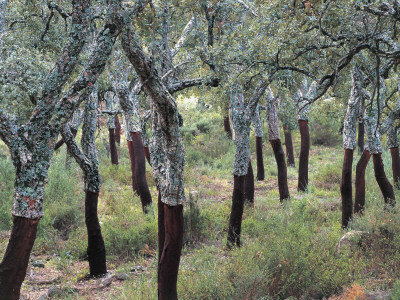 |
| Spanish cork oaks. The dark lower trunk had already had it's cork stripped. |
Wednesday, 5 October 2011
It's Not All Rubbish
Tuesdays are bin days for us in Preston. Over the last few years I've lived in a few different areas with a few different recycling and rubbish systems. Some places had rubbish collections ever week, some rubbish every week and recycling fortnightly. In Preston we have rubbish one week and recycling the other.
The recycling is split into two big boxes under the stairs. The yellow lid box is for paper and cardboard while the red lid (which has been missing for some time...) box is for glass, tins, foil and plastic bottles. We also have a food waste collection every week which is great as it mean the actual rubbish is kept to a minimum. Having weekly food rubbish collections also mean that what little rubbish is in the bin doesn't smell at all.
I love watching how much we recycle, put into food waste and rubbish. It really makes you think when you can see how much food you throw out each week. I'm also addicted to seeing how small I can get our rubbish bag every fortnight and how much of our waste I can get into the recycling boxes. The next step will be to keep rubbish down but also reduce recycling and food waste. Recycling's great but it's better not to make the waste in the first place! My veg box is helping as we no longer have plastic packaging for that, just a big cardboard box which we give back each week to be reused.
Rubbish has been in the news as well as on my mind this week. On Monday the Communities Secretary Eric Pickles announced that £250 million is going to be found to encourage councils to provide weekly rubbish collections. Environment groups and those against the austerity cuts have been horrified. It does seem a little surprising that when everything seems to be being cut there's money around for extra bin collections.
I know some people complain that in the summer after two weeks their rubbish smells or that in a large household bins fill up within a week. But if the recycling's separate and clean that won't smell, which with good recycling facilities should be most of the household waste. With regular food waste collections, and a desperately needed reduction in throwing good food away, rubbish won't be smelly and won't fill up as quickly.
I don't live in a big family house but in a student house of 6 the recycling boxes only got full after two weeks and we only filled the bin once a week. So that's 2 full bin bags a fortnight, easy to fit into the wheelie bin and that included all the food waste as we couldn't compost or recycle it.
The Independent talked about the governments proposed changes here, while The Guardian discusses it here and the BBC covers it here. There's a lot of comments from both sides of the debate so have a read for more info.
The recycling is split into two big boxes under the stairs. The yellow lid box is for paper and cardboard while the red lid (which has been missing for some time...) box is for glass, tins, foil and plastic bottles. We also have a food waste collection every week which is great as it mean the actual rubbish is kept to a minimum. Having weekly food rubbish collections also mean that what little rubbish is in the bin doesn't smell at all.
I love watching how much we recycle, put into food waste and rubbish. It really makes you think when you can see how much food you throw out each week. I'm also addicted to seeing how small I can get our rubbish bag every fortnight and how much of our waste I can get into the recycling boxes. The next step will be to keep rubbish down but also reduce recycling and food waste. Recycling's great but it's better not to make the waste in the first place! My veg box is helping as we no longer have plastic packaging for that, just a big cardboard box which we give back each week to be reused.
Rubbish has been in the news as well as on my mind this week. On Monday the Communities Secretary Eric Pickles announced that £250 million is going to be found to encourage councils to provide weekly rubbish collections. Environment groups and those against the austerity cuts have been horrified. It does seem a little surprising that when everything seems to be being cut there's money around for extra bin collections.
I know some people complain that in the summer after two weeks their rubbish smells or that in a large household bins fill up within a week. But if the recycling's separate and clean that won't smell, which with good recycling facilities should be most of the household waste. With regular food waste collections, and a desperately needed reduction in throwing good food away, rubbish won't be smelly and won't fill up as quickly.
I don't live in a big family house but in a student house of 6 the recycling boxes only got full after two weeks and we only filled the bin once a week. So that's 2 full bin bags a fortnight, easy to fit into the wheelie bin and that included all the food waste as we couldn't compost or recycle it.
The Independent talked about the governments proposed changes here, while The Guardian discusses it here and the BBC covers it here. There's a lot of comments from both sides of the debate so have a read for more info.
Sunday, 2 October 2011
Autumn Cleaning
Cleaning isn't my favourite weekend activity but this weekend some of if was quite interesting. I've read a lot about "green" cleaning methods, using stuff that you already have in your cupboards instead of harsh chemicals. It's meant to be better for the environment because you're not putting dangerous chemicals into the water system (when you wash them down the drain) and better for you because your not breathing the chemicals in. But do these homemade cleaning products really work? I tried three out.
- Vinegar window cleaner: I've used this in the past and I find it works almost as well as window cleaner. Mix some vinegar (I normally use 1:10 vinegar:water) with some hot water and use an old clean rag to wipe down inside and outside windows. Then use a clean towel to dry and polish. This takes a little more time than the usual methods but really works well, even better if you put the vinegar mixture in an old spray bottle.
- Bicarbonate of soda microwave cleaner: I read this in a magazine a while ago. The method said to put equal parts of bicarbonate of soda and boiling water in a microwavable dish and pop it in the microwave for 2 minutes. This is meant to loosen all the dirt inside the microwave so that you can just wipe it off. Maybe I did it wrong but it really didn't do anything. Much better was hot water and scrubbing, only took a few minutes so no cleaning product needed, just elbow grease.
- Brown sauce for metal cleaning: I've recently bought some old brass/pewter (can't tell which) cups and wanted to give them a really good clean. I've found a few cleaning suggestions on the internet including ketchup, brown sauce and a mixture of brown sauce, salt and vinegar. I tried all three. I rubbed the mixture onto the cups, left it for a few minutes and then wiped off and washed with hot water. It definitely got a lot of the dirt off but not as good as actual metal cleaner. It smelt better than normal metal polish and I think it worked at least half as well, I'll be using it again. Out of the three the brown sauce worked best, but only by a little. I'm not sure whether it's the vinegar content or something else that changes the effectiveness. Does anyone else know?
I enjoyed my green cleaning experiments and although there were mixed results I'll be using some of them in the future. It was nice to get things clean without getting dizzy from chemical smells. Does anyone else have any green cleaning methods I can try out?
Wednesday, 28 September 2011
Shades of Green
Lots of the words in yesterday's list are used for people and lifestyles rather than products. Light, dark and bright green all fall into this category and describe three green philosophy types. I've read these terms often but didn't really know what they meant. A great article which explains all is this one by Alex Steffen (who coined the term Bright Green). Here's a quick guide:
Light Green environmentalism is the belief that changes on an individual level are the main solution to environmental problems. Lots of people making lots of little changes will snowball and all together will begin to make a big difference. It also relies on people demanding change as consumers which will push the markets towards more environmentally friendly products. This form of environmentalism has helped spread the environmental idea and made it a fashionable lifestyle choice, but it also generates a lot of "green fatigue" as you often feel that your little changes don't have an impact in the grand scheme.
Dark Green environmentalism focuses on community action. More campaigning, activism and a move away from our current consumer lifestyle, back to a more local, community one. The idea is that small communities producing locally will have short supply chains and allow individuals to take control of their impact on the environment. This involves making bigger changes and commitments, not just remembering to recycle each week. The Dark Green philosophy has been taken up in particular by transition towns where communities prepare for the dual challenges of peak oil and climate change by reducing their fossil fuel reliance. This focus on community action works well and does a lot of good. However, it's often associated with the doom and gloom side of environmentalism, with messages of imminent disaster, which often puts people off doing anything green at all.
Bright Green is the newest of these terms. It's philosophy is a belief that sustainable innovation and design are key to a sustainable society. To fix environmental problems we need an economically strong green industry. We need industry to redesign systems and rethink infrastructure to make integral changes to how society works. This is how the biggest changes happen and while you can agree with this philosophy, unless you're an inventor or in charge of major infrastructures it doesn't leave much room for individual action.
In reality most environmental issues require a mix of the three types of green. Recycling is a good example. You need individuals to recycle but you also need the community to have facilities to recycle, like collections or bins. On top of this you also need manufacturers to create the procedures for recycling and for creating new products.
Mos environmentalists would describe themselves as some shade between these greens and I think that's better than just being one. We need to use all the ways of changing our lifestyles and society for a greener future, not just stick to one because we like the label. At the moment I'm probably more light green than anything else but I'm really interested in getting involved in more dark green projects in my community and I think more environmental inventions and changes to industry would be great.
What colour green are you? What do you think about all this labeling?
Light Green environmentalism is the belief that changes on an individual level are the main solution to environmental problems. Lots of people making lots of little changes will snowball and all together will begin to make a big difference. It also relies on people demanding change as consumers which will push the markets towards more environmentally friendly products. This form of environmentalism has helped spread the environmental idea and made it a fashionable lifestyle choice, but it also generates a lot of "green fatigue" as you often feel that your little changes don't have an impact in the grand scheme.
Dark Green environmentalism focuses on community action. More campaigning, activism and a move away from our current consumer lifestyle, back to a more local, community one. The idea is that small communities producing locally will have short supply chains and allow individuals to take control of their impact on the environment. This involves making bigger changes and commitments, not just remembering to recycle each week. The Dark Green philosophy has been taken up in particular by transition towns where communities prepare for the dual challenges of peak oil and climate change by reducing their fossil fuel reliance. This focus on community action works well and does a lot of good. However, it's often associated with the doom and gloom side of environmentalism, with messages of imminent disaster, which often puts people off doing anything green at all.
Bright Green is the newest of these terms. It's philosophy is a belief that sustainable innovation and design are key to a sustainable society. To fix environmental problems we need an economically strong green industry. We need industry to redesign systems and rethink infrastructure to make integral changes to how society works. This is how the biggest changes happen and while you can agree with this philosophy, unless you're an inventor or in charge of major infrastructures it doesn't leave much room for individual action.
In reality most environmental issues require a mix of the three types of green. Recycling is a good example. You need individuals to recycle but you also need the community to have facilities to recycle, like collections or bins. On top of this you also need manufacturers to create the procedures for recycling and for creating new products.
Mos environmentalists would describe themselves as some shade between these greens and I think that's better than just being one. We need to use all the ways of changing our lifestyles and society for a greener future, not just stick to one because we like the label. At the moment I'm probably more light green than anything else but I'm really interested in getting involved in more dark green projects in my community and I think more environmental inventions and changes to industry would be great.
What colour green are you? What do you think about all this labeling?
Tuesday, 27 September 2011
What's In A Name?
Light Green, Dark Green, Bright Green, Sustainable, Eco-friendly, Environmental, Ethical, Fairtrade, Organic, FSC, Rainforest Alliance certified, Responsibly sourced, Local, Free range...
The list seems endless but what do all these labels stand for? If I'm going to green my life first I need to decide what that actually means.
To start with, the list can be split into two groups. Those which guarantee the product meets certain minimum conditions and others which sound nice but don't guarantee anything.
The five which do guarantee standards are:
Fairtrade - If a product has this label then it satisfies a list of social, economic and environmental standards set by the Fairtrade International Organisation. These standards include a fair wage for the producers, investment into development for the community and long term contracts so that growers can plan securely and sustainably.
Organic - Being organic tends to mean no chemicals, pesticides, genetic modification or other synthetic inputs. Any product that is labelled organic must meet strict UK, European and international standards. The most common organic certification is the Soil Association's. This exceeds the minimum requirements and assures that farms have high animal welfare standards, promote wildlife, don't use genetic modification or pesticides/chemicals and pursue sustainable farming techniques.
FSC - This stands for Forest Stewardship Council. The FSC logo appears on products that have come from well managed forests, so you can be certain you aren't contributing to the further destruction of global forests. These products range from furniture to toilet paper!
Rainforest Alliance certified - Similar to Faritrade (as far as I can see) this label guarantees that farms meet the standards of the Sustainable Agriculture Network. This means the farms use sustainable farm management and are also working towards improving local social and environmental standards. This label focuses more on sustainable farming than fair pay but still aims to promote economically sustainable farming methods so farmers have security too.
Free range - This is only a binding term for poultry and eggs in the UK. So if it says free rage on any other meat products it doesn't guarantee anything, although it's probably a good sign.
For chickens free range means continuous daytime access to open-air runs for at least half their lifetime. It also guarantees a slaughter age of at least 56 days, just less than two months! There are a few different standards for chickens and it's all a bit confusing. I'll do another blog on this another time once I've figured it out!
For eggs, free range means the hens have had continuous access to outdoor runs "mainly covered with vegetation" but sheds are often used where the hens have less than a square foot each. Again, there are lots of similar labels and I'll discuss this in more detail another time.
There's another way to split the labels too. Those which correspond to products such as food, furniture, appliances, and those which describe people and lifestyles such as light, dark and bright green. I'll talk more about these people labels tomorrow.
The list seems endless but what do all these labels stand for? If I'm going to green my life first I need to decide what that actually means.
To start with, the list can be split into two groups. Those which guarantee the product meets certain minimum conditions and others which sound nice but don't guarantee anything.
The five which do guarantee standards are:
Organic - Being organic tends to mean no chemicals, pesticides, genetic modification or other synthetic inputs. Any product that is labelled organic must meet strict UK, European and international standards. The most common organic certification is the Soil Association's. This exceeds the minimum requirements and assures that farms have high animal welfare standards, promote wildlife, don't use genetic modification or pesticides/chemicals and pursue sustainable farming techniques.
FSC - This stands for Forest Stewardship Council. The FSC logo appears on products that have come from well managed forests, so you can be certain you aren't contributing to the further destruction of global forests. These products range from furniture to toilet paper!
Rainforest Alliance certified - Similar to Faritrade (as far as I can see) this label guarantees that farms meet the standards of the Sustainable Agriculture Network. This means the farms use sustainable farm management and are also working towards improving local social and environmental standards. This label focuses more on sustainable farming than fair pay but still aims to promote economically sustainable farming methods so farmers have security too.
Free range - This is only a binding term for poultry and eggs in the UK. So if it says free rage on any other meat products it doesn't guarantee anything, although it's probably a good sign.
For chickens free range means continuous daytime access to open-air runs for at least half their lifetime. It also guarantees a slaughter age of at least 56 days, just less than two months! There are a few different standards for chickens and it's all a bit confusing. I'll do another blog on this another time once I've figured it out!
For eggs, free range means the hens have had continuous access to outdoor runs "mainly covered with vegetation" but sheds are often used where the hens have less than a square foot each. Again, there are lots of similar labels and I'll discuss this in more detail another time.
There's another way to split the labels too. Those which correspond to products such as food, furniture, appliances, and those which describe people and lifestyles such as light, dark and bright green. I'll talk more about these people labels tomorrow.
Subscribe to:
Posts (Atom)