Today I've been having a bit of a winter clear out and tidy up. It's good to get the house tidy and in order before filling it with decorations and, a little later, nice new presents. During my tidying I found lots of environment and conservation leaflets I've collected from various places over the last few months and it's given me a new sense of enthusiasm.
In particular, I rediscovered the Book of Green which I found in the Beautiful Planet cafe in Preston. This little book is free and is an "eco-living directory" full of companies and products that are ethical or environmentally friendly. The book comes out once a year and has been running since 2006; it's also online here.
Looking through, the book is split up into sections including Food and Drink, Travel and Leisure, Green Child and Business Services. It's a great resource to flick through for ideas and having it all collected together makes it easier to fight the urge to just take the easy option when buying things and forget the environmental impacts (both direct and indirect).
The clothing and jewellery pages are filling my mind with thoughts of post-Christmas shopping while the Eco-builds section makes me think wistfully of future dream homes full of eco-friendly gagets and powered by renewable energy. It's going to be a good source of ideas for Christmas presents for friends and family too, although I'm still busy with crafting home made gifts most evenings-hopefully they'll be done before the big day!
Why not have a look at the Book of Green online and see if it sparks and ideas for last minute presents for you?
Showing posts with label Environment. Show all posts
Showing posts with label Environment. Show all posts
Friday, 9 December 2011

Thursday, 8 December 2011
Tweet Tweet
 The Eurasian Wren (Troglodytes troglodytes) is the only wren that you will see in the UK and this little bird has always held a special place in my heart. Sacred to the Druids the wren was considered "supreme among all the birds" and in folklore it was believed that the Fairy Queen would take the form of a Wren, often known as Jenny Wren in nursery rhymes. This connection with my name is probably why I'm so fond of wrens, as I can remember being called Jenny Wren by family and getting cards with wrens on all my life.
 The RSPB's website says that "for such a small bird it has a remarkably loud voice". At 5ft 11" small isn't a word that's been used to describe me recently but family often point out that my frequent, loud chatter means I punch above my weight when it comes to getting my voice heard, quite like the wren.
Starting this blog meant my online voice got lots louder too and I've been chattering here almost every day for two and a half months now. I hoped that writing about the environment and nature every day would make me think more about my impact on the world and help me make my life more sustainable and greener; and I think it has.
It has also made me think and learn about issues I wouldn't have done otherwise, I never used to trawl the environment sections of news websites or become hooked on environment and conservation radio programmes!
 The third thing I wanted from writing my blog was to get my voice and ideas out onto the internet and it's great to see how many people have looked at my page each day. But like the wren I want my voice to get even louder, as there are lots of other birds singing in the woods! So I've joined Twitter. I've only just started and would love some followers so please follow me @jennifercavery.
I'd love to know what you think of my blog, or if there's a topic you'd like me to write about so please comment or get in touch on twitter!
Wednesday, 16 November 2011
Walking The Walk Again
Yesterday I finally managed to go for a walk along my usual patch of the canal again. My resolution to go every week has lapsed recently but it was great to get out and see how things have been changing over autumn.

As you can see from the photos the leaves have almost all fallen now and with the morning sun behind me on the walk out there was a definite feel of winter in the air. Despite this, even in mid November there are still flowers in amongst the hedges. A welsh poppy and some purple and pink flowers that have been there since I moved here in early September. It's nice to be reminded that even in the season we associate with decay and winding down new shoots and petals are pushing through.
 The canal path was busy yesterday, with lots of dog walkers and joggers as well as a man fishing patiently. I wish I'd stopped to ask him what he normally catches. I've only ever seen one fish in the canal, a pike last spring, but there must be lots of fish in there. Unlike the fish the birds were easy to spot. Still in their morning flurry of activity there was lots of birdsong and I easily spotted most of my normal species. Pigeon (always the first one as they live under the bridge I walk down to the canal by), sparrow, great tit, black headed gull, mallard duck, moor hen, swan, as well as the more unusual blackbird, starling and pied wagtail.
Almost all the berries have gone from the hedges now and the sparrows are hooked on the bird feeder in the garden. They're still only eating from one of the two seed feeders though, it's definitely their favourite.

As you can see from the photos the leaves have almost all fallen now and with the morning sun behind me on the walk out there was a definite feel of winter in the air. Despite this, even in mid November there are still flowers in amongst the hedges. A welsh poppy and some purple and pink flowers that have been there since I moved here in early September. It's nice to be reminded that even in the season we associate with decay and winding down new shoots and petals are pushing through.

Almost all the berries have gone from the hedges now and the sparrows are hooked on the bird feeder in the garden. They're still only eating from one of the two seed feeders though, it's definitely their favourite.
Tuesday, 15 November 2011
Telling Tales
Last week I had lots of train journeys around the country. Most of them were after 5pm so it was dark and I didn't get very far with my train I-Spy. There was one trip in daylight, from Wellingborough to London where me (and my Dad) saw almost all the things on my list. I'm not sure if we saw anyone rushing for the train but it was 10am so there weren't many busy commuters rushing around.
On an earlier train journey that week I sat down and realised I'd brought nothing to read on my three hour journey. As the radio signal disappeared and I decided it really was too dark to play I-Spy I looked around for another source of entertainment and was pleasantly surprised to find a copy of Easy Living magazine in the pouch on the back of the seat in front. I've never read this magazine before but it was pretty good and kept me entertained throughout the journey. The best bit was knowing it was free and also that I was recycling someone else's old magazine.
It's a great idea leaving papers or magazines on trains once you're done with them, as long as the nice train staff don't tidy it away before someone else can pick it up to read. A completely read magazine is one thing but what about leaving your most loved book behind for someone else?
 While I was in Europe last summer I visited Hanover for an afternoon. Sat on a bench by a church I noticed a cupboard next to me, the cupboard was filled with books and as I sat people came and went leaving and taking various books. I was fascinated, even though all the titles were in German. This is an example of a recent new social trend of book leaving. Public places are designated as "libraries" and people drop off unwanted books and pick up new ones. It's a great idea and although I don't know if it's taken off in the U.K. let I do know of several similar schemes.
For example the Guardian newspaper launched its six-week book season this autumn by setting 15,000 books free into the wilds of the U.K. From coffee shops to stations platforms, children's novels to science books to craft annuals; the books were placed around the country for new readers to discover them, read them and pass them on again. Guardian readers were also encouraged to leave their own books with the special bookplate sticker (found free in the weekend papers) inside with a message from the original owner. Finders can then log their book online and look at where it came from and where it's been.
Along the same tracking lines the Bookcrossings phenomenon allows books to be shared and traced across the globe. Stickers are downloaded and printed than then they and the books they're attached to are left in places new owners can find them. The unique sticker number in the book is then logged into the website and the past and present owners can chat about the books, an organic online bookclub.
All these ideas, from leaving your magazine behind on purpose to setting books free into the world are all examples of all three of the R's: reduce, reuse, recycle. You reduce the number of books you buy by swapping them with others, you always reuse a great book reading it again and again and you recycle it onto the next new reader. A brilliant example of how sustainable living should be. Although, I'm not saying we don't need any new books. Old stories are good but a new tale always has a special feel.
Sunday, 13 November 2011
Eggcelent Choice
I am proud of my farming heritage. My grandparents owned a small dairy farm in rural Northamptonshire and now my aunt and uncle run an organic egg farm only a couple of villages over. I always feel a link back to the countryside and the farming landscape even though I have no day to day experience of it. I didn't grow up on a farm but I have many happy memories of playing in the fields and "helping" with the farm chores when I was little and visiting, although I doubt how much actual help we were when feeding the lambs or herding the cattle.
Farming is a hard profession, even more so now that supermarkets are trying to push down prices for customers which often means pushing down profits for the farmers not the shops. During my lifetime, partly to cope with this, farming has become much more industrial with the use of chemicals, fertilisers, antibiotics and intensive methods. This often means bad news for wildlife and the environment as intensive methods and chemicals push wildlife out to the very edges of the countryside. I've talked about Fairtrade and the benefits for the environment and farmers that paying a fair price has but haven't yet talked about organic farming and the benefits this has in this country and abroad.
The Soil Association is the main certification body for organic farming in the U.K. For farms to be organic they must satisfy strict standards:
I always get my eggs from my uncle and aunts farm, this sometimes means travelling by train with a rucksack containing a dozen eggs but normally they survive the trip. When they first started farming organic eggs it was amazing to see the contrast with the normal shop bought eggs. Not only do they last much longer (because we get them straight from the farm which makes them about two weeks fresher than buying them in the shops) but their colour, taste and size is different.
Organic, free-range eggs have a much deeper colour and taste, well, more eggy than battery farmed eggs. The yolks are the colour of oranges rather than the pale yellow of primroses. Also, shops want standard size eggs and this hasn't yet been communicated down to the chickens. Because of this we often get the too big or too small eggs that can't be sold in shops. When a new batch of hens comes to the farm they often start by laying double or triple yolk eggs (I've no idea why) and so these eggs are much too big for the shops so we get them. My university friends were amazed by double yolk eggs and I hadn't realised this was an uncommon thing. It can make cake making tricky but an extra yolk in scrambled eggs is a brilliant treat.
Organic farms must adhere to strict welfare conditions and the hens have freedom to roam the fields during daylight and are put away to bed in large sheds when night falls to protect them from foxes and other predators. It's quite amazing to see thousands of hens wandering around in a field but they do look quite happy-as happy as hens can look.
Because pesticides, chemicals and antibiotics are restricted or banned on organic farms the soil and natural environment has time to recover and bloom. Farmers are encouraged to incorporate wildlife friendly schemes into their farms which helps to bring back the balance between nature and farming which is needed to get the full potential out of organic farming.
There are of course downsides to organic farming. It takes up more land, sometimes uses more energy (battery farming is unethical but very energy efficient) and water and doesn't always produce as high yields as intensive farming but the benefits of yummier food, happier animals and better environment must surely be worth something.
How organic farming is used globally and the more general impacts, pros and cons it has are discussions for another blog. For now I'm off to enjoy some bright yellow scrambled eggs! Have a nice Sunday and if you're ever in Waitrose why not try the Organic Free-range Columbian Blacktail eggs, you might even be eating some from my relatives farm!
Farming is a hard profession, even more so now that supermarkets are trying to push down prices for customers which often means pushing down profits for the farmers not the shops. During my lifetime, partly to cope with this, farming has become much more industrial with the use of chemicals, fertilisers, antibiotics and intensive methods. This often means bad news for wildlife and the environment as intensive methods and chemicals push wildlife out to the very edges of the countryside. I've talked about Fairtrade and the benefits for the environment and farmers that paying a fair price has but haven't yet talked about organic farming and the benefits this has in this country and abroad.
The Soil Association is the main certification body for organic farming in the U.K. For farms to be organic they must satisfy strict standards:
- Artificial chemicals are prohibited
- Pesticides are strictly restricted
- Animal welfare is at the heart of farming with a truly free-range life for animals
- Diversity and rotation of crops and animals allows the soil time to recover and prevents the build up of pests and diseases in the soil
- The routine use of drugs, antibiotics and wormers is banned
- The use of genetically modified crops and ingredients is banned
I always get my eggs from my uncle and aunts farm, this sometimes means travelling by train with a rucksack containing a dozen eggs but normally they survive the trip. When they first started farming organic eggs it was amazing to see the contrast with the normal shop bought eggs. Not only do they last much longer (because we get them straight from the farm which makes them about two weeks fresher than buying them in the shops) but their colour, taste and size is different.
Organic, free-range eggs have a much deeper colour and taste, well, more eggy than battery farmed eggs. The yolks are the colour of oranges rather than the pale yellow of primroses. Also, shops want standard size eggs and this hasn't yet been communicated down to the chickens. Because of this we often get the too big or too small eggs that can't be sold in shops. When a new batch of hens comes to the farm they often start by laying double or triple yolk eggs (I've no idea why) and so these eggs are much too big for the shops so we get them. My university friends were amazed by double yolk eggs and I hadn't realised this was an uncommon thing. It can make cake making tricky but an extra yolk in scrambled eggs is a brilliant treat.
Organic farms must adhere to strict welfare conditions and the hens have freedom to roam the fields during daylight and are put away to bed in large sheds when night falls to protect them from foxes and other predators. It's quite amazing to see thousands of hens wandering around in a field but they do look quite happy-as happy as hens can look.
Because pesticides, chemicals and antibiotics are restricted or banned on organic farms the soil and natural environment has time to recover and bloom. Farmers are encouraged to incorporate wildlife friendly schemes into their farms which helps to bring back the balance between nature and farming which is needed to get the full potential out of organic farming.
There are of course downsides to organic farming. It takes up more land, sometimes uses more energy (battery farming is unethical but very energy efficient) and water and doesn't always produce as high yields as intensive farming but the benefits of yummier food, happier animals and better environment must surely be worth something.
How organic farming is used globally and the more general impacts, pros and cons it has are discussions for another blog. For now I'm off to enjoy some bright yellow scrambled eggs! Have a nice Sunday and if you're ever in Waitrose why not try the Organic Free-range Columbian Blacktail eggs, you might even be eating some from my relatives farm!
Saturday, 12 November 2011
Fair Cities
I've lived in two cities in my life and by chance both have been certified Fairtrade Cities. As much as I like the idea this doesn't mean their ingredients all satisfy high environmental and ethical standards but that as a community the city has signed up to support the Fairtrade movement.
Preston gained it's Fairtrade status in 2004. To do this the businesses, residents, schools and colleges all signed up to help end world poverty by promoting, buying and selling Fairtrade products. There are five criteria that must be met, these are:
Preston gained it's Fairtrade status in 2004. To do this the businesses, residents, schools and colleges all signed up to help end world poverty by promoting, buying and selling Fairtrade products. There are five criteria that must be met, these are:
- Council: Local council passes a resolution supporting Fairtrade and serves Fairtrade products whenever possible.
- Commerce: A range of Fairtrade products are available from local retail outlets (the number is determined by how big the city/town is).
- Community: Local workspaces and community groups support Fairtrade and use Fairtrate products whenever possible.
- Common consensus: Media coverage and events raise awareness and understanding of Fairtrade across the community.
- Captains: A local Fairtrade steering group is convened to ensure the Fairtrade campaigns continue to develop and gain new support.
Other than the sign as you enter Preston I hadn't really thought much about its Fairtrade status. I know there are several ethical produce shops in the centre but I haven't seen much else advertised. An additional requirement for Fairtrade cities is that they have a Fairtrade Directory. I've just found the one for Preston and as well as the supermarkets and cafes I already know about there are lots more to seek out and try.
There are lots of Fairtrade Towns and Cities around the country. Why not look up your nearest and find out about campaigns and activities near you? Or if you don't have one near by look for the shops and groups that support Fairtrade where you live.
Tuesday, 8 November 2011
Small and Perfectly Adapted
Conservation charities come in many sizes and conserve many things. The best known ones are the biggest, loudest ones but there are lots of little charities whose work and issues are just as important and whose staff and volunteers work just as hard, if not harder, to be heard. Buglife is one of these smaller charities with just over 15 staff members and based in a small office in Peterborough, which is where I visited them yesterday.
Buglife was launched in 2004 as the first charity in Europe to focus on the protection and conservation of invertebrates. Its work ranges from outreach events with young people and schools to challenging government policy on planning and brownfield development plans. They also carry out vital conservation work in the field to both protect and discover new knowledge of invertebrates throughout the U.K. If you are a member (or become a member) of Buglife you are in good company. Germaine Greer is their current President with Nick Baker (from Spring/Autumn Watch and Really Wild Show), Edward O Wilson (eminent authority of global biodiversity) and Steve Backshall (from Really Wild Show and The One Show) as Vice Presidents.
It's a lot easier to raise money for big fluffy animals than small wriggly ones but looking at previous Bug of the Month articles on the Buglife website reveals loads of fascinating creatures which are worth protecting, conserving and celebrating. Here are just a few:
My volunteering with Buglife yesterday involved looking at their online media presence and also an introduction into how the organisation works. I was very pleased to see that my Bug of the Month article on the Common wasp has received over 200 page views and was very interested to learn about the charities brownfield sites conservation work. It was an exciting day and all the staff there were so welcoming (I didn't want to go home by the end of the day!). Thank you to everyone at Buglife, in particular to Dale who I'm working with, for looking after me and showing me the exciting work this great charity does.
Buglife was launched in 2004 as the first charity in Europe to focus on the protection and conservation of invertebrates. Its work ranges from outreach events with young people and schools to challenging government policy on planning and brownfield development plans. They also carry out vital conservation work in the field to both protect and discover new knowledge of invertebrates throughout the U.K. If you are a member (or become a member) of Buglife you are in good company. Germaine Greer is their current President with Nick Baker (from Spring/Autumn Watch and Really Wild Show), Edward O Wilson (eminent authority of global biodiversity) and Steve Backshall (from Really Wild Show and The One Show) as Vice Presidents.
It's a lot easier to raise money for big fluffy animals than small wriggly ones but looking at previous Bug of the Month articles on the Buglife website reveals loads of fascinating creatures which are worth protecting, conserving and celebrating. Here are just a few:
 |
| Stick Insects are becoming common in the South West. Picture by Malcolm Lee |
 |
| Sunset Cup Coral is found in a few locations off the U.K. coast. Picture by Yoruno |
 |
| Common Wasp found through out the U.K. Picture by Paul Padam |
My volunteering with Buglife yesterday involved looking at their online media presence and also an introduction into how the organisation works. I was very pleased to see that my Bug of the Month article on the Common wasp has received over 200 page views and was very interested to learn about the charities brownfield sites conservation work. It was an exciting day and all the staff there were so welcoming (I didn't want to go home by the end of the day!). Thank you to everyone at Buglife, in particular to Dale who I'm working with, for looking after me and showing me the exciting work this great charity does.
Monday, 7 November 2011
Stamp collecting
I have a tendency to hoard things, whether it is a small plateful of leftover vegetables, old worn out jeans or jam jars. But the pots of used stamps that have always been present in my home have nothing to do with my hoarding nature. As far as I'm concerned stamps cannot be thrown away under any circumstance, that's just how I've grown up. Stamps go in the stamps pot-that is their home. For years I didn't even questions why this happened, or where the stamps went when, periodically, the pot became empty. The answer is not that we are a family of philatelists (although family tell me Dad dabbled in this before catching the bird watching bug!) but, as it often does, comes back to environmental concerns.
I've been watching the BBC's new series Frozen Planet and this week it featured some gorgeous shots of the Wandering Albatross. These birds are some of the heaviest flying birds in the world reaching 10kg and (along with the Royal Albatross) have the biggest wingspan of 3.5 meters (11ft). I'm quite a tall person at 5ft 11" but that means I'm only just taller than one wing of these huge birds.
There are 22 species of albatross and they live in every ocean, except the North Atlantic, in the world. Most breed in the southern hemisphere, with three favouring the North Pacific and one on the equator. Unfortunately 10 species are endangered or critically endangered with all the other species either vulnerable or near threatened according to the International Union for Conservation of Nature Red List. In fact this means that 18 out of the 22 are seen to be at serious risk of extinction. There are many threats to the various types of albatross. The normal threats that affect almost all sealife such as floating plastic rubbish, pollution and climate change are important but there are also problems from introduced predators and various types of fishing. Longlined fishing involves (unsurprisingly) long lines of fishing line with hooks all along it. Problems arise when the hooks are visible from the air and albatrosses get hooked and killed. Trawling also kills a huge number of birds sometimes being caught in nets but also hitting the cables on the ships. The death rate of albatrosses has reached such a level that the birds can't reproduce quickly enough to sustain the population.
So, this is all very bad but what can be done to save these beautiful birds and how does any of this relate to the stamps? Solutions are simpler than you may think. Attaching "scare lines" (a curtain of plastic streamers) to boats, sinking the hooks deeper in the water and dying the bait blue are all simple ways to deter albatrosses and the Albatross Task Force has been working hard on the open sea to educate fishermen of the dangers and solutions. Many fishermen are really happy to make these simple changes once they are aware of the problem and the group have seen huge success over the past few years.
The RSPB are working closely with the Task Force and you can help support them. To join the fight to save albatrosses you could make a donation, buy albatross postcards or cuddly toys or, like me, save your stamps. While individually a used second class stamp doesn't have much value by collecting all our used stamps together and selling them on the RSPB raised £15,000 last year for the albatross campaign. Only £50 worth of stamps will buy a tori-line (scare line) for a long line fishing vessel.
It's little by little but to save these huge beautiful birds I'll keep saving my stamps and sending them to the RSPBs campaign address. And the odd looks from visitors when they find my piles of stamps are a great excuses for me to educate them to the albatrosses plight and hopefully spread the collecting bug.
Sunday, 6 November 2011
A Family Affair
When I started this blog I wanted to write about my life, nature and how both impact upon the environment. I wasn't sure where to start but luckily there's a book with tips and ideas for exactly this - Blogging For Nature conveniently written by my Dad, Mark Avery (look at his website if you want to buy a copy!).
I've read Dad's blog since he started writing it and it's been an education in environment and conservation issues, as well as a good way to find out what he'd been up to while I was at university. My friends started reading it which was fine until they started telling me about the day's blog before I'd even started breakfast! Today, Dad's blog is about other interesting blogs, including mine, so thanks Dad!
This week I'll be writing about Albatrosses, Buglife, the Duke of Edinburgh Award, Eggs and I'll be back on my weekly walk in Preston and looking through this week's new veg box. If you've just discovered my blog, via Dad's link or just by chance, thanks for reading and I hope you come back and read more. Please leave a comment as I'd love to hear your views on my blog and the things I'm writing about.
I've read Dad's blog since he started writing it and it's been an education in environment and conservation issues, as well as a good way to find out what he'd been up to while I was at university. My friends started reading it which was fine until they started telling me about the day's blog before I'd even started breakfast! Today, Dad's blog is about other interesting blogs, including mine, so thanks Dad!
This week I'll be writing about Albatrosses, Buglife, the Duke of Edinburgh Award, Eggs and I'll be back on my weekly walk in Preston and looking through this week's new veg box. If you've just discovered my blog, via Dad's link or just by chance, thanks for reading and I hope you come back and read more. Please leave a comment as I'd love to hear your views on my blog and the things I'm writing about.
Saturday, 5 November 2011
Remember, Remember
 I don't know how many countries celebrate the failure of a terrorist attack 400 years after it was meant to have happened, but being partial to fireworks I'm quite please the U.K. does. Fireworks night (aka Guy Fawkes night, Bonfire night and 5th November) has lost a lot of its original themes of anti-Catholicism, class confrontations and nationalism. Nowadays it's all about the brightness and being so close to other festivals of lights, such as Diwali, it's common for fireworks to start mid October and continue until mid November.
Over the last five years, as well as the traditional fireworks, new lights have appeared on the horizon, those of Chinese lanterns. You've almost certainly seen them in the nights sky, points of orange light floating across the skyline. What they actually are is paper/plastic boxes with a tiny tea light heating the air inside the box and lifting it up into the sky. These little lights are really beautiful and it's lovely to see them slowly floating across the sky, sometimes up to 30 miles. They're pretty cheap too at about £2 each.
But (there always seems to be a but with good things) don't let the pretty lights dazzle you into missing the large risks and dangers associated with the lanterns. Last year, while watching lanterns at a family fireworks party, a three year old boy was seriously injured when part of a melted lantern fell onto his face. Everyone knows the dangers of fireworks but the dangers of these new lanterns are less well know.
As well as possible injuries there are also risks to the environment, farm animals and emergency services. There have been several wild fires attributed to the lanterns over the last few years and also fires on farm, hay barns and injury to livestock. Many of the lanterns are now said to be biodegradable, but people seem sceptical about this and I always wonder how long they take to degrade, even if they do so. Wild fires will damage natural habitats and impact upon unsuspecting animals while the hot wire from fallen lanterns lies in wait for small unsuspecting paws.
There are less obvious problems for the emergency services with these lanterns. Between 1st October 2009 and 30th September 2010 there were 128 false alerts to the Maratime and Coastguard Agency attributed to Chinese lanterns. People see the lanterns out at sea and mistaken for parachute signal flares and so the emergency services are called. On 26 occasions lifeboats were launched and on two occasion helicopters mobilised.
There are calls for a ban on Chinese lanterns or at least limiting them to certain times of year. I'm sure there are negative environmental impacts of fireworks too, even if its just the hundreds of cardboard and plastic shells that fall to the ground once they've been lit.
Whatever you're doing this weekend, remember to wrap up warm and keep safe. Also, if you're having a bonfire check it for hedgehogs before you lights it! They love the big piles of leaves and sticks as a warm place to hibernate.
Thursday, 3 November 2011
Watch
Yesterday I got some exciting post I'd been looking forward to for a few weeks. My Wildlife Watch Leader Pack arrived!
Wildlife Watch is the junior branch of the Wildlife Trusts. Children of any age can join but it's normally aimed at 8 years and above. When I was younger I was a member and really enjoyed learning about wildlife at the once a month meetings. Particular highlights were seeing slow worms, pond dipping and eating home made flapjacks made by our enthusiastic leader Rupert (who I'm pleased to see on the website is still running my old group). There are now also Greenwatch groups which are aimed at older members (12+) which allow young people to work on conservation projects and surveys to gain a deeper understanding of wildlife and nature.
My Mum is a Watch Leader and I've helped out at a few meetings in the past. It was partly this experience that made me sign up to become a leader when I moved to Preston, but also because I loved being a Young Leader at Scouts and other environmental education projects I've volunteered with.
It was very easy to become a leader. I went to a meeting to check I enjoyed helping, filled in a few forms and completed a CRB check (which came back in 24 hours, a personal record!). So now, about a month later, I am officially a Wildlife Watch Leader and will be helping to run the Preston Peregrines group for two hours once a month (although I'll be doing more than two hours work for it!).
My pack arrived with a CD of the essential guide to running a Watch group, a recent copy of the Watch magazine, and a copy of LINK the magazine for leaders filled with tips and ideas for running educational and fun meetings.
I'm really looking forward to starting as a leader and I hope I can make the meetings as fun and memorable as mine were. Teaching young people about nature and wildlife is essential if future generations are to protect and understand these valuable resources properly.

Monday, 31 October 2011
Halloween
The door's been knocking all evening with very scary small children in great costumes for Halloween. I've failed on the "green" snacks as I ended up buying lots of plastic wrapped sweets for the evening but they do seem to be going down well. It's easy for Halloween to become expensive and full of plastic which gets thrown away later. I have thought of a few green ways to get spooky though.
If you make pumpkin lanterns why not roast it afterwards? It cooks just like butter nut squash and can just be cooked whole which would make a great centre piece for a dinner if you'd carved it. You could also make the traditional pumpkin pie or try a pumpkin cake recipe. Those left over seeds can be used too like I did yesterday. Once you've done all that you'll have almost no pumpkin waste!
You've carved your pumpkins and filled them with candles so how about an electricity free evening? Tell ghost stories by candle light or play games in the dark. With Diwali and other festivals of light coming to a close this week it's the perfect time to celebrate the dark nights (even darker after the clocks change over) and look forward to Guy Fawkes Night next week.
If you make pumpkin lanterns why not roast it afterwards? It cooks just like butter nut squash and can just be cooked whole which would make a great centre piece for a dinner if you'd carved it. You could also make the traditional pumpkin pie or try a pumpkin cake recipe. Those left over seeds can be used too like I did yesterday. Once you've done all that you'll have almost no pumpkin waste!
You've carved your pumpkins and filled them with candles so how about an electricity free evening? Tell ghost stories by candle light or play games in the dark. With Diwali and other festivals of light coming to a close this week it's the perfect time to celebrate the dark nights (even darker after the clocks change over) and look forward to Guy Fawkes Night next week.
Wednesday, 26 October 2011
Yellow and Blue Make Green?
In May 2010, shortly after the coalition had been formed, David Cameron said that he wanted it to be "the greenest government ever" and Chris Hume (Secretary of State for Energy and Climate Change) said "Climate change is in my view, our view, the greatest challenge facing mankind."
When I heard that I was really hopeful. I don't know a lot about politics (and knew even less 18 months ago) but those statements sounded like the new government were going to really take environmental issues seriously. A year later, with the struggles of deficit, recession and social unrest the environment had already slipped into the background.
During Mr Cameron's speech at his party conference this year he must have forgotten the page on the environment as the only references to it were a passing comment on "green engineering" and berating Labour for not "going green".
Then George Osborne made a bold environmental pledge. He said
"We're not going to save the planet by putting our country out of business. So let's at the very least resolve that we're going to cut our carbon emissions no slower but also no faster than our fellow countries in Europe."
Brilliant, thanks George, that really is the very least you can do. His arguments included the fact that the U.K. contributes 2%, compared to China and the USA's 40% of emissions globally and that carbon investment businesses will go overseas. Now I've done a quick calculation and it looks like the U.K. population is less than 1/20 of the combined populations of China and the U.S.A so by Mr Osborne's figures we should be reducing our emissions more if they are to match population sizes. Another quick calculation shows that the U.K. actually makes up less than 1% of the world population so we should definitely be trying to half our emissions.
So far it's not looking great for the greenest government ever. Then, this morning, I turned on the radio to hear that the Prime Minister, who is passionate about the environment and is trying to make his government the greenest ever, may not be going to the globally important Rio+20 summit next year because it clashes with the Queen's Jubilee celebrations. I checked the dates and I'm sure Mr Cameron could at least make the 6th June, after a 4 day weekend!
Today the Environmental Audit Committee of MPs will make a direct call for David Cameron to confirm his attendance at next year's summit in Brazil. They hope that this will reinforce the UK's commitment to the low carbon economy and also may boost the conferences profile. According to The Guardian,
sources confirmed the Prime Minister will not attend the summit. The UK's delegation will instead be led by Environment Secretary Caroline Spelman with the rest of the ministerial delegation being announced nearer the time.
With proposals to raise the speed limit to 80 mph (which will raise emmisions), Mr Osborne's firm stance for economic growth over all else and a refusal to lead the way in Europe, today's news isn't really shocking, just disappointing. It seems that maybe yellow and blue don't really make green at all.
Friday, 21 October 2011
One Man's Rubbish...
As I put the recycling out last week I started thinking about how different countries recycle. I agree this is a big thought for early on a rainy Tuesday so maybe I was just dreaming of somewhere sunnier.
According to the Defra website, in 2009/2010, on average, each person in the UK generated 457kg of waste. Of that 181kg was recycled and 275kg was not. That is an average of 39% of waste recycled which sounds pretty good but the idea of 275kg (I'm imagining bags of sugar) being thrown away by every single person is really crazy. I find it odd how most people wouldn't thrown rubbish on the pavement but putting rubbish in a bin that is later taken and put in a big pile on the ground somewhere is fine. How is that a good system of waste disposal!?
The U.K. is improving its recycling habits and slowly reducing its waste. It's a problem we all need to face and deal with. Companies need to start packaging products with less plastic, in fact with less everything. Consumers (us!) need to remember to recycle as much as we possibly can and minimise our food and non-food waste, do you buy loose apples rather than plastic wrapped ones? And finally government and local authorities need to keep providing better, easier and more extensive recycling facilities.
As a developed nation the U.K. has a responsibility to lead the way towards sustainable living. We've got the money (we still have more than lots of countries!), the infrastructure and the technology to show the rest of the world how it's done. Whether we will is a different, more worrying question but we can't expect less developed countries such as India to be showing us how it's done.
It's hard to find reliable figures for India's recycling. Some put the level of electrical waste recycling at 40% while others say 20% of paper is recycled but I can't find a statistic for total waste and total recycling annually. This is probably due to the much larger numbers and much less organised system of waste disposal in Indian. Not everyone get weekly collections and nice colour coded recycling bins!
From what I've heard from friends who have visited India, electrical recycling is quite easy but anything else is almost always binned. Maybe this is because the electrical components are more valuable than other waste but this might be changing as new innovative ways of recycling and using waste are appearing across India.
In one of the biggest slums in the world, Dharavi in Mumbai, recycling is funding a mini economic boom. Almost every street on the slum contains family run factories recycling everything from oil drums to ball point pens. This waste not want not attitude is helping lift people away from absolute poverty and helping them improve their living conditions. Read more about this here.
Recycling is becoming a real money maker in India where brand new resources are expensive. There are now many entrepreneurs setting up their own recycling factories and finding new ways of recycling unwanted items across the country. For example, Mr K Ahmed Khan has patented a method to combine old plastic bags with bitumen to make new roads and in 18 months has laid 40km! More on this here.
It's brilliant to read these success stories and I'm sure there are lots of similar stories around the world and in the U.K.
According to the Defra website, in 2009/2010, on average, each person in the UK generated 457kg of waste. Of that 181kg was recycled and 275kg was not. That is an average of 39% of waste recycled which sounds pretty good but the idea of 275kg (I'm imagining bags of sugar) being thrown away by every single person is really crazy. I find it odd how most people wouldn't thrown rubbish on the pavement but putting rubbish in a bin that is later taken and put in a big pile on the ground somewhere is fine. How is that a good system of waste disposal!?
The U.K. is improving its recycling habits and slowly reducing its waste. It's a problem we all need to face and deal with. Companies need to start packaging products with less plastic, in fact with less everything. Consumers (us!) need to remember to recycle as much as we possibly can and minimise our food and non-food waste, do you buy loose apples rather than plastic wrapped ones? And finally government and local authorities need to keep providing better, easier and more extensive recycling facilities.
As a developed nation the U.K. has a responsibility to lead the way towards sustainable living. We've got the money (we still have more than lots of countries!), the infrastructure and the technology to show the rest of the world how it's done. Whether we will is a different, more worrying question but we can't expect less developed countries such as India to be showing us how it's done.
It's hard to find reliable figures for India's recycling. Some put the level of electrical waste recycling at 40% while others say 20% of paper is recycled but I can't find a statistic for total waste and total recycling annually. This is probably due to the much larger numbers and much less organised system of waste disposal in Indian. Not everyone get weekly collections and nice colour coded recycling bins!
From what I've heard from friends who have visited India, electrical recycling is quite easy but anything else is almost always binned. Maybe this is because the electrical components are more valuable than other waste but this might be changing as new innovative ways of recycling and using waste are appearing across India.
In one of the biggest slums in the world, Dharavi in Mumbai, recycling is funding a mini economic boom. Almost every street on the slum contains family run factories recycling everything from oil drums to ball point pens. This waste not want not attitude is helping lift people away from absolute poverty and helping them improve their living conditions. Read more about this here.
Recycling is becoming a real money maker in India where brand new resources are expensive. There are now many entrepreneurs setting up their own recycling factories and finding new ways of recycling unwanted items across the country. For example, Mr K Ahmed Khan has patented a method to combine old plastic bags with bitumen to make new roads and in 18 months has laid 40km! More on this here.
It's brilliant to read these success stories and I'm sure there are lots of similar stories around the world and in the U.K.
Thursday, 20 October 2011
I'm Back!
After a week offline I'm back! Lots has happened in the last week and I'll be talking about some of it over the next few days. I'll have updates on my veg box ventures and my weekly walks, why I was dressed as a Viking for a day and recent environment news.
Suddenly Autumn seems to have really arrived. With the first frost last night and the clocks changing in just over a week the nights are feeling a lot longer and darker. The heating has come on at home as we need somewhere warm enough to dry clothes. The occasional sunny days are enough most of the time but when washing stays wet for days inside something needs to be done. Our lights are on more now too and since the weekend all our bulbs are energy saving, saving us money and fossil fuels.
As I've said before while we're tucked up in ever warmer houses the wildlife outside has to find other ways to cope with the onset of winter. The sparrows in the garden are at the feeders constantly and I'm going to give them all a good clean and make sure they're filled before the RSPB's Feed The Birds Day on the 29th.
Suddenly Autumn seems to have really arrived. With the first frost last night and the clocks changing in just over a week the nights are feeling a lot longer and darker. The heating has come on at home as we need somewhere warm enough to dry clothes. The occasional sunny days are enough most of the time but when washing stays wet for days inside something needs to be done. Our lights are on more now too and since the weekend all our bulbs are energy saving, saving us money and fossil fuels.
As I've said before while we're tucked up in ever warmer houses the wildlife outside has to find other ways to cope with the onset of winter. The sparrows in the garden are at the feeders constantly and I'm going to give them all a good clean and make sure they're filled before the RSPB's Feed The Birds Day on the 29th.
Sunday, 9 October 2011
Counting Up The Miles
Well I failed in my attempts to improve my wine habits this weekend. Although I looked carefully at the bottle I still ended up with a plastic cork and I chose a German wine as there weren't any Fairtrade ones. But I'll keep trying to get better and I'm definitely thinking about it more now.
I've been on a lot of trains this weekend. Preston to York, York to Leeds and Leeds to Preston. I definitely enjoy going by train more than driving. It does take longer but you get to see much more of the countryside, I love riding through the dales in all its different weathers-rain, sun or snow!
Preston to York is about 80 miles by train. According to the East Coast Carbon Calculator I produce 7 kg of Co2 on a train from Preston to York whereas it would be 15kg in a car. York to Leeds by train is about 15 miles and Leeds to Preston is another 65 miles. In total, according to the East Coast website, my journey by train saved 16kg CO2 compared to going by car. This is apparently equivalent to 371 hours of TV or 296 hours of boiling a kettle.
I don't really know how they work that out. The car values will depend on how many people in a car per trip and the train will depend on how full it is. But as a rough estimate knowing that you're using almost half as much energy to travel feels quite good.
A really interesting book about calculating energy use is Sustainable Energy- Without the Hot Air by David MacKay. I'm only halfway through reading it but it's very good so far. It discusses different energy supplies available and whether sustainable energy can meet our demands without changing our lifestyles. Having not got to the end I don't know the answer yet, but the graphs, facts and figures are very clear and it's a well written book with lots to think about. I've got a copy but I've just discovered it is a free book online here which means it's available to read and download. The information in it is also free to use and the author encourages people to share the information in this book. For more information on the book look here.
More on this when I finish reading it!
I've been on a lot of trains this weekend. Preston to York, York to Leeds and Leeds to Preston. I definitely enjoy going by train more than driving. It does take longer but you get to see much more of the countryside, I love riding through the dales in all its different weathers-rain, sun or snow!
Preston to York is about 80 miles by train. According to the East Coast Carbon Calculator I produce 7 kg of Co2 on a train from Preston to York whereas it would be 15kg in a car. York to Leeds by train is about 15 miles and Leeds to Preston is another 65 miles. In total, according to the East Coast website, my journey by train saved 16kg CO2 compared to going by car. This is apparently equivalent to 371 hours of TV or 296 hours of boiling a kettle.
I don't really know how they work that out. The car values will depend on how many people in a car per trip and the train will depend on how full it is. But as a rough estimate knowing that you're using almost half as much energy to travel feels quite good.
A really interesting book about calculating energy use is Sustainable Energy- Without the Hot Air by David MacKay. I'm only halfway through reading it but it's very good so far. It discusses different energy supplies available and whether sustainable energy can meet our demands without changing our lifestyles. Having not got to the end I don't know the answer yet, but the graphs, facts and figures are very clear and it's a well written book with lots to think about. I've got a copy but I've just discovered it is a free book online here which means it's available to read and download. The information in it is also free to use and the author encourages people to share the information in this book. For more information on the book look here.
More on this when I finish reading it!
Saturday, 8 October 2011
A Long Way For A Drink
How far would you go for a good bottle of wine? Even if you buy wine from across the street the chances are that the bottle and contents have had a long journey to your door.
English wine, although getting more common, isn't a mainstream product just yet. The English wines I've tried are delicious but it's not always easy to find them in your local supermarket. Wine from some of our nearest neighbours, France, Spain and Germany, are common in our shops though as well as bottles from further a field such as Australia, Chile and South Africa.
If we're trying to live more sustainable lives isn't it a contradiction to only buy local food but to buy wine from the other side of the planet? Following this line of thought I tend to automatically buy wines from France and Spain, ruling out wines from other countries even if they're Faritrade (more on that later). I always thought this must be better for the environment but after looking into it a bit more I'm not so sure. After reading an article on the carbon footprint of wines, here, I realised, as with food, it matters much more how the wine travels to my glass not always from where.
Only around 2% of the environmental impact of food comes from it's transportation but this figure could be as high as 34% for wine. A new initiative is to bulk ship wines and then bottle at the location of sale. For countries such as Australia this could reduce the carbon emissions of wine transport by 40%. This is great for large brands but impractical for small producers.
Once bottled it's also important to look at how the wine is transported. It's been calculated that a bottle of wine from Chile, shipped by sea container from Valparaiso to Felixstowe and then by road to Bristol uses about 318g of CO2. This is hard to comprehend but when I read that the average car uses 170g CO2 per kilometre it puts it into perspective. Wine from Spain and France may be shipped but may also be brought by truck which will have a higher carbon footprint. The real problem for most buyers who are trying to be ethical is there's no way of knowing exactly how the wine got to this country. I don't know if anything is being done about this at the moment but I'll definitely look at wines from further away more closely now as I can pretty much guarantee they'll have been shipped in.
Fairtrade was mentioned earlier. I'm almost addicted to the Faritrade logo, and if I see it on a product I automatically want to buy it, even if it's something I don't need. You often see the logo on wine from countries outside Europe such as Chile or Argentina or South Africa. Now I've stopped ruling these wines out I'll definitely pick more Fairtrade bottles up in the shops. The reason Fairtrade isn't used in all countries is because it's mainly a way of helping growers in developing countries. In Europe we already have minimum wage and employment laws to protect workers but other places don't have the same protection. As with all Fairtrade products the farms must pursue sustainable growing techniques, minimise use of chemicals, pay a fair wage and help support local community and social development.
So to round up the past few wine filled days: I'll definitely stick to picking wines which use corks (to help the wildlife I talked about yesterday) but I'll look more at wines from countries further away than Europe as they might not have higher travel emissions. If I do buy wine from developing countries I'll always buy Fairtrade so I know that my money goes to the farmers and also supports sustainable development.
English wine, although getting more common, isn't a mainstream product just yet. The English wines I've tried are delicious but it's not always easy to find them in your local supermarket. Wine from some of our nearest neighbours, France, Spain and Germany, are common in our shops though as well as bottles from further a field such as Australia, Chile and South Africa.
If we're trying to live more sustainable lives isn't it a contradiction to only buy local food but to buy wine from the other side of the planet? Following this line of thought I tend to automatically buy wines from France and Spain, ruling out wines from other countries even if they're Faritrade (more on that later). I always thought this must be better for the environment but after looking into it a bit more I'm not so sure. After reading an article on the carbon footprint of wines, here, I realised, as with food, it matters much more how the wine travels to my glass not always from where.
Only around 2% of the environmental impact of food comes from it's transportation but this figure could be as high as 34% for wine. A new initiative is to bulk ship wines and then bottle at the location of sale. For countries such as Australia this could reduce the carbon emissions of wine transport by 40%. This is great for large brands but impractical for small producers.
Once bottled it's also important to look at how the wine is transported. It's been calculated that a bottle of wine from Chile, shipped by sea container from Valparaiso to Felixstowe and then by road to Bristol uses about 318g of CO2. This is hard to comprehend but when I read that the average car uses 170g CO2 per kilometre it puts it into perspective. Wine from Spain and France may be shipped but may also be brought by truck which will have a higher carbon footprint. The real problem for most buyers who are trying to be ethical is there's no way of knowing exactly how the wine got to this country. I don't know if anything is being done about this at the moment but I'll definitely look at wines from further away more closely now as I can pretty much guarantee they'll have been shipped in.
Fairtrade was mentioned earlier. I'm almost addicted to the Faritrade logo, and if I see it on a product I automatically want to buy it, even if it's something I don't need. You often see the logo on wine from countries outside Europe such as Chile or Argentina or South Africa. Now I've stopped ruling these wines out I'll definitely pick more Fairtrade bottles up in the shops. The reason Fairtrade isn't used in all countries is because it's mainly a way of helping growers in developing countries. In Europe we already have minimum wage and employment laws to protect workers but other places don't have the same protection. As with all Fairtrade products the farms must pursue sustainable growing techniques, minimise use of chemicals, pay a fair wage and help support local community and social development.
So to round up the past few wine filled days: I'll definitely stick to picking wines which use corks (to help the wildlife I talked about yesterday) but I'll look more at wines from countries further away than Europe as they might not have higher travel emissions. If I do buy wine from developing countries I'll always buy Fairtrade so I know that my money goes to the farmers and also supports sustainable development.
Friday, 7 October 2011
Thirst For Knowledge
No veg box yesterday as we haven't finish all the veg from last week! Instead of food I'm thinking about drinks. Today I'm off to a fancy dress party. I'm no wine expert but there's so much choice that surely there's an environmentally friendly option I can find. As well as taste and price there are several key things I look for in a good bottle, but having researched it a little harder some things aren't as simple as I first thought. Over the next two days I'll look at a few of the environmental issues connected to wine.
The first thing I look at is what's in the top of my bottle. In the past 20 years there's been a huge expansion in the number of products used for bottle closure. Before I was born cork was used almost exclusively, and that cork was produced just as exclusively from countries on the Mediterranean, mostly Spain and Portugal. Nowadays screw caps, plastic corks and glass stoppers are easy to find on the shelves so is one better than another and why the sudden change?
Cork monopolised the market for centuries but about 20 years ago scientists discovered TCA, a chemical which taints wine and causes it to go off. TCA is estimated to be in 1-10% of corks and currently cannot be identified before the cork is put into the bottle, you only know it's there when the wine goes off. This problem forced producers to start looking for other ways to seal their bottles.
The most common alternatives are plastic corks and screw tops. Screw tops have the added advantage that you can easily reseal the bottle if you only want a glass so is seen as better than cork for reasons other than a lack of TCA. Plastic corks are designed to look, feel and pop like natural corks. I hate plastic corks. Something about the very fake, plastic feel puts me off, especially when it's set against the almost natural feel of the glass wine bottle. I also can't help thinking that making plastic corks isn't the best use of the world's limited oil resources.
So I don't mind screw tops and I hate plastic, but is there any environmental reason for picking one type
over another. Other than the fact that cork is renewable while metal screw tops and plastic corks aren't there's also another benefit of using cork. The cork oak forests in Spain and Portugal are facing serious danger since the cork percentage of the closure market dropped. The cork oaks of southern Spain are rich in insects, birds, mammals and plants as the production of cork is naturally kind to the surrounding environment. Cork is the stripped bark from the oak trees and this must be done carefully to preserve the trees health. This means that the trees are left safe for wildlife to use while cork can be harvested for decades without ill effects. With a drop in cork demand these ancient forests might be lost forever if the land use is forced to change and with it we could lose the Iberian Lynx, the Iberian Imperial Eagle and the Barbary Deer.
Having seen this beautiful, rare environment in the past I know it's worth protecting so I'm going to try and buy cork wine whenever I can. But is it environmentally friendly to ship cork out to countries that don't produce it themselves, or is it better for Chilean and Australian wines to use screw tops? More on this tomorrow.
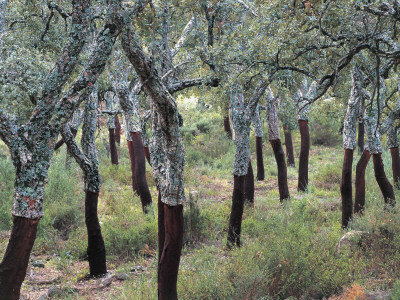 |
| Spanish cork oaks. The dark lower trunk had already had it's cork stripped. |
Wednesday, 5 October 2011
It's Not All Rubbish
Tuesdays are bin days for us in Preston. Over the last few years I've lived in a few different areas with a few different recycling and rubbish systems. Some places had rubbish collections ever week, some rubbish every week and recycling fortnightly. In Preston we have rubbish one week and recycling the other.
The recycling is split into two big boxes under the stairs. The yellow lid box is for paper and cardboard while the red lid (which has been missing for some time...) box is for glass, tins, foil and plastic bottles. We also have a food waste collection every week which is great as it mean the actual rubbish is kept to a minimum. Having weekly food rubbish collections also mean that what little rubbish is in the bin doesn't smell at all.
I love watching how much we recycle, put into food waste and rubbish. It really makes you think when you can see how much food you throw out each week. I'm also addicted to seeing how small I can get our rubbish bag every fortnight and how much of our waste I can get into the recycling boxes. The next step will be to keep rubbish down but also reduce recycling and food waste. Recycling's great but it's better not to make the waste in the first place! My veg box is helping as we no longer have plastic packaging for that, just a big cardboard box which we give back each week to be reused.
Rubbish has been in the news as well as on my mind this week. On Monday the Communities Secretary Eric Pickles announced that £250 million is going to be found to encourage councils to provide weekly rubbish collections. Environment groups and those against the austerity cuts have been horrified. It does seem a little surprising that when everything seems to be being cut there's money around for extra bin collections.
I know some people complain that in the summer after two weeks their rubbish smells or that in a large household bins fill up within a week. But if the recycling's separate and clean that won't smell, which with good recycling facilities should be most of the household waste. With regular food waste collections, and a desperately needed reduction in throwing good food away, rubbish won't be smelly and won't fill up as quickly.
I don't live in a big family house but in a student house of 6 the recycling boxes only got full after two weeks and we only filled the bin once a week. So that's 2 full bin bags a fortnight, easy to fit into the wheelie bin and that included all the food waste as we couldn't compost or recycle it.
The Independent talked about the governments proposed changes here, while The Guardian discusses it here and the BBC covers it here. There's a lot of comments from both sides of the debate so have a read for more info.
The recycling is split into two big boxes under the stairs. The yellow lid box is for paper and cardboard while the red lid (which has been missing for some time...) box is for glass, tins, foil and plastic bottles. We also have a food waste collection every week which is great as it mean the actual rubbish is kept to a minimum. Having weekly food rubbish collections also mean that what little rubbish is in the bin doesn't smell at all.
I love watching how much we recycle, put into food waste and rubbish. It really makes you think when you can see how much food you throw out each week. I'm also addicted to seeing how small I can get our rubbish bag every fortnight and how much of our waste I can get into the recycling boxes. The next step will be to keep rubbish down but also reduce recycling and food waste. Recycling's great but it's better not to make the waste in the first place! My veg box is helping as we no longer have plastic packaging for that, just a big cardboard box which we give back each week to be reused.
Rubbish has been in the news as well as on my mind this week. On Monday the Communities Secretary Eric Pickles announced that £250 million is going to be found to encourage councils to provide weekly rubbish collections. Environment groups and those against the austerity cuts have been horrified. It does seem a little surprising that when everything seems to be being cut there's money around for extra bin collections.
I know some people complain that in the summer after two weeks their rubbish smells or that in a large household bins fill up within a week. But if the recycling's separate and clean that won't smell, which with good recycling facilities should be most of the household waste. With regular food waste collections, and a desperately needed reduction in throwing good food away, rubbish won't be smelly and won't fill up as quickly.
I don't live in a big family house but in a student house of 6 the recycling boxes only got full after two weeks and we only filled the bin once a week. So that's 2 full bin bags a fortnight, easy to fit into the wheelie bin and that included all the food waste as we couldn't compost or recycle it.
The Independent talked about the governments proposed changes here, while The Guardian discusses it here and the BBC covers it here. There's a lot of comments from both sides of the debate so have a read for more info.
Sunday, 2 October 2011
Autumn Cleaning
Cleaning isn't my favourite weekend activity but this weekend some of if was quite interesting. I've read a lot about "green" cleaning methods, using stuff that you already have in your cupboards instead of harsh chemicals. It's meant to be better for the environment because you're not putting dangerous chemicals into the water system (when you wash them down the drain) and better for you because your not breathing the chemicals in. But do these homemade cleaning products really work? I tried three out.
- Vinegar window cleaner: I've used this in the past and I find it works almost as well as window cleaner. Mix some vinegar (I normally use 1:10 vinegar:water) with some hot water and use an old clean rag to wipe down inside and outside windows. Then use a clean towel to dry and polish. This takes a little more time than the usual methods but really works well, even better if you put the vinegar mixture in an old spray bottle.
- Bicarbonate of soda microwave cleaner: I read this in a magazine a while ago. The method said to put equal parts of bicarbonate of soda and boiling water in a microwavable dish and pop it in the microwave for 2 minutes. This is meant to loosen all the dirt inside the microwave so that you can just wipe it off. Maybe I did it wrong but it really didn't do anything. Much better was hot water and scrubbing, only took a few minutes so no cleaning product needed, just elbow grease.
- Brown sauce for metal cleaning: I've recently bought some old brass/pewter (can't tell which) cups and wanted to give them a really good clean. I've found a few cleaning suggestions on the internet including ketchup, brown sauce and a mixture of brown sauce, salt and vinegar. I tried all three. I rubbed the mixture onto the cups, left it for a few minutes and then wiped off and washed with hot water. It definitely got a lot of the dirt off but not as good as actual metal cleaner. It smelt better than normal metal polish and I think it worked at least half as well, I'll be using it again. Out of the three the brown sauce worked best, but only by a little. I'm not sure whether it's the vinegar content or something else that changes the effectiveness. Does anyone else know?
I enjoyed my green cleaning experiments and although there were mixed results I'll be using some of them in the future. It was nice to get things clean without getting dizzy from chemical smells. Does anyone else have any green cleaning methods I can try out?
Subscribe to:
Posts (Atom)