Today I've been having a bit of a winter clear out and tidy up. It's good to get the house tidy and in order before filling it with decorations and, a little later, nice new presents. During my tidying I found lots of environment and conservation leaflets I've collected from various places over the last few months and it's given me a new sense of enthusiasm.
In particular, I rediscovered the Book of Green which I found in the Beautiful Planet cafe in Preston. This little book is free and is an "eco-living directory" full of companies and products that are ethical or environmentally friendly. The book comes out once a year and has been running since 2006; it's also online here.
Looking through, the book is split up into sections including Food and Drink, Travel and Leisure, Green Child and Business Services. It's a great resource to flick through for ideas and having it all collected together makes it easier to fight the urge to just take the easy option when buying things and forget the environmental impacts (both direct and indirect).
The clothing and jewellery pages are filling my mind with thoughts of post-Christmas shopping while the Eco-builds section makes me think wistfully of future dream homes full of eco-friendly gagets and powered by renewable energy. It's going to be a good source of ideas for Christmas presents for friends and family too, although I'm still busy with crafting home made gifts most evenings-hopefully they'll be done before the big day!
Why not have a look at the Book of Green online and see if it sparks and ideas for last minute presents for you?
Showing posts with label Sustainability. Show all posts
Showing posts with label Sustainability. Show all posts
Friday, 9 December 2011

Friday, 18 November 2011
My Beans Dilemma
Baked beans are an incredibly versatile food stuff. Pop them in stews or pasta sauces, have them with your full English, on toast or a baked potato; they're great however you eat them. They are low fat, vegetarian and one of your five a day portions of fruit and veg, definitely a super-food.
Their simplicity is one reason why they're so useful at lunch times. Take in a few slices of bread and you can easily have beans on toast for lunch and feel all warmed inside and healthy too. It's not a huge hassle, but taking them out the tin, finding a microwavable container, cooking them and then washing up all seems more effort than taking sandwiches. Then there's the problem of size, one tin is a little too big for a lunchtime and the smaller tins at 150g are just not quite enough. So the new 200g snack pots are great because you have the right amount of beans for lunch and you can pop the plastic containers straight into the microwave and then bin them straight after.
It's so easy. Just open, cook, then bin the packaging. But that's "bin the packaging" not recycle the packaging. One of my favourite things about baked beans is that (apart from the plastic wrapping around 4 packs) they come in completely recyclable packaging. I've never met anyone who wouldn't automatically recycle tins, it's ingrained in our lifestyles. But the new plastic containers are much harder to recycle. I definitely can't here in Preston, I might have been able to recycle the main pot at university in Durham but not the plastic film lid. So the question is, do I sacrifice sustainable packaging for convenience of cooking?
I don't have an answer to that. I love the convenience of the new pots, but hate the waste that the new product brings over the old version. It seems backwards to move from a sustainable packaging to non-sustainable. Maybe I am being a little naive about what people do with their tins at work, I might be in the minority to carefully wash mine and pop into my bag to take home to recycle if there aren't facilities in the office. For now I'm sticking to leftovers and sandwiches but I'm still jealous of colleagues who sit eating their warm (just the right amount of) beans on toast at lunch time.
What are your green dilemmas? Post a comment to discuss!
Their simplicity is one reason why they're so useful at lunch times. Take in a few slices of bread and you can easily have beans on toast for lunch and feel all warmed inside and healthy too. It's not a huge hassle, but taking them out the tin, finding a microwavable container, cooking them and then washing up all seems more effort than taking sandwiches. Then there's the problem of size, one tin is a little too big for a lunchtime and the smaller tins at 150g are just not quite enough. So the new 200g snack pots are great because you have the right amount of beans for lunch and you can pop the plastic containers straight into the microwave and then bin them straight after.
It's so easy. Just open, cook, then bin the packaging. But that's "bin the packaging" not recycle the packaging. One of my favourite things about baked beans is that (apart from the plastic wrapping around 4 packs) they come in completely recyclable packaging. I've never met anyone who wouldn't automatically recycle tins, it's ingrained in our lifestyles. But the new plastic containers are much harder to recycle. I definitely can't here in Preston, I might have been able to recycle the main pot at university in Durham but not the plastic film lid. So the question is, do I sacrifice sustainable packaging for convenience of cooking?
I don't have an answer to that. I love the convenience of the new pots, but hate the waste that the new product brings over the old version. It seems backwards to move from a sustainable packaging to non-sustainable. Maybe I am being a little naive about what people do with their tins at work, I might be in the minority to carefully wash mine and pop into my bag to take home to recycle if there aren't facilities in the office. For now I'm sticking to leftovers and sandwiches but I'm still jealous of colleagues who sit eating their warm (just the right amount of) beans on toast at lunch time.
What are your green dilemmas? Post a comment to discuss!
Tuesday, 15 November 2011
Telling Tales
Last week I had lots of train journeys around the country. Most of them were after 5pm so it was dark and I didn't get very far with my train I-Spy. There was one trip in daylight, from Wellingborough to London where me (and my Dad) saw almost all the things on my list. I'm not sure if we saw anyone rushing for the train but it was 10am so there weren't many busy commuters rushing around.
On an earlier train journey that week I sat down and realised I'd brought nothing to read on my three hour journey. As the radio signal disappeared and I decided it really was too dark to play I-Spy I looked around for another source of entertainment and was pleasantly surprised to find a copy of Easy Living magazine in the pouch on the back of the seat in front. I've never read this magazine before but it was pretty good and kept me entertained throughout the journey. The best bit was knowing it was free and also that I was recycling someone else's old magazine.
It's a great idea leaving papers or magazines on trains once you're done with them, as long as the nice train staff don't tidy it away before someone else can pick it up to read. A completely read magazine is one thing but what about leaving your most loved book behind for someone else?
 While I was in Europe last summer I visited Hanover for an afternoon. Sat on a bench by a church I noticed a cupboard next to me, the cupboard was filled with books and as I sat people came and went leaving and taking various books. I was fascinated, even though all the titles were in German. This is an example of a recent new social trend of book leaving. Public places are designated as "libraries" and people drop off unwanted books and pick up new ones. It's a great idea and although I don't know if it's taken off in the U.K. let I do know of several similar schemes.
For example the Guardian newspaper launched its six-week book season this autumn by setting 15,000 books free into the wilds of the U.K. From coffee shops to stations platforms, children's novels to science books to craft annuals; the books were placed around the country for new readers to discover them, read them and pass them on again. Guardian readers were also encouraged to leave their own books with the special bookplate sticker (found free in the weekend papers) inside with a message from the original owner. Finders can then log their book online and look at where it came from and where it's been.
Along the same tracking lines the Bookcrossings phenomenon allows books to be shared and traced across the globe. Stickers are downloaded and printed than then they and the books they're attached to are left in places new owners can find them. The unique sticker number in the book is then logged into the website and the past and present owners can chat about the books, an organic online bookclub.
All these ideas, from leaving your magazine behind on purpose to setting books free into the world are all examples of all three of the R's: reduce, reuse, recycle. You reduce the number of books you buy by swapping them with others, you always reuse a great book reading it again and again and you recycle it onto the next new reader. A brilliant example of how sustainable living should be. Although, I'm not saying we don't need any new books. Old stories are good but a new tale always has a special feel.
Saturday, 12 November 2011
Fair Cities
I've lived in two cities in my life and by chance both have been certified Fairtrade Cities. As much as I like the idea this doesn't mean their ingredients all satisfy high environmental and ethical standards but that as a community the city has signed up to support the Fairtrade movement.
Preston gained it's Fairtrade status in 2004. To do this the businesses, residents, schools and colleges all signed up to help end world poverty by promoting, buying and selling Fairtrade products. There are five criteria that must be met, these are:
Preston gained it's Fairtrade status in 2004. To do this the businesses, residents, schools and colleges all signed up to help end world poverty by promoting, buying and selling Fairtrade products. There are five criteria that must be met, these are:
- Council: Local council passes a resolution supporting Fairtrade and serves Fairtrade products whenever possible.
- Commerce: A range of Fairtrade products are available from local retail outlets (the number is determined by how big the city/town is).
- Community: Local workspaces and community groups support Fairtrade and use Fairtrate products whenever possible.
- Common consensus: Media coverage and events raise awareness and understanding of Fairtrade across the community.
- Captains: A local Fairtrade steering group is convened to ensure the Fairtrade campaigns continue to develop and gain new support.
Other than the sign as you enter Preston I hadn't really thought much about its Fairtrade status. I know there are several ethical produce shops in the centre but I haven't seen much else advertised. An additional requirement for Fairtrade cities is that they have a Fairtrade Directory. I've just found the one for Preston and as well as the supermarkets and cafes I already know about there are lots more to seek out and try.
There are lots of Fairtrade Towns and Cities around the country. Why not look up your nearest and find out about campaigns and activities near you? Or if you don't have one near by look for the shops and groups that support Fairtrade where you live.
Monday, 7 November 2011
Stamp collecting
I have a tendency to hoard things, whether it is a small plateful of leftover vegetables, old worn out jeans or jam jars. But the pots of used stamps that have always been present in my home have nothing to do with my hoarding nature. As far as I'm concerned stamps cannot be thrown away under any circumstance, that's just how I've grown up. Stamps go in the stamps pot-that is their home. For years I didn't even questions why this happened, or where the stamps went when, periodically, the pot became empty. The answer is not that we are a family of philatelists (although family tell me Dad dabbled in this before catching the bird watching bug!) but, as it often does, comes back to environmental concerns.
I've been watching the BBC's new series Frozen Planet and this week it featured some gorgeous shots of the Wandering Albatross. These birds are some of the heaviest flying birds in the world reaching 10kg and (along with the Royal Albatross) have the biggest wingspan of 3.5 meters (11ft). I'm quite a tall person at 5ft 11" but that means I'm only just taller than one wing of these huge birds.
There are 22 species of albatross and they live in every ocean, except the North Atlantic, in the world. Most breed in the southern hemisphere, with three favouring the North Pacific and one on the equator. Unfortunately 10 species are endangered or critically endangered with all the other species either vulnerable or near threatened according to the International Union for Conservation of Nature Red List. In fact this means that 18 out of the 22 are seen to be at serious risk of extinction. There are many threats to the various types of albatross. The normal threats that affect almost all sealife such as floating plastic rubbish, pollution and climate change are important but there are also problems from introduced predators and various types of fishing. Longlined fishing involves (unsurprisingly) long lines of fishing line with hooks all along it. Problems arise when the hooks are visible from the air and albatrosses get hooked and killed. Trawling also kills a huge number of birds sometimes being caught in nets but also hitting the cables on the ships. The death rate of albatrosses has reached such a level that the birds can't reproduce quickly enough to sustain the population.
So, this is all very bad but what can be done to save these beautiful birds and how does any of this relate to the stamps? Solutions are simpler than you may think. Attaching "scare lines" (a curtain of plastic streamers) to boats, sinking the hooks deeper in the water and dying the bait blue are all simple ways to deter albatrosses and the Albatross Task Force has been working hard on the open sea to educate fishermen of the dangers and solutions. Many fishermen are really happy to make these simple changes once they are aware of the problem and the group have seen huge success over the past few years.
The RSPB are working closely with the Task Force and you can help support them. To join the fight to save albatrosses you could make a donation, buy albatross postcards or cuddly toys or, like me, save your stamps. While individually a used second class stamp doesn't have much value by collecting all our used stamps together and selling them on the RSPB raised £15,000 last year for the albatross campaign. Only £50 worth of stamps will buy a tori-line (scare line) for a long line fishing vessel.
It's little by little but to save these huge beautiful birds I'll keep saving my stamps and sending them to the RSPBs campaign address. And the odd looks from visitors when they find my piles of stamps are a great excuses for me to educate them to the albatrosses plight and hopefully spread the collecting bug.
Saturday, 5 November 2011
Remember, Remember
 I don't know how many countries celebrate the failure of a terrorist attack 400 years after it was meant to have happened, but being partial to fireworks I'm quite please the U.K. does. Fireworks night (aka Guy Fawkes night, Bonfire night and 5th November) has lost a lot of its original themes of anti-Catholicism, class confrontations and nationalism. Nowadays it's all about the brightness and being so close to other festivals of lights, such as Diwali, it's common for fireworks to start mid October and continue until mid November.
Over the last five years, as well as the traditional fireworks, new lights have appeared on the horizon, those of Chinese lanterns. You've almost certainly seen them in the nights sky, points of orange light floating across the skyline. What they actually are is paper/plastic boxes with a tiny tea light heating the air inside the box and lifting it up into the sky. These little lights are really beautiful and it's lovely to see them slowly floating across the sky, sometimes up to 30 miles. They're pretty cheap too at about £2 each.
But (there always seems to be a but with good things) don't let the pretty lights dazzle you into missing the large risks and dangers associated with the lanterns. Last year, while watching lanterns at a family fireworks party, a three year old boy was seriously injured when part of a melted lantern fell onto his face. Everyone knows the dangers of fireworks but the dangers of these new lanterns are less well know.
As well as possible injuries there are also risks to the environment, farm animals and emergency services. There have been several wild fires attributed to the lanterns over the last few years and also fires on farm, hay barns and injury to livestock. Many of the lanterns are now said to be biodegradable, but people seem sceptical about this and I always wonder how long they take to degrade, even if they do so. Wild fires will damage natural habitats and impact upon unsuspecting animals while the hot wire from fallen lanterns lies in wait for small unsuspecting paws.
There are less obvious problems for the emergency services with these lanterns. Between 1st October 2009 and 30th September 2010 there were 128 false alerts to the Maratime and Coastguard Agency attributed to Chinese lanterns. People see the lanterns out at sea and mistaken for parachute signal flares and so the emergency services are called. On 26 occasions lifeboats were launched and on two occasion helicopters mobilised.
There are calls for a ban on Chinese lanterns or at least limiting them to certain times of year. I'm sure there are negative environmental impacts of fireworks too, even if its just the hundreds of cardboard and plastic shells that fall to the ground once they've been lit.
Whatever you're doing this weekend, remember to wrap up warm and keep safe. Also, if you're having a bonfire check it for hedgehogs before you lights it! They love the big piles of leaves and sticks as a warm place to hibernate.
Wednesday, 2 November 2011
7 billion and counting...
This week the 7 billionth person was born, that's 7 thousand million people. When I was born 22 years ago there were almost 5.2 billion people, so the population has increased by slightly under 50% in a quarter of a century.
Recent news has focused on how the world will cope with this huge population number as if it's suddenly increased but the population on Monday was only a bit bigger than on Sunday. The numbers are going up fast, but there aren't instant large increases. The question that should be on everybody's lips is how do we cope right now with the current population. Estimates say that 1 in 7 people are currently hungry (not getting enough food, not just peckish) but world agriculture is producing enough food for every person to have 2,720 kilo-calories a day. That's more than enough to keep everyone full so what's going wrong? The main problems seem to come down to distribution and lack of land to grow or money to buy the necessary food.
As the population continues to increase so will the demand on land for both growing and living space. Already our lives encroach hugely onto the natural world. Deforestation, building on greenbelt and pollution and over fishing in the seas are leaving a very clear mark. Seven billion will be the number that's hitting the headlines this week but the world is also facing the 6th biggest mass extinction in history. The International Union for Conservation of Nature found that 36% of the species it assessed in 2008 were in danger of extinction; a scary statistic.
Some people are using the population size landmark to raise awareness of these connected issues in a rather unusual way. The Centre for Biological Diversity in the U.S.A. has launched its 7 Billion and Counting campaign. As well as national adverts, local events and online activities the group are giving away 100,000 condoms featuring six different designs. Each design pictures a different endangered species and facts about the threat caused to our natural world by overpopulation. The aim is to get people talking about the effect of the population boom and how we can help to stabilise the population.
I don't remember where I first hear the slogan "start at 30 and stop at 2" but with people living longer it does seem to make sense to wait a little later for children and only have enough children to replace the two people making them! What do you think? Populations are going to be a key issue in the next century along with climate change and a sustainable world. Let's hope we find solutions to all these interlinked problems.
Recent news has focused on how the world will cope with this huge population number as if it's suddenly increased but the population on Monday was only a bit bigger than on Sunday. The numbers are going up fast, but there aren't instant large increases. The question that should be on everybody's lips is how do we cope right now with the current population. Estimates say that 1 in 7 people are currently hungry (not getting enough food, not just peckish) but world agriculture is producing enough food for every person to have 2,720 kilo-calories a day. That's more than enough to keep everyone full so what's going wrong? The main problems seem to come down to distribution and lack of land to grow or money to buy the necessary food.
As the population continues to increase so will the demand on land for both growing and living space. Already our lives encroach hugely onto the natural world. Deforestation, building on greenbelt and pollution and over fishing in the seas are leaving a very clear mark. Seven billion will be the number that's hitting the headlines this week but the world is also facing the 6th biggest mass extinction in history. The International Union for Conservation of Nature found that 36% of the species it assessed in 2008 were in danger of extinction; a scary statistic.
Some people are using the population size landmark to raise awareness of these connected issues in a rather unusual way. The Centre for Biological Diversity in the U.S.A. has launched its 7 Billion and Counting campaign. As well as national adverts, local events and online activities the group are giving away 100,000 condoms featuring six different designs. Each design pictures a different endangered species and facts about the threat caused to our natural world by overpopulation. The aim is to get people talking about the effect of the population boom and how we can help to stabilise the population.
I don't remember where I first hear the slogan "start at 30 and stop at 2" but with people living longer it does seem to make sense to wait a little later for children and only have enough children to replace the two people making them! What do you think? Populations are going to be a key issue in the next century along with climate change and a sustainable world. Let's hope we find solutions to all these interlinked problems.
Saturday, 8 October 2011
A Long Way For A Drink
How far would you go for a good bottle of wine? Even if you buy wine from across the street the chances are that the bottle and contents have had a long journey to your door.
English wine, although getting more common, isn't a mainstream product just yet. The English wines I've tried are delicious but it's not always easy to find them in your local supermarket. Wine from some of our nearest neighbours, France, Spain and Germany, are common in our shops though as well as bottles from further a field such as Australia, Chile and South Africa.
If we're trying to live more sustainable lives isn't it a contradiction to only buy local food but to buy wine from the other side of the planet? Following this line of thought I tend to automatically buy wines from France and Spain, ruling out wines from other countries even if they're Faritrade (more on that later). I always thought this must be better for the environment but after looking into it a bit more I'm not so sure. After reading an article on the carbon footprint of wines, here, I realised, as with food, it matters much more how the wine travels to my glass not always from where.
Only around 2% of the environmental impact of food comes from it's transportation but this figure could be as high as 34% for wine. A new initiative is to bulk ship wines and then bottle at the location of sale. For countries such as Australia this could reduce the carbon emissions of wine transport by 40%. This is great for large brands but impractical for small producers.
Once bottled it's also important to look at how the wine is transported. It's been calculated that a bottle of wine from Chile, shipped by sea container from Valparaiso to Felixstowe and then by road to Bristol uses about 318g of CO2. This is hard to comprehend but when I read that the average car uses 170g CO2 per kilometre it puts it into perspective. Wine from Spain and France may be shipped but may also be brought by truck which will have a higher carbon footprint. The real problem for most buyers who are trying to be ethical is there's no way of knowing exactly how the wine got to this country. I don't know if anything is being done about this at the moment but I'll definitely look at wines from further away more closely now as I can pretty much guarantee they'll have been shipped in.
Fairtrade was mentioned earlier. I'm almost addicted to the Faritrade logo, and if I see it on a product I automatically want to buy it, even if it's something I don't need. You often see the logo on wine from countries outside Europe such as Chile or Argentina or South Africa. Now I've stopped ruling these wines out I'll definitely pick more Fairtrade bottles up in the shops. The reason Fairtrade isn't used in all countries is because it's mainly a way of helping growers in developing countries. In Europe we already have minimum wage and employment laws to protect workers but other places don't have the same protection. As with all Fairtrade products the farms must pursue sustainable growing techniques, minimise use of chemicals, pay a fair wage and help support local community and social development.
So to round up the past few wine filled days: I'll definitely stick to picking wines which use corks (to help the wildlife I talked about yesterday) but I'll look more at wines from countries further away than Europe as they might not have higher travel emissions. If I do buy wine from developing countries I'll always buy Fairtrade so I know that my money goes to the farmers and also supports sustainable development.
English wine, although getting more common, isn't a mainstream product just yet. The English wines I've tried are delicious but it's not always easy to find them in your local supermarket. Wine from some of our nearest neighbours, France, Spain and Germany, are common in our shops though as well as bottles from further a field such as Australia, Chile and South Africa.
If we're trying to live more sustainable lives isn't it a contradiction to only buy local food but to buy wine from the other side of the planet? Following this line of thought I tend to automatically buy wines from France and Spain, ruling out wines from other countries even if they're Faritrade (more on that later). I always thought this must be better for the environment but after looking into it a bit more I'm not so sure. After reading an article on the carbon footprint of wines, here, I realised, as with food, it matters much more how the wine travels to my glass not always from where.
Only around 2% of the environmental impact of food comes from it's transportation but this figure could be as high as 34% for wine. A new initiative is to bulk ship wines and then bottle at the location of sale. For countries such as Australia this could reduce the carbon emissions of wine transport by 40%. This is great for large brands but impractical for small producers.
Once bottled it's also important to look at how the wine is transported. It's been calculated that a bottle of wine from Chile, shipped by sea container from Valparaiso to Felixstowe and then by road to Bristol uses about 318g of CO2. This is hard to comprehend but when I read that the average car uses 170g CO2 per kilometre it puts it into perspective. Wine from Spain and France may be shipped but may also be brought by truck which will have a higher carbon footprint. The real problem for most buyers who are trying to be ethical is there's no way of knowing exactly how the wine got to this country. I don't know if anything is being done about this at the moment but I'll definitely look at wines from further away more closely now as I can pretty much guarantee they'll have been shipped in.
Fairtrade was mentioned earlier. I'm almost addicted to the Faritrade logo, and if I see it on a product I automatically want to buy it, even if it's something I don't need. You often see the logo on wine from countries outside Europe such as Chile or Argentina or South Africa. Now I've stopped ruling these wines out I'll definitely pick more Fairtrade bottles up in the shops. The reason Fairtrade isn't used in all countries is because it's mainly a way of helping growers in developing countries. In Europe we already have minimum wage and employment laws to protect workers but other places don't have the same protection. As with all Fairtrade products the farms must pursue sustainable growing techniques, minimise use of chemicals, pay a fair wage and help support local community and social development.
So to round up the past few wine filled days: I'll definitely stick to picking wines which use corks (to help the wildlife I talked about yesterday) but I'll look more at wines from countries further away than Europe as they might not have higher travel emissions. If I do buy wine from developing countries I'll always buy Fairtrade so I know that my money goes to the farmers and also supports sustainable development.
Friday, 7 October 2011
Thirst For Knowledge
No veg box yesterday as we haven't finish all the veg from last week! Instead of food I'm thinking about drinks. Today I'm off to a fancy dress party. I'm no wine expert but there's so much choice that surely there's an environmentally friendly option I can find. As well as taste and price there are several key things I look for in a good bottle, but having researched it a little harder some things aren't as simple as I first thought. Over the next two days I'll look at a few of the environmental issues connected to wine.
The first thing I look at is what's in the top of my bottle. In the past 20 years there's been a huge expansion in the number of products used for bottle closure. Before I was born cork was used almost exclusively, and that cork was produced just as exclusively from countries on the Mediterranean, mostly Spain and Portugal. Nowadays screw caps, plastic corks and glass stoppers are easy to find on the shelves so is one better than another and why the sudden change?
Cork monopolised the market for centuries but about 20 years ago scientists discovered TCA, a chemical which taints wine and causes it to go off. TCA is estimated to be in 1-10% of corks and currently cannot be identified before the cork is put into the bottle, you only know it's there when the wine goes off. This problem forced producers to start looking for other ways to seal their bottles.
The most common alternatives are plastic corks and screw tops. Screw tops have the added advantage that you can easily reseal the bottle if you only want a glass so is seen as better than cork for reasons other than a lack of TCA. Plastic corks are designed to look, feel and pop like natural corks. I hate plastic corks. Something about the very fake, plastic feel puts me off, especially when it's set against the almost natural feel of the glass wine bottle. I also can't help thinking that making plastic corks isn't the best use of the world's limited oil resources.
So I don't mind screw tops and I hate plastic, but is there any environmental reason for picking one type
over another. Other than the fact that cork is renewable while metal screw tops and plastic corks aren't there's also another benefit of using cork. The cork oak forests in Spain and Portugal are facing serious danger since the cork percentage of the closure market dropped. The cork oaks of southern Spain are rich in insects, birds, mammals and plants as the production of cork is naturally kind to the surrounding environment. Cork is the stripped bark from the oak trees and this must be done carefully to preserve the trees health. This means that the trees are left safe for wildlife to use while cork can be harvested for decades without ill effects. With a drop in cork demand these ancient forests might be lost forever if the land use is forced to change and with it we could lose the Iberian Lynx, the Iberian Imperial Eagle and the Barbary Deer.
Having seen this beautiful, rare environment in the past I know it's worth protecting so I'm going to try and buy cork wine whenever I can. But is it environmentally friendly to ship cork out to countries that don't produce it themselves, or is it better for Chilean and Australian wines to use screw tops? More on this tomorrow.
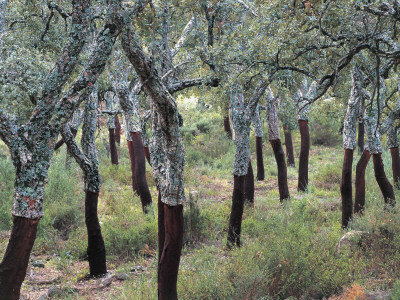 |
| Spanish cork oaks. The dark lower trunk had already had it's cork stripped. |
Wednesday, 5 October 2011
It's Not All Rubbish
Tuesdays are bin days for us in Preston. Over the last few years I've lived in a few different areas with a few different recycling and rubbish systems. Some places had rubbish collections ever week, some rubbish every week and recycling fortnightly. In Preston we have rubbish one week and recycling the other.
The recycling is split into two big boxes under the stairs. The yellow lid box is for paper and cardboard while the red lid (which has been missing for some time...) box is for glass, tins, foil and plastic bottles. We also have a food waste collection every week which is great as it mean the actual rubbish is kept to a minimum. Having weekly food rubbish collections also mean that what little rubbish is in the bin doesn't smell at all.
I love watching how much we recycle, put into food waste and rubbish. It really makes you think when you can see how much food you throw out each week. I'm also addicted to seeing how small I can get our rubbish bag every fortnight and how much of our waste I can get into the recycling boxes. The next step will be to keep rubbish down but also reduce recycling and food waste. Recycling's great but it's better not to make the waste in the first place! My veg box is helping as we no longer have plastic packaging for that, just a big cardboard box which we give back each week to be reused.
Rubbish has been in the news as well as on my mind this week. On Monday the Communities Secretary Eric Pickles announced that £250 million is going to be found to encourage councils to provide weekly rubbish collections. Environment groups and those against the austerity cuts have been horrified. It does seem a little surprising that when everything seems to be being cut there's money around for extra bin collections.
I know some people complain that in the summer after two weeks their rubbish smells or that in a large household bins fill up within a week. But if the recycling's separate and clean that won't smell, which with good recycling facilities should be most of the household waste. With regular food waste collections, and a desperately needed reduction in throwing good food away, rubbish won't be smelly and won't fill up as quickly.
I don't live in a big family house but in a student house of 6 the recycling boxes only got full after two weeks and we only filled the bin once a week. So that's 2 full bin bags a fortnight, easy to fit into the wheelie bin and that included all the food waste as we couldn't compost or recycle it.
The Independent talked about the governments proposed changes here, while The Guardian discusses it here and the BBC covers it here. There's a lot of comments from both sides of the debate so have a read for more info.
The recycling is split into two big boxes under the stairs. The yellow lid box is for paper and cardboard while the red lid (which has been missing for some time...) box is for glass, tins, foil and plastic bottles. We also have a food waste collection every week which is great as it mean the actual rubbish is kept to a minimum. Having weekly food rubbish collections also mean that what little rubbish is in the bin doesn't smell at all.
I love watching how much we recycle, put into food waste and rubbish. It really makes you think when you can see how much food you throw out each week. I'm also addicted to seeing how small I can get our rubbish bag every fortnight and how much of our waste I can get into the recycling boxes. The next step will be to keep rubbish down but also reduce recycling and food waste. Recycling's great but it's better not to make the waste in the first place! My veg box is helping as we no longer have plastic packaging for that, just a big cardboard box which we give back each week to be reused.
Rubbish has been in the news as well as on my mind this week. On Monday the Communities Secretary Eric Pickles announced that £250 million is going to be found to encourage councils to provide weekly rubbish collections. Environment groups and those against the austerity cuts have been horrified. It does seem a little surprising that when everything seems to be being cut there's money around for extra bin collections.
I know some people complain that in the summer after two weeks their rubbish smells or that in a large household bins fill up within a week. But if the recycling's separate and clean that won't smell, which with good recycling facilities should be most of the household waste. With regular food waste collections, and a desperately needed reduction in throwing good food away, rubbish won't be smelly and won't fill up as quickly.
I don't live in a big family house but in a student house of 6 the recycling boxes only got full after two weeks and we only filled the bin once a week. So that's 2 full bin bags a fortnight, easy to fit into the wheelie bin and that included all the food waste as we couldn't compost or recycle it.
The Independent talked about the governments proposed changes here, while The Guardian discusses it here and the BBC covers it here. There's a lot of comments from both sides of the debate so have a read for more info.
Saturday, 1 October 2011
Party Time
 The Green Party has one MP, two MEPs and 130 councilors on 43 councils across the UK. While not yet quite a mainstream party, membership has doubled in the last few years and is still growing steadily.
I've decided to volunteer one day a week for the Green Party's North West region; to gain experience in campaigning, media and general political policy. My first job will be to look at the regions university local groups, their current activities and what they need to expand.
Today I went to the regional meeting in Preston's County Hall- a very impressive building! I met with Emily Heath, their regional coordinator and a member of Lancaster City Council, to discuss what my volunteering might involve.
In the morning there was a choice of two workshops. I chose "Why Capitalism is destroying the planet", run by Joel Rasbash, a supporter of the Green Party in Carlisle and a very engaging speaker. Although I didn't know much about capitalism before the session was very interesting and informative. The workshop discussed the basic principles behind capitalism, it's historic relevance and the consequences for economics, society and the environment. Then the discussion was opened to the room and there was a 45 minute discussion of the key points. I didn't understand a lot of it but it was very interesting to see that the main points weren't environment based but social and economic concerns. It's easy to forget that the Green party isn't all about the environment. A lot of their policy is built around sustainable living, which involves renewable energy and recycling, but their policies stretch across all areas of governance.
The afternoon was taken up by reports from regional local groups, current campaigning updates and feedback from the Party conference which was help in Sheffield last month. I found the campaign updates particularly interesting. Currently the main concerns for the North West region are opposing the governments planned austerity cuts, disposal of nuclear waste, the national planning policy framework (which I talked about on Thursday) and Fracking-a very real concern for the region at the moment.
Friday, 30 September 2011
Growing My Own
It's Friday and that means a new veg box arrived yesterday!
This week my vegbox was
Another benefit is that, unlike for the supermarkets, there are less restrictions on size and shape of the vegetables, just taste and quality matter. For the supermarket packaging courgettes had to be less than 21cm, now they just have to be delicious and ripe.
This week my vegbox was
- Onions
- Carrots
- Potatoes
- Salad leaves
- Red peppers
- Leeks
- Cauliflower
All of the veg is UK grown except the peppers which come from Spain. My UK veg comes from Home Farm in Yorkshire and is grown by Peter Richardson and his team of farm workers. The farm was converted to organic in 1996 and Peter clearly feels it gets them closer to both their crops and customers. On the Riverford website he says
"You feel more of an intimate relationship as you weed the crops, rather than just going across with a sprayer. "
"There’s a closer connection with the customer, there’s no two ways about it. "He has a closer relationship with customers because, unlike before, the veg is now packed on the farm. He can see what is being sold each week and it leaves the farm exactly how it arrives on my door. Previously the veg left the farm to be packed and then sent on to be sold.
Another benefit is that, unlike for the supermarkets, there are less restrictions on size and shape of the vegetables, just taste and quality matter. For the supermarket packaging courgettes had to be less than 21cm, now they just have to be delicious and ripe.
Looking forward to cooking up some yummy meals with all this. Last week I used the sweet potatoes, carrots, potatoes and onions to make soup. It was great and very orange. We used four portions up after we cooked it and I've frozen another 5-6 in the freezer. All I did was fry/roast the veg, blend it all and add about a pint of chicken stock and some spices.
 |
| Lettuce on the left and middle, chilies on the right where you can see the cardboard sticks they were planted next to. |
I've been growing some food of my own too. Three weeks ago I planted some very old lettuce and chili seeds in a box on my kitchen windowsillNow they've started growing and soon the lettuce will be ready to start picking and chilies will be ready to be planted up into separate pots. I love having nice green leaves growing in the house while everything outside is dying back. It was so easy, as long as I don't forget to water them every few days!
Thursday, 29 September 2011
Planning Ahead
The biggest environmental news story in the past month has definitely been about planning. Way back in July the UK government released a draft National Planning Policy Framework (NPPF) which outlined proposed changes to planning policy. Since then environmental NGOs have repeatedly raised concerns over the new plans and over the last two weeks a row has broken out, mainly between the National Trust and the Government but other NGOs have been getting involved too.
So what is it all about?
First let look at what the changes actually say. The current system tells local authorities to oppose any development that damages sites of particular environmental or scientific importance. This includes sites protected by UK, European or international laws (e.g. SSSIs, protected species, protected habitat). The only way this sort of development can be approved is if the site isn't specifically protected under law already (if it is you really can't damage it) AND if the benefits of the development outweigh the negative impacts it will have. That seems like a pretty sensible system. You must prove that you won't damage the environment, and if you do the benefits are much much better than the damage.
The new NPPF now puts much more emphasis on the importance of economic growth. It says that local authorities should support developments "unless the adverse impacts of allowing the development would significantly and demonstrably outweigh the benefits". Now this sounds quite similar to above, if the damage is greater than the benefits then you can't build, but it's more subtle than that. I read a good explanation on another blog, the difference between the old and the new policy is the difference between innocent until proven guilty and guilty until proven innocent.
This is a HUGELY simplified version of the debate. There is lots of case-law, legislation and previous protection to be taken into account and how the policy will be used will vary from place to place so it's not simple. But the above seems to be the key issue people are fighting about.
Now, whose actually fighting and on which side?
On the Yes side: The Government (Bob Neil the minister for Communities and Local Government, George Osbourne, Eric Pickles and even David Cameron have all spoken on the issue) and some developers and business (although I can't find any specific names anywhere on the internet at the time of writing!)On the NO side: Environmental NGOs (The National Trust in particular as well as RSPB, Woodland Trust, Friends of the Earth, Buglife and others) and the lobbying group 38degrees.
This gives quite a clear image of whose fighting for which issue. Those saying yes are looking to improve the economy first and worry about environmental sustainability second. George Osbourne even said “No one should underestimate our determination to win this battle.” While the environment charities are doing what it's their job to do- raise awareness of possible threats to our ecosystems, wildlife and environment that doesn't have a voice of its own. And to be honest, the seem to be making their points a lot more calmly and rational than government.
Both environment NGOs and business are fighting for their specific interests, but surely government shouldn't be fighting. Government should be listening to all sides then deciding what's best for the country, both in the short and long term. Yes, that might mean arguing point out with people but not actively going out to fight specific groups.
This one blog doesn't contain enough information to draw conclusions about the new planning policy. If you want more information have a look at this, this, this and this. There are several campaigns and petitions you can sign if you want changes to the current proposals. You can find them here and here. Also there is the official government consultation website here. Get involved and have your say, either on this blog, oen of the petitions or the government site.
So what is it all about?
First let look at what the changes actually say. The current system tells local authorities to oppose any development that damages sites of particular environmental or scientific importance. This includes sites protected by UK, European or international laws (e.g. SSSIs, protected species, protected habitat). The only way this sort of development can be approved is if the site isn't specifically protected under law already (if it is you really can't damage it) AND if the benefits of the development outweigh the negative impacts it will have. That seems like a pretty sensible system. You must prove that you won't damage the environment, and if you do the benefits are much much better than the damage.
The new NPPF now puts much more emphasis on the importance of economic growth. It says that local authorities should support developments "unless the adverse impacts of allowing the development would significantly and demonstrably outweigh the benefits". Now this sounds quite similar to above, if the damage is greater than the benefits then you can't build, but it's more subtle than that. I read a good explanation on another blog, the difference between the old and the new policy is the difference between innocent until proven guilty and guilty until proven innocent.
This is a HUGELY simplified version of the debate. There is lots of case-law, legislation and previous protection to be taken into account and how the policy will be used will vary from place to place so it's not simple. But the above seems to be the key issue people are fighting about.
Now, whose actually fighting and on which side?
On the Yes side: The Government (Bob Neil the minister for Communities and Local Government, George Osbourne, Eric Pickles and even David Cameron have all spoken on the issue) and some developers and business (although I can't find any specific names anywhere on the internet at the time of writing!)On the NO side: Environmental NGOs (The National Trust in particular as well as RSPB, Woodland Trust, Friends of the Earth, Buglife and others) and the lobbying group 38degrees.
This gives quite a clear image of whose fighting for which issue. Those saying yes are looking to improve the economy first and worry about environmental sustainability second. George Osbourne even said “No one should underestimate our determination to win this battle.” While the environment charities are doing what it's their job to do- raise awareness of possible threats to our ecosystems, wildlife and environment that doesn't have a voice of its own. And to be honest, the seem to be making their points a lot more calmly and rational than government.
Both environment NGOs and business are fighting for their specific interests, but surely government shouldn't be fighting. Government should be listening to all sides then deciding what's best for the country, both in the short and long term. Yes, that might mean arguing point out with people but not actively going out to fight specific groups.
This one blog doesn't contain enough information to draw conclusions about the new planning policy. If you want more information have a look at this, this, this and this. There are several campaigns and petitions you can sign if you want changes to the current proposals. You can find them here and here. Also there is the official government consultation website here. Get involved and have your say, either on this blog, oen of the petitions or the government site.
Wednesday, 28 September 2011
Shades of Green
Lots of the words in yesterday's list are used for people and lifestyles rather than products. Light, dark and bright green all fall into this category and describe three green philosophy types. I've read these terms often but didn't really know what they meant. A great article which explains all is this one by Alex Steffen (who coined the term Bright Green). Here's a quick guide:
Light Green environmentalism is the belief that changes on an individual level are the main solution to environmental problems. Lots of people making lots of little changes will snowball and all together will begin to make a big difference. It also relies on people demanding change as consumers which will push the markets towards more environmentally friendly products. This form of environmentalism has helped spread the environmental idea and made it a fashionable lifestyle choice, but it also generates a lot of "green fatigue" as you often feel that your little changes don't have an impact in the grand scheme.
Dark Green environmentalism focuses on community action. More campaigning, activism and a move away from our current consumer lifestyle, back to a more local, community one. The idea is that small communities producing locally will have short supply chains and allow individuals to take control of their impact on the environment. This involves making bigger changes and commitments, not just remembering to recycle each week. The Dark Green philosophy has been taken up in particular by transition towns where communities prepare for the dual challenges of peak oil and climate change by reducing their fossil fuel reliance. This focus on community action works well and does a lot of good. However, it's often associated with the doom and gloom side of environmentalism, with messages of imminent disaster, which often puts people off doing anything green at all.
Bright Green is the newest of these terms. It's philosophy is a belief that sustainable innovation and design are key to a sustainable society. To fix environmental problems we need an economically strong green industry. We need industry to redesign systems and rethink infrastructure to make integral changes to how society works. This is how the biggest changes happen and while you can agree with this philosophy, unless you're an inventor or in charge of major infrastructures it doesn't leave much room for individual action.
In reality most environmental issues require a mix of the three types of green. Recycling is a good example. You need individuals to recycle but you also need the community to have facilities to recycle, like collections or bins. On top of this you also need manufacturers to create the procedures for recycling and for creating new products.
Mos environmentalists would describe themselves as some shade between these greens and I think that's better than just being one. We need to use all the ways of changing our lifestyles and society for a greener future, not just stick to one because we like the label. At the moment I'm probably more light green than anything else but I'm really interested in getting involved in more dark green projects in my community and I think more environmental inventions and changes to industry would be great.
What colour green are you? What do you think about all this labeling?
Light Green environmentalism is the belief that changes on an individual level are the main solution to environmental problems. Lots of people making lots of little changes will snowball and all together will begin to make a big difference. It also relies on people demanding change as consumers which will push the markets towards more environmentally friendly products. This form of environmentalism has helped spread the environmental idea and made it a fashionable lifestyle choice, but it also generates a lot of "green fatigue" as you often feel that your little changes don't have an impact in the grand scheme.
Dark Green environmentalism focuses on community action. More campaigning, activism and a move away from our current consumer lifestyle, back to a more local, community one. The idea is that small communities producing locally will have short supply chains and allow individuals to take control of their impact on the environment. This involves making bigger changes and commitments, not just remembering to recycle each week. The Dark Green philosophy has been taken up in particular by transition towns where communities prepare for the dual challenges of peak oil and climate change by reducing their fossil fuel reliance. This focus on community action works well and does a lot of good. However, it's often associated with the doom and gloom side of environmentalism, with messages of imminent disaster, which often puts people off doing anything green at all.
Bright Green is the newest of these terms. It's philosophy is a belief that sustainable innovation and design are key to a sustainable society. To fix environmental problems we need an economically strong green industry. We need industry to redesign systems and rethink infrastructure to make integral changes to how society works. This is how the biggest changes happen and while you can agree with this philosophy, unless you're an inventor or in charge of major infrastructures it doesn't leave much room for individual action.
In reality most environmental issues require a mix of the three types of green. Recycling is a good example. You need individuals to recycle but you also need the community to have facilities to recycle, like collections or bins. On top of this you also need manufacturers to create the procedures for recycling and for creating new products.
Mos environmentalists would describe themselves as some shade between these greens and I think that's better than just being one. We need to use all the ways of changing our lifestyles and society for a greener future, not just stick to one because we like the label. At the moment I'm probably more light green than anything else but I'm really interested in getting involved in more dark green projects in my community and I think more environmental inventions and changes to industry would be great.
What colour green are you? What do you think about all this labeling?
Tuesday, 27 September 2011
What's In A Name?
Light Green, Dark Green, Bright Green, Sustainable, Eco-friendly, Environmental, Ethical, Fairtrade, Organic, FSC, Rainforest Alliance certified, Responsibly sourced, Local, Free range...
The list seems endless but what do all these labels stand for? If I'm going to green my life first I need to decide what that actually means.
To start with, the list can be split into two groups. Those which guarantee the product meets certain minimum conditions and others which sound nice but don't guarantee anything.
The five which do guarantee standards are:
Fairtrade - If a product has this label then it satisfies a list of social, economic and environmental standards set by the Fairtrade International Organisation. These standards include a fair wage for the producers, investment into development for the community and long term contracts so that growers can plan securely and sustainably.
Organic - Being organic tends to mean no chemicals, pesticides, genetic modification or other synthetic inputs. Any product that is labelled organic must meet strict UK, European and international standards. The most common organic certification is the Soil Association's. This exceeds the minimum requirements and assures that farms have high animal welfare standards, promote wildlife, don't use genetic modification or pesticides/chemicals and pursue sustainable farming techniques.
FSC - This stands for Forest Stewardship Council. The FSC logo appears on products that have come from well managed forests, so you can be certain you aren't contributing to the further destruction of global forests. These products range from furniture to toilet paper!
Rainforest Alliance certified - Similar to Faritrade (as far as I can see) this label guarantees that farms meet the standards of the Sustainable Agriculture Network. This means the farms use sustainable farm management and are also working towards improving local social and environmental standards. This label focuses more on sustainable farming than fair pay but still aims to promote economically sustainable farming methods so farmers have security too.
Free range - This is only a binding term for poultry and eggs in the UK. So if it says free rage on any other meat products it doesn't guarantee anything, although it's probably a good sign.
For chickens free range means continuous daytime access to open-air runs for at least half their lifetime. It also guarantees a slaughter age of at least 56 days, just less than two months! There are a few different standards for chickens and it's all a bit confusing. I'll do another blog on this another time once I've figured it out!
For eggs, free range means the hens have had continuous access to outdoor runs "mainly covered with vegetation" but sheds are often used where the hens have less than a square foot each. Again, there are lots of similar labels and I'll discuss this in more detail another time.
There's another way to split the labels too. Those which correspond to products such as food, furniture, appliances, and those which describe people and lifestyles such as light, dark and bright green. I'll talk more about these people labels tomorrow.
The list seems endless but what do all these labels stand for? If I'm going to green my life first I need to decide what that actually means.
To start with, the list can be split into two groups. Those which guarantee the product meets certain minimum conditions and others which sound nice but don't guarantee anything.
The five which do guarantee standards are:
Organic - Being organic tends to mean no chemicals, pesticides, genetic modification or other synthetic inputs. Any product that is labelled organic must meet strict UK, European and international standards. The most common organic certification is the Soil Association's. This exceeds the minimum requirements and assures that farms have high animal welfare standards, promote wildlife, don't use genetic modification or pesticides/chemicals and pursue sustainable farming techniques.
FSC - This stands for Forest Stewardship Council. The FSC logo appears on products that have come from well managed forests, so you can be certain you aren't contributing to the further destruction of global forests. These products range from furniture to toilet paper!
Rainforest Alliance certified - Similar to Faritrade (as far as I can see) this label guarantees that farms meet the standards of the Sustainable Agriculture Network. This means the farms use sustainable farm management and are also working towards improving local social and environmental standards. This label focuses more on sustainable farming than fair pay but still aims to promote economically sustainable farming methods so farmers have security too.
Free range - This is only a binding term for poultry and eggs in the UK. So if it says free rage on any other meat products it doesn't guarantee anything, although it's probably a good sign.
For chickens free range means continuous daytime access to open-air runs for at least half their lifetime. It also guarantees a slaughter age of at least 56 days, just less than two months! There are a few different standards for chickens and it's all a bit confusing. I'll do another blog on this another time once I've figured it out!
For eggs, free range means the hens have had continuous access to outdoor runs "mainly covered with vegetation" but sheds are often used where the hens have less than a square foot each. Again, there are lots of similar labels and I'll discuss this in more detail another time.
There's another way to split the labels too. Those which correspond to products such as food, furniture, appliances, and those which describe people and lifestyles such as light, dark and bright green. I'll talk more about these people labels tomorrow.
Friday, 23 September 2011
Food For Thought
Where does your food come from? Local food isn't a new issue but it's one that's easy not to think about and might seem hard to do something about.
When I started university my answer would have been Tesco. After a closer look at some plastic packaging I could probably have managed a country of origin or production for some foods. It's an interesting exercise. Pick a selection of foods from your fridge and cupboards, guess where they come from, then see if you're right. I got a shock when I found my apples had been flown in from Chile when I could see fresh, ripe apples growing outside in England.
Now, at least for fruit and veg, I've grown used to knowing country and county (even farm most of the time) before the food arrives home. I think that makes me quite unusual. No, I don't wander the supermarkets making lists of where each apple comes from. The key to my food knowledge is my veg box, which arrives fortnightly or weekly depending on how much I use/need each week.
My parents started having a veg box at home when I was a teenager, so I've grown up with the idea. But if you haven't heard of it before this is how they normally work:
A quick search online brings up more than 10 different veg box schemes in my local area. I use Riverford Organic Veg which is quite a large scheme but has kept it's produce local by splitting into regional farm areas. This week my mini box (£9.85) contained (and came from):
I'll talk more about my veg box in the future; about how ethical/environmentally friendly it is or isn't, price comparisons with the supermarkets and what I'm getting each week as we head deeper into Autumn. Maybe even some recipes!
I'd love to hear your thoughts on my blog. So if you're reading this please comment, even if it's just to say "Hello!"
When I started university my answer would have been Tesco. After a closer look at some plastic packaging I could probably have managed a country of origin or production for some foods. It's an interesting exercise. Pick a selection of foods from your fridge and cupboards, guess where they come from, then see if you're right. I got a shock when I found my apples had been flown in from Chile when I could see fresh, ripe apples growing outside in England.
Now, at least for fruit and veg, I've grown used to knowing country and county (even farm most of the time) before the food arrives home. I think that makes me quite unusual. No, I don't wander the supermarkets making lists of where each apple comes from. The key to my food knowledge is my veg box, which arrives fortnightly or weekly depending on how much I use/need each week.
My parents started having a veg box at home when I was a teenager, so I've grown up with the idea. But if you haven't heard of it before this is how they normally work:
- Order your box online or by phone
- Enter your delivery address and payment details
- Receive your veg box to your door
A quick search online brings up more than 10 different veg box schemes in my local area. I use Riverford Organic Veg which is quite a large scheme but has kept it's produce local by splitting into regional farm areas. This week my mini box (£9.85) contained (and came from):
- Onions (UK)
- Carrots (UK)
- Broccoli (UK)
- Sweet Potatoes (UK)
- Cabbage (UK)
- Lettuce (UK)
- Cherry Tomatoes (Spain)
I'll talk more about my veg box in the future; about how ethical/environmentally friendly it is or isn't, price comparisons with the supermarkets and what I'm getting each week as we head deeper into Autumn. Maybe even some recipes!
I'd love to hear your thoughts on my blog. So if you're reading this please comment, even if it's just to say "Hello!"
Subscribe to:
Posts (Atom)